HELLO
My name is Reed, I am an Industrial Designer pursuing my B.S. through Western Washington University
GALLERY
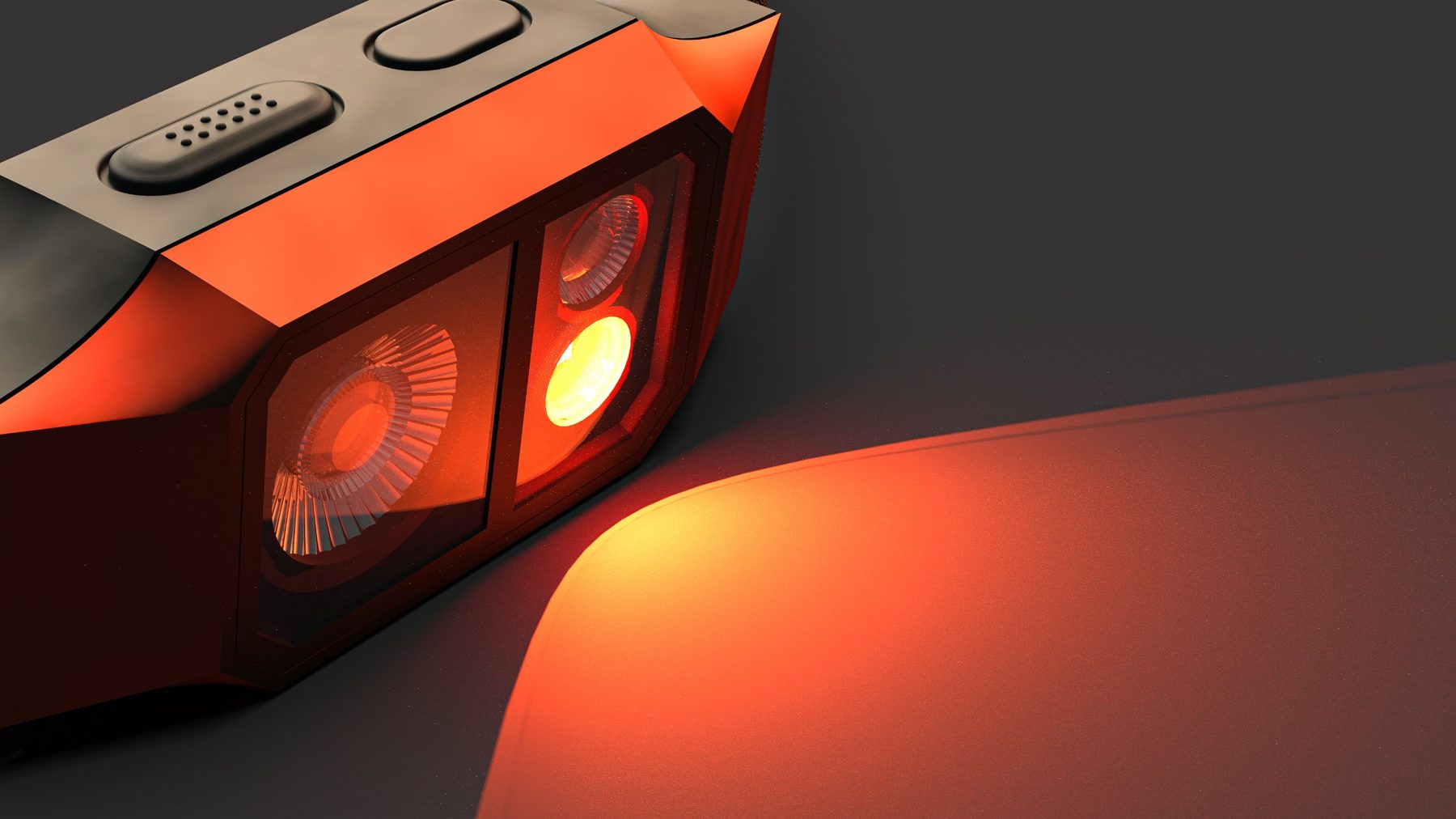
Product Visualization
Rhinoceros & KeyShot
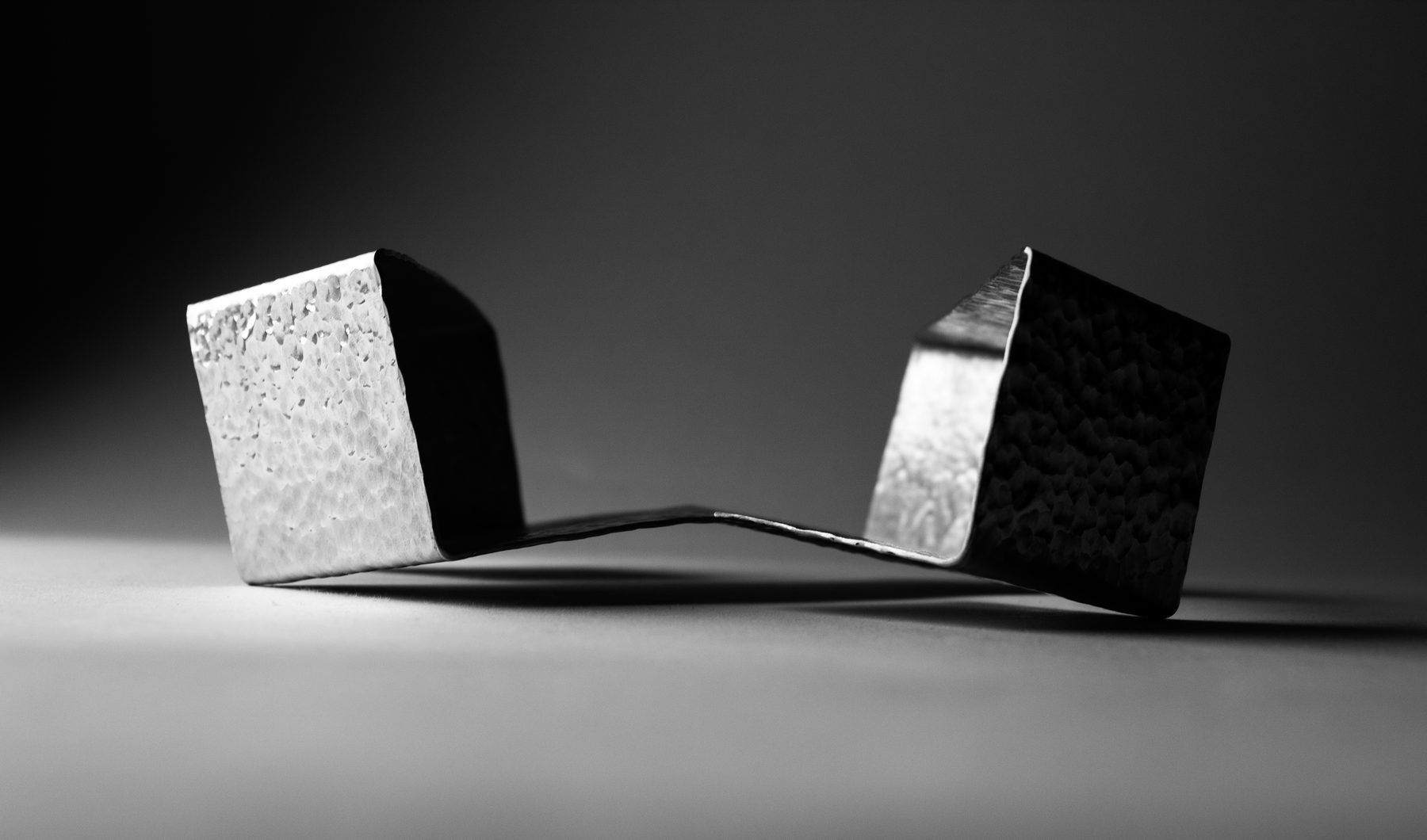
Physical Fabrication
Sheet Metal, Woodworking & More
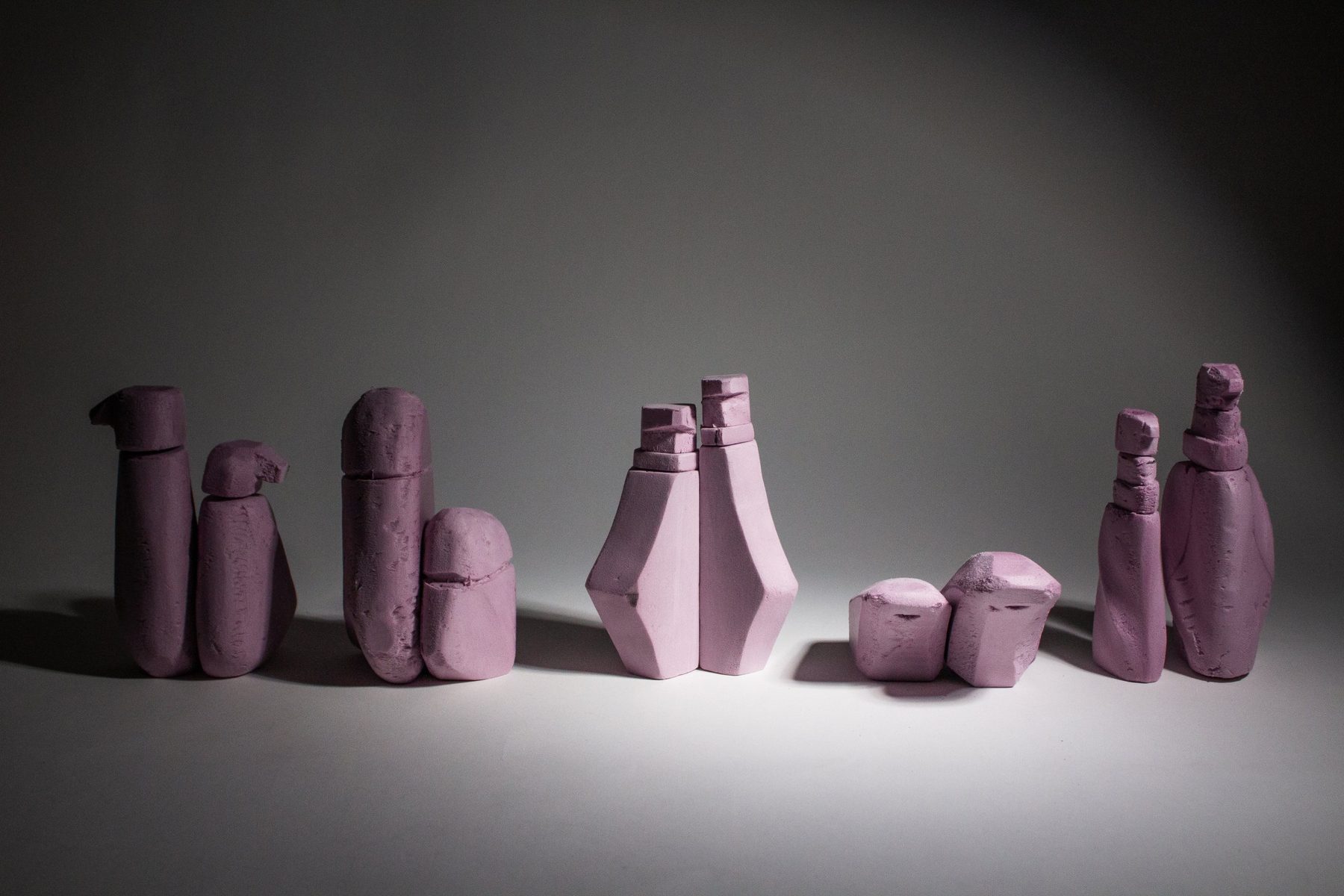
Modeling
Low-to-Mid Fidelity Sketch Modeling
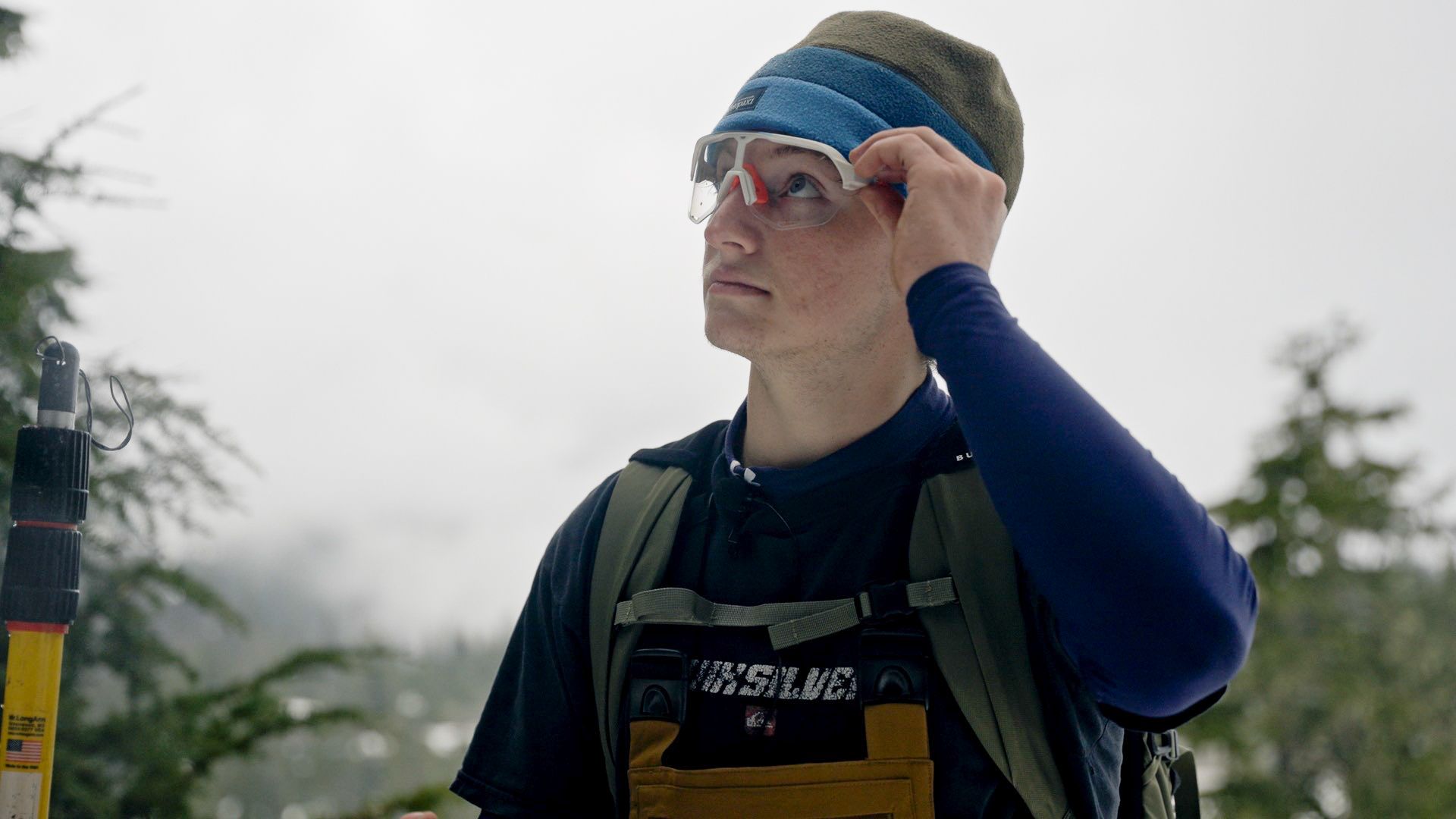
Fine Art
Colored Pencil
ABOUT
As a lifelong outdoor enthusiast, I understand the importance of thoughtfully designed, high-quality gear. I strive to create products that are beautiful, functional, and sustainable. From backpacking to biking to surfing, I would love to have a direct hand in developing and designing gear that enhances the outdoor experience for all.






OPTIX
Assistant Camera
carrying vest.
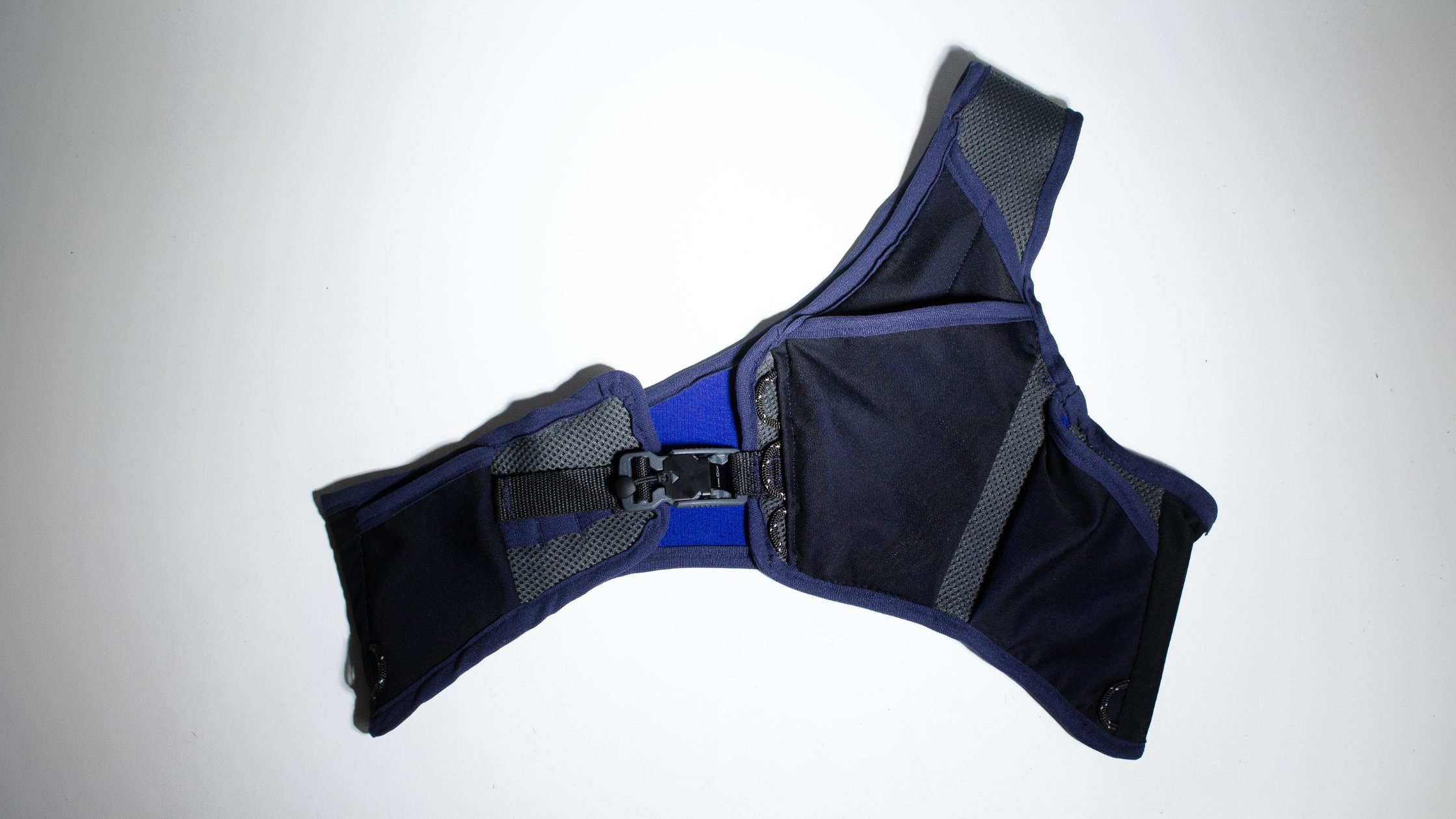
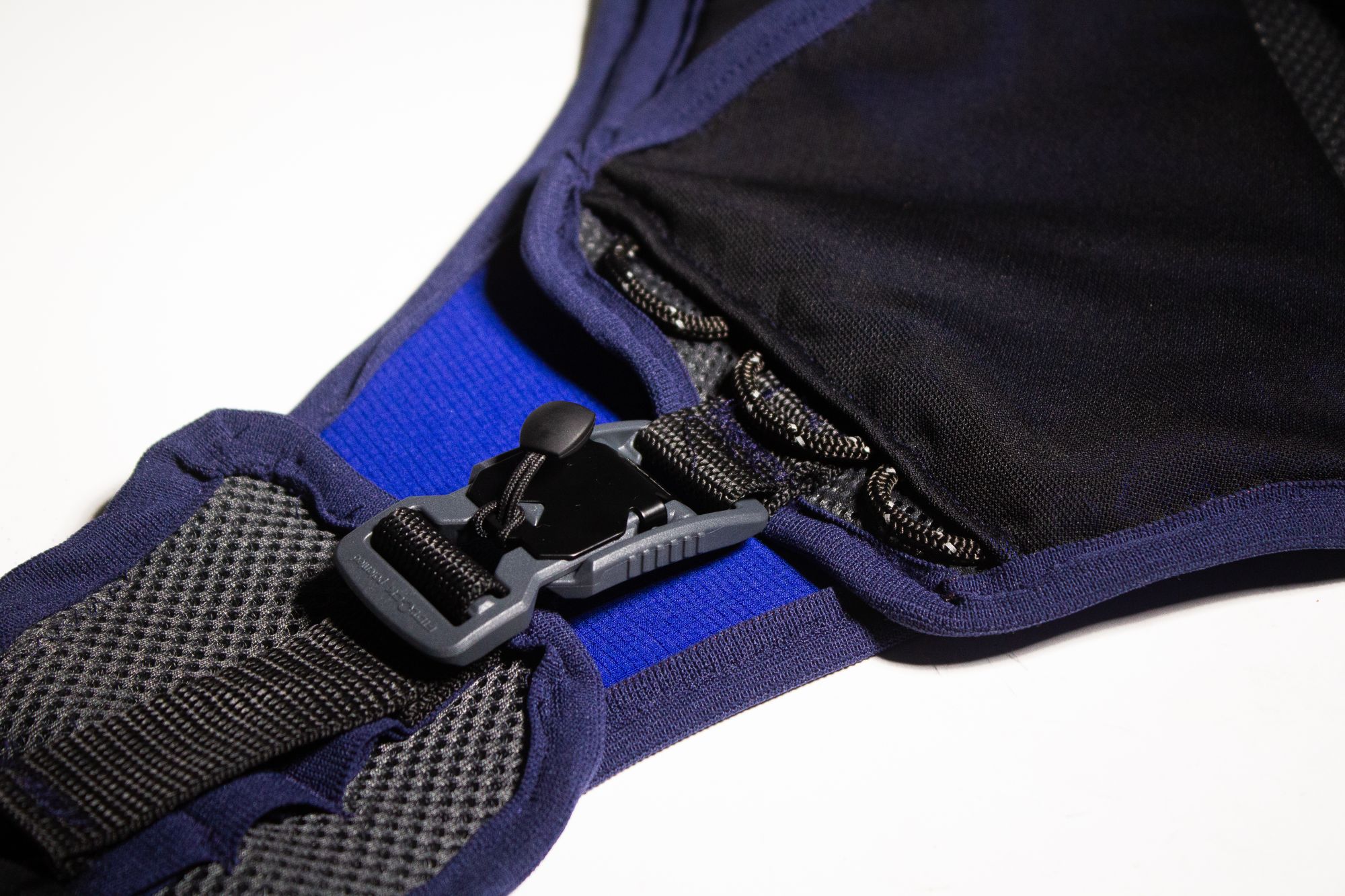
Optix is a carrying system for film sets that keeps an Assistant Camera mobile while their essential tools stay secure and within reach.
An Assistant Camera’s main job is pulling focus: keeping every shot sharp with a follow focus.
I interviewed a working AC about his duties, the sets he works on and the carrying system he uses now, looking for the moments where it gets in his way.
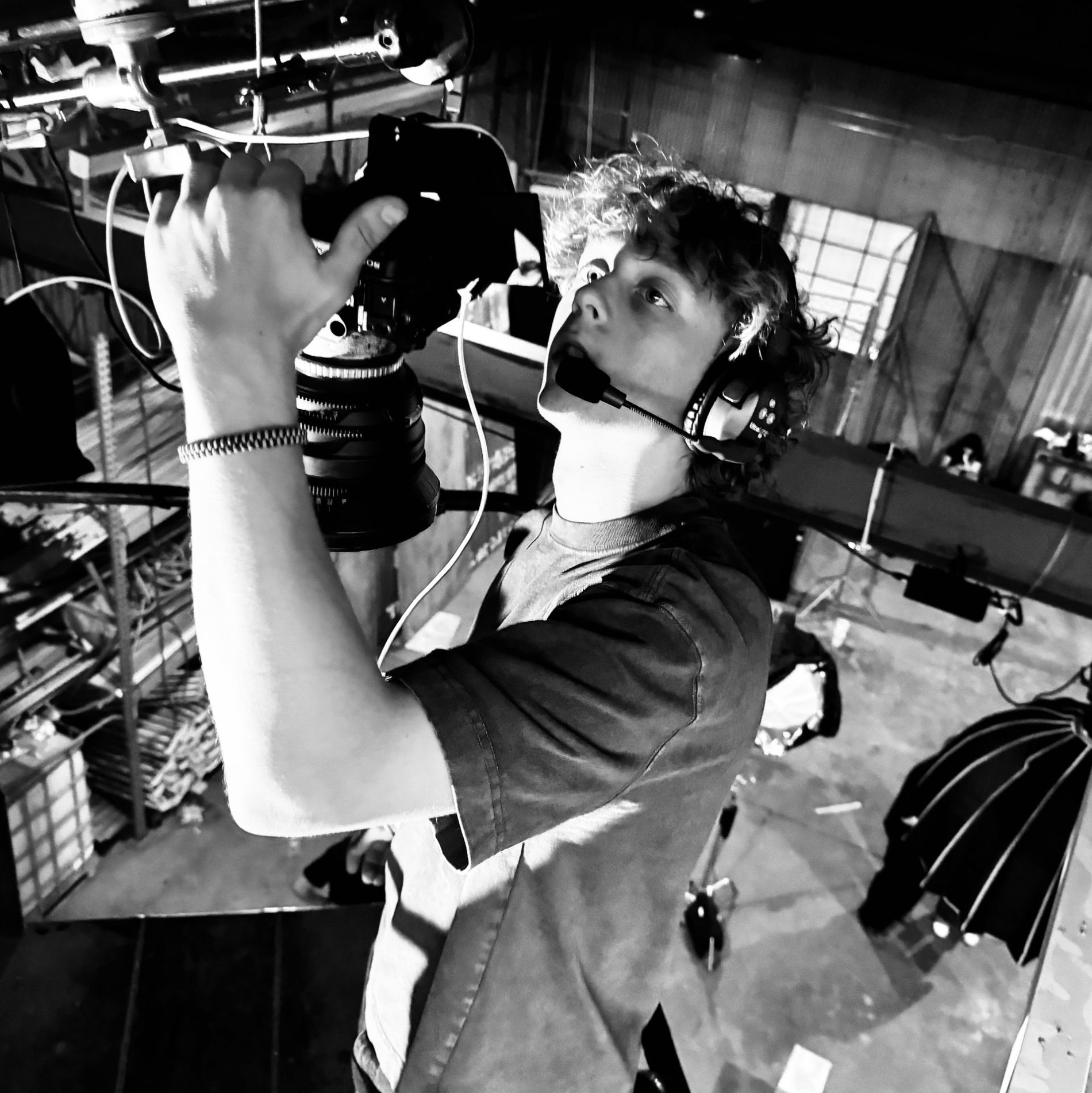
A small set of essential tools gets used constantly, but nothing carries them well.
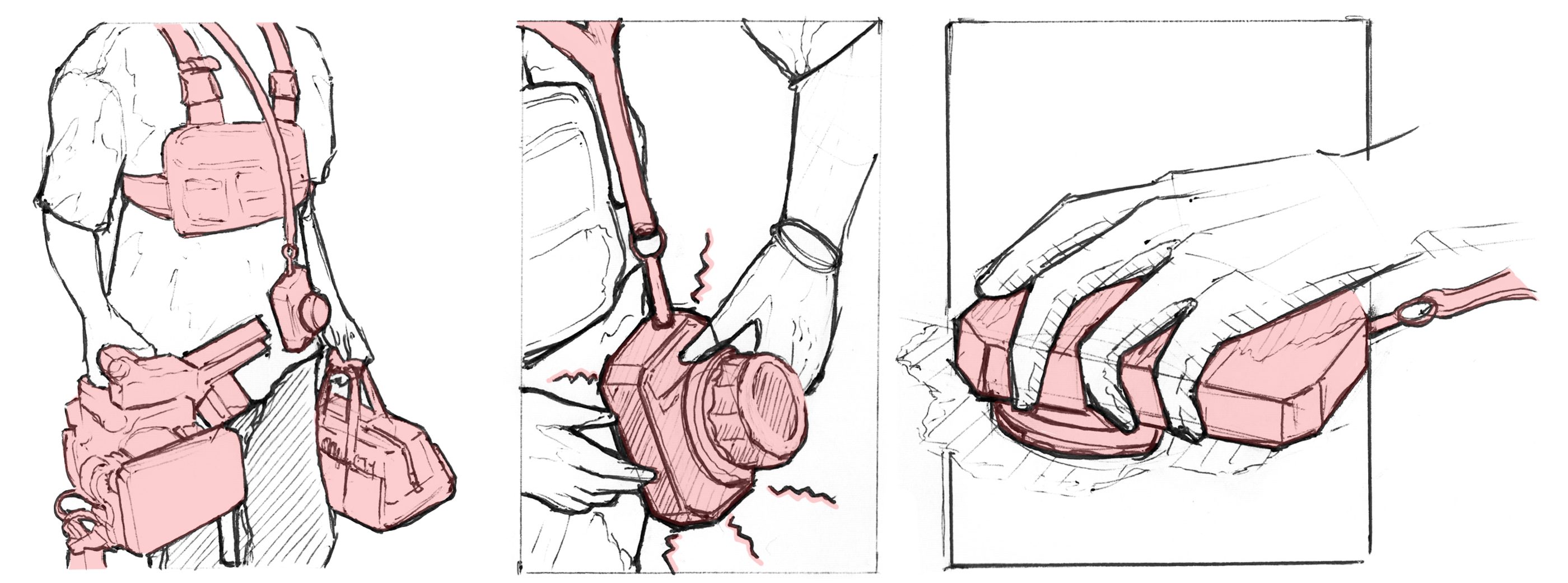
“The cross-body strap bounces awkwardly as I move around the set. Normally I set the follow focus down instead of continuing to carry it.”
“How might we provide accessible yet secure storage that supports the user’s mobility through fast-paced production environments, ensuring smooth transitions between the active use and storage of critical tools.”
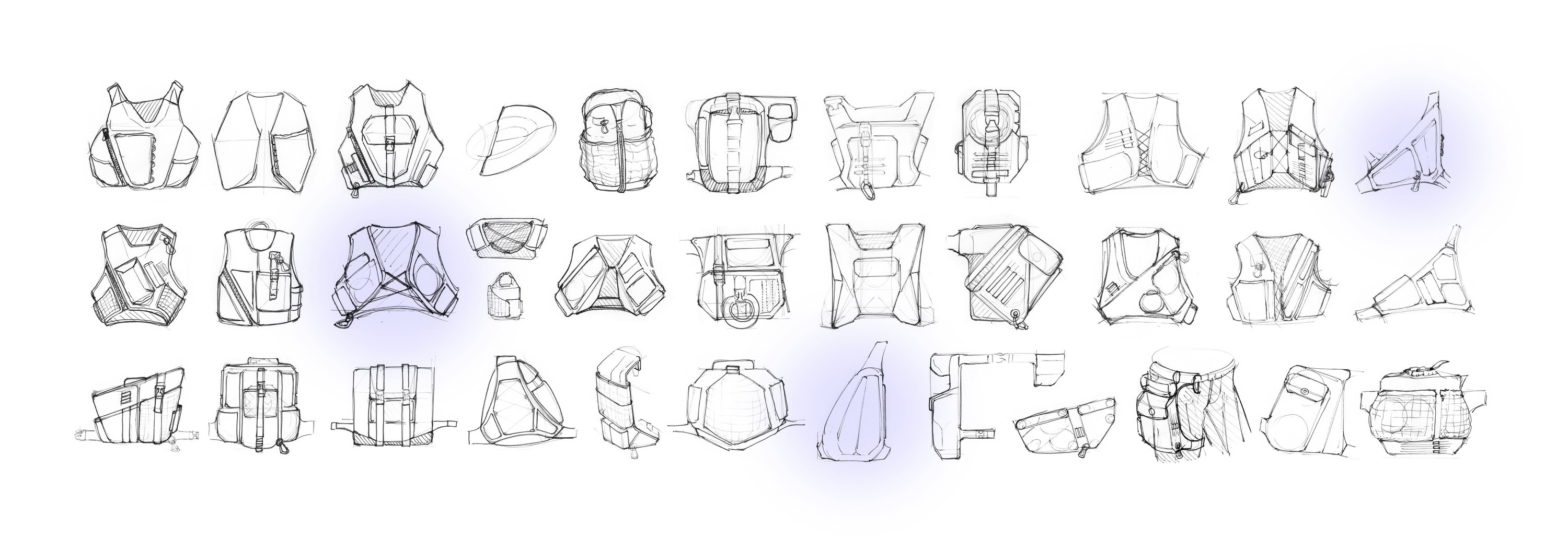
Holsters, life jackets, tool belts, avalanche vests: most carried one or two items, not the whole kit.
Sketched concepts helped narrow the design to two directions: leg holsters and vests.
An asymmetric running vest keeps tools close while limiting the skin contact that causes heat and chafing.
Instead of patterning a vest from scratch, I adapted running-vest paneling studied at REI.
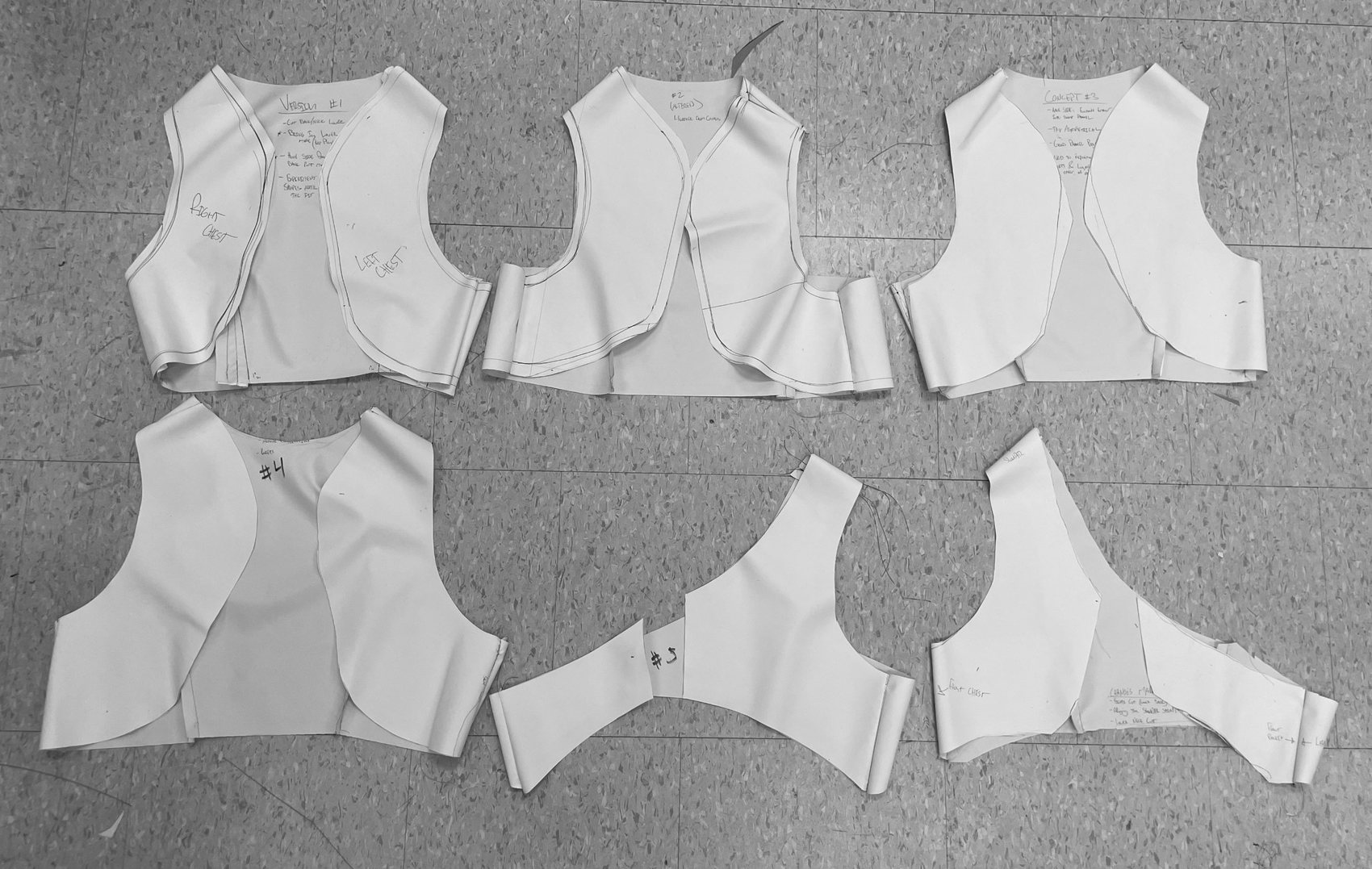
8 prototypes (6 rough, 2 refined), each tested by wearing it and acting out an AC’s movements. Templates of the versions that worked became a sketch underlay in 3D: copy, modify, test again.
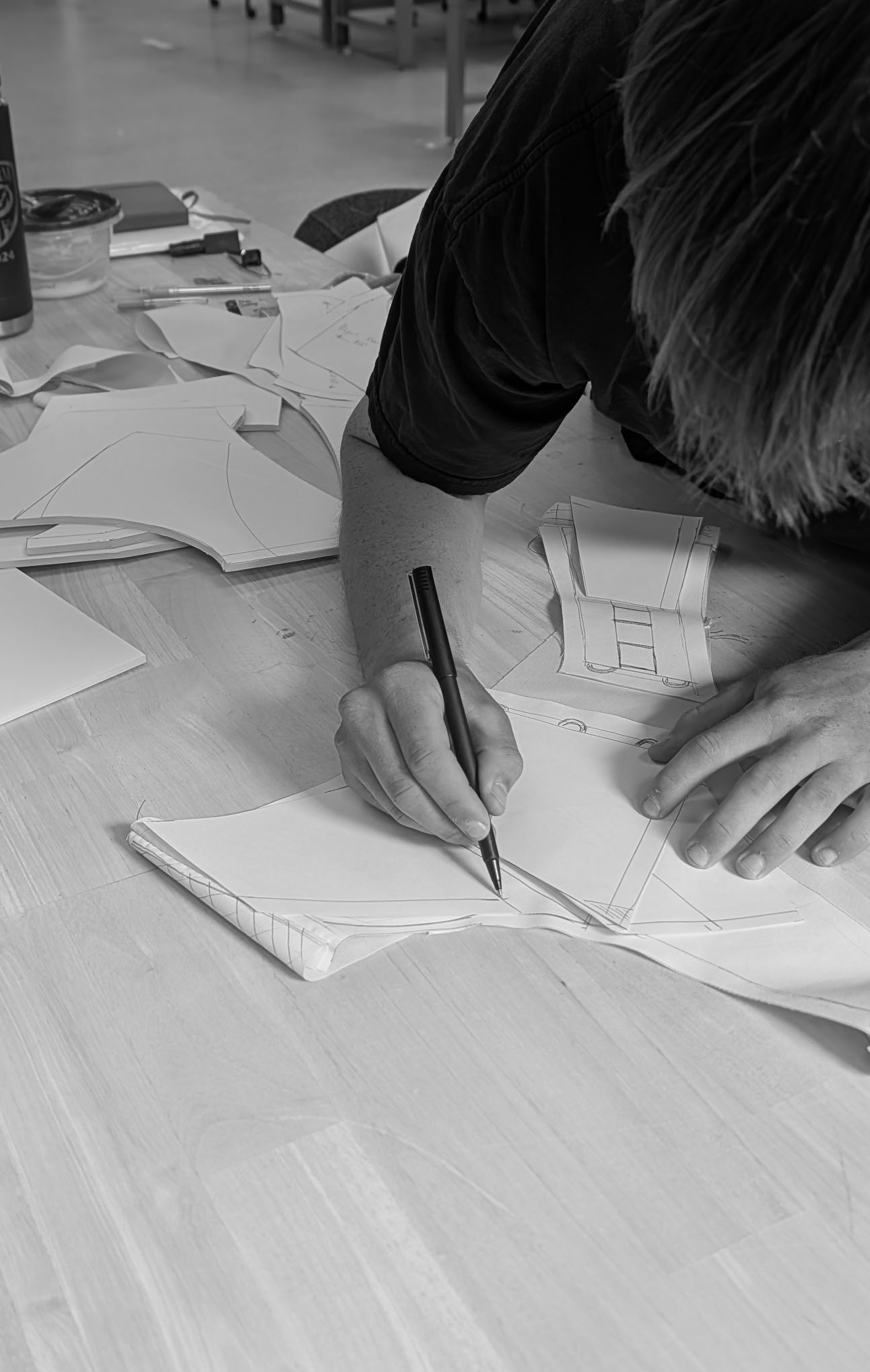
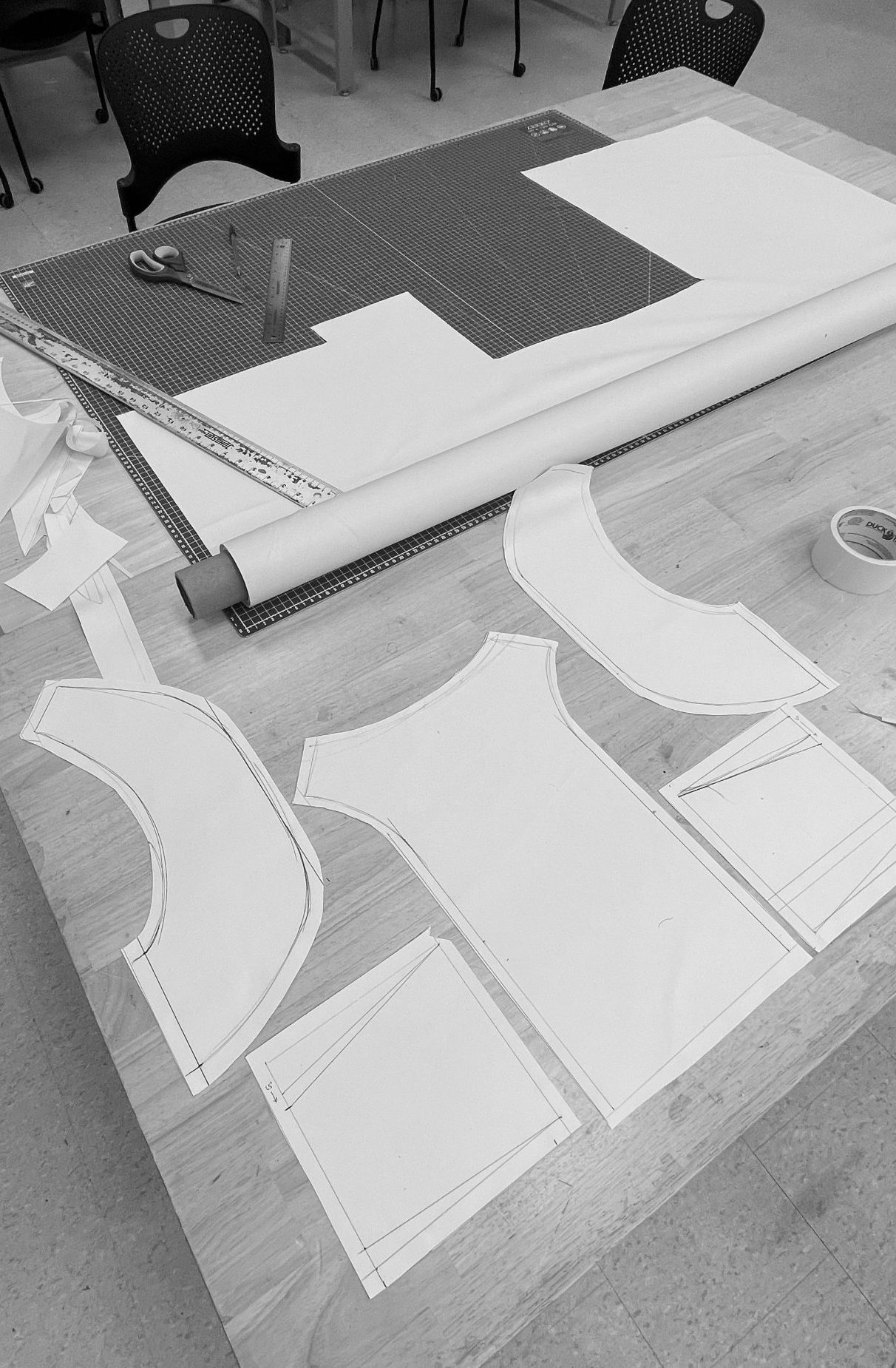
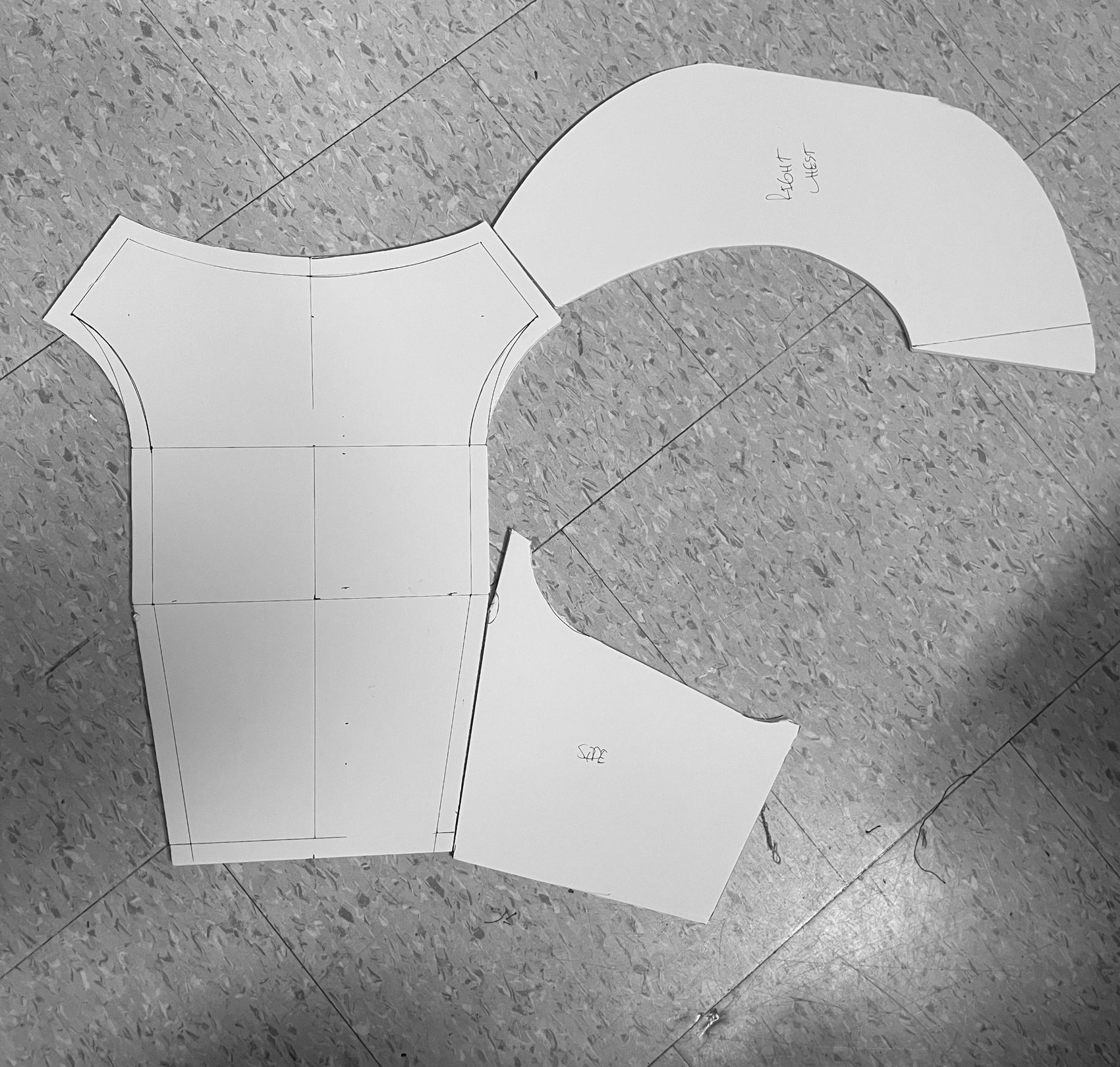
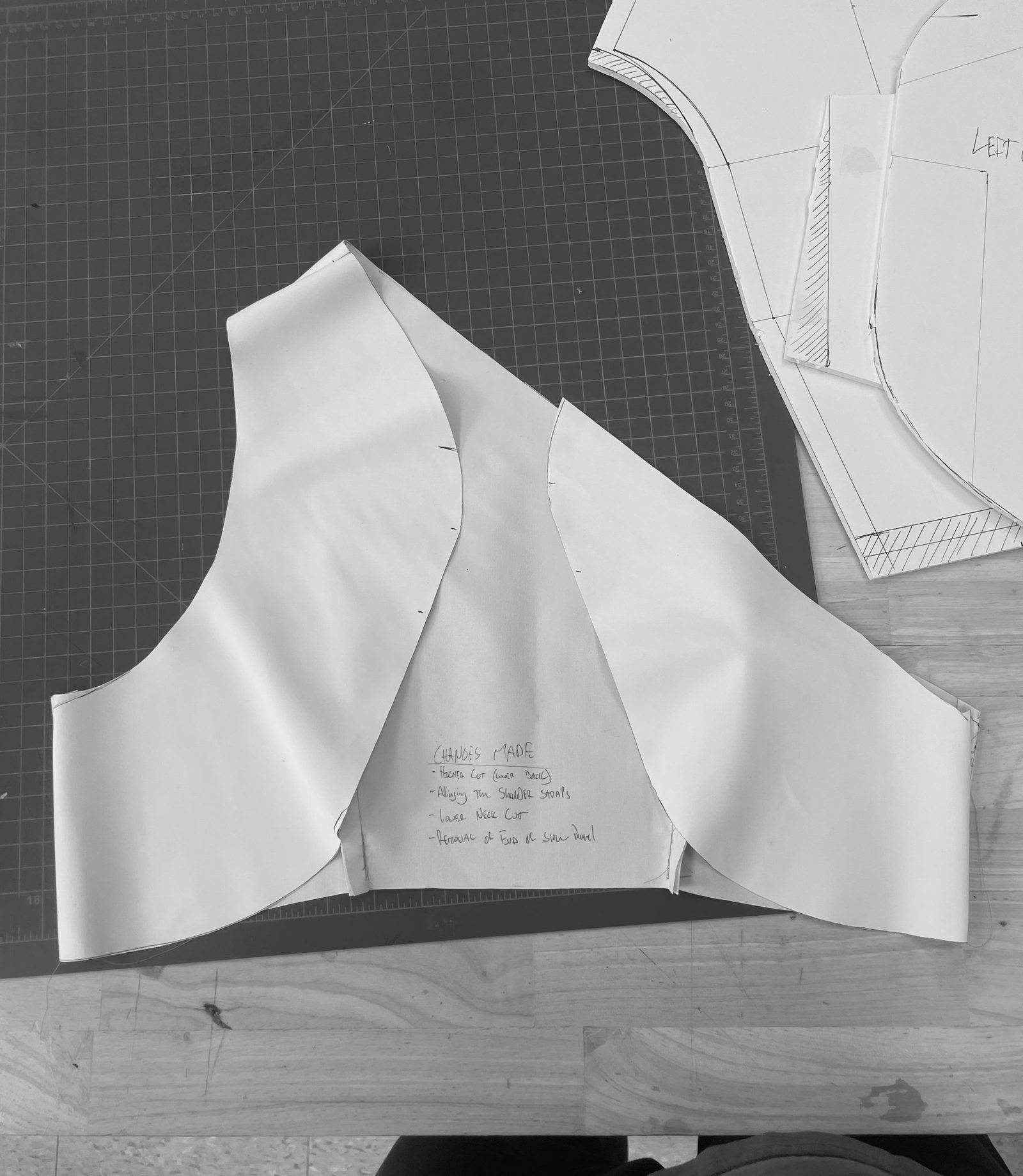
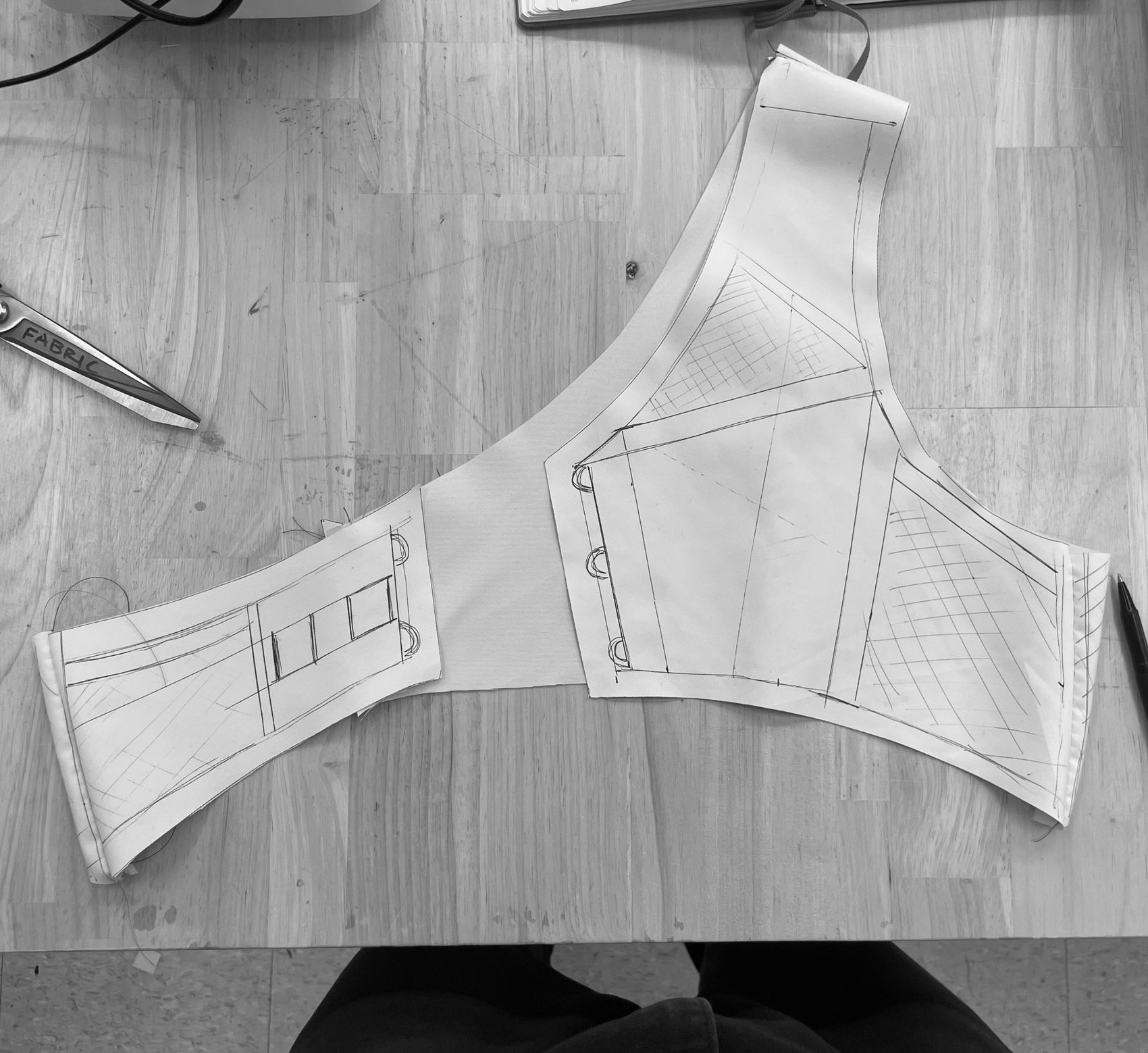
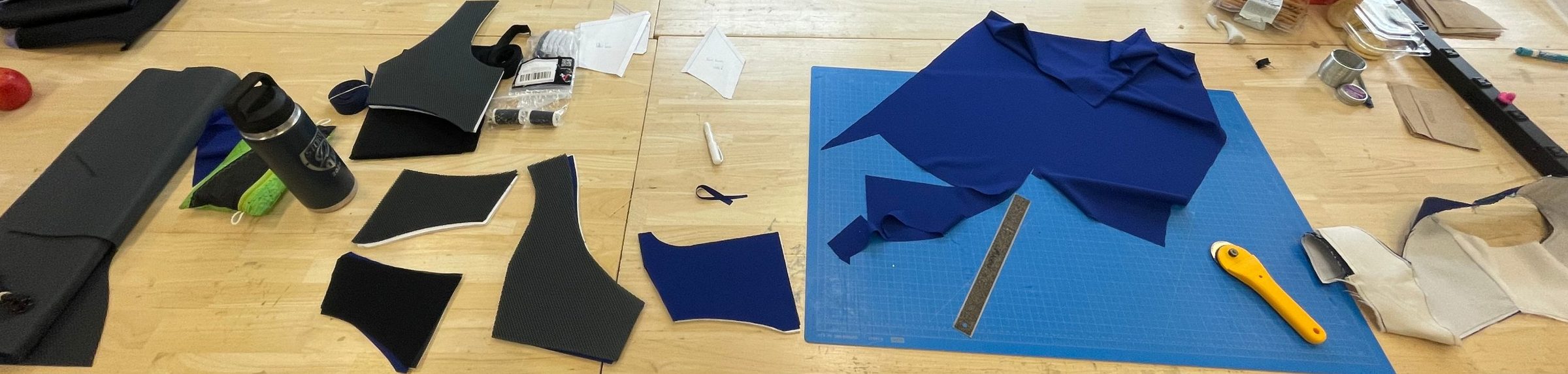
The final vest was built from Seattle Fabrics materials and Fidlock clips on a $50 budget.
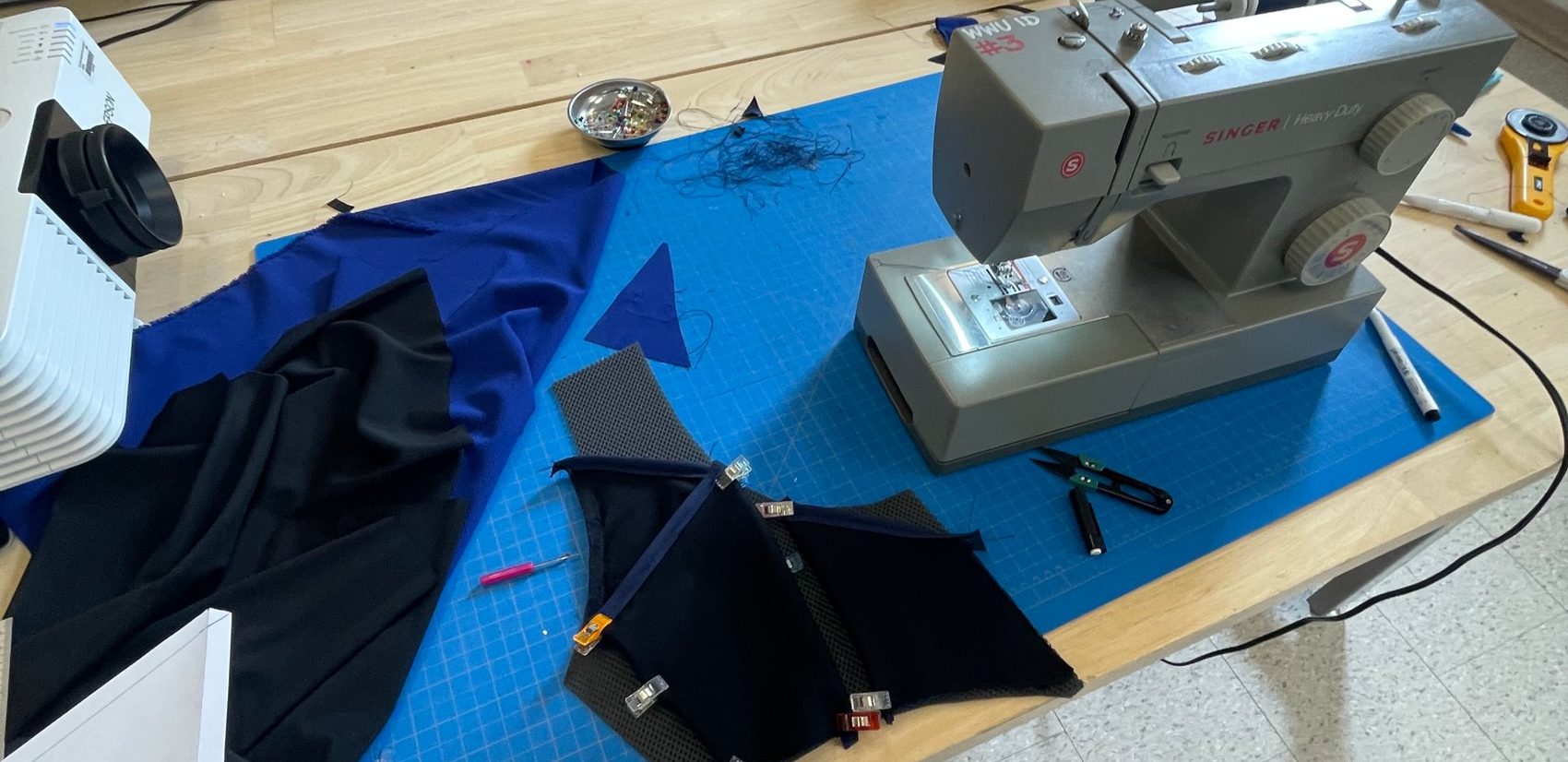
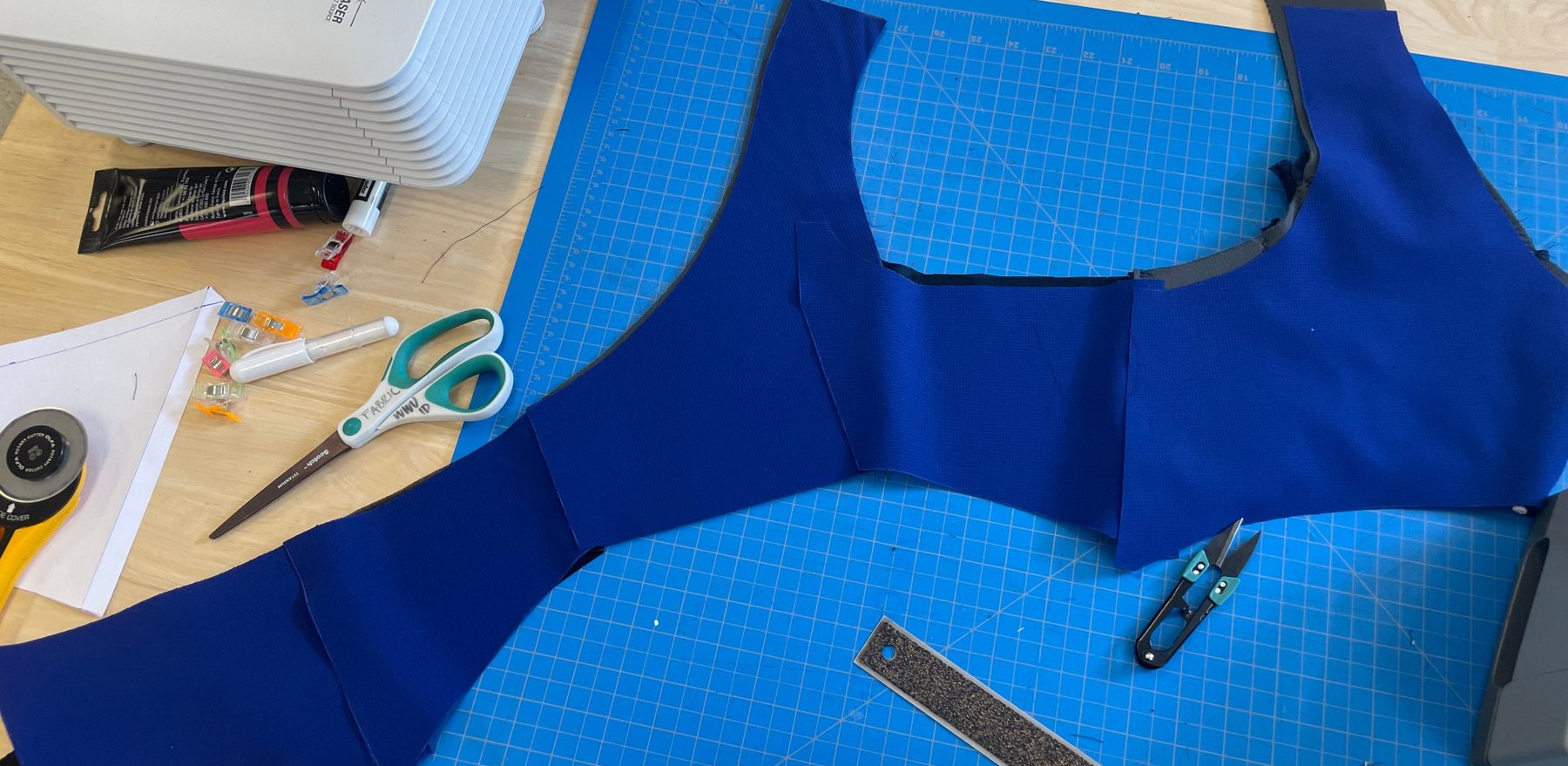
The last mock-up was seam-ripped into panel templates. Getting stretch bias tape crisp on tight curves was the hardest part.
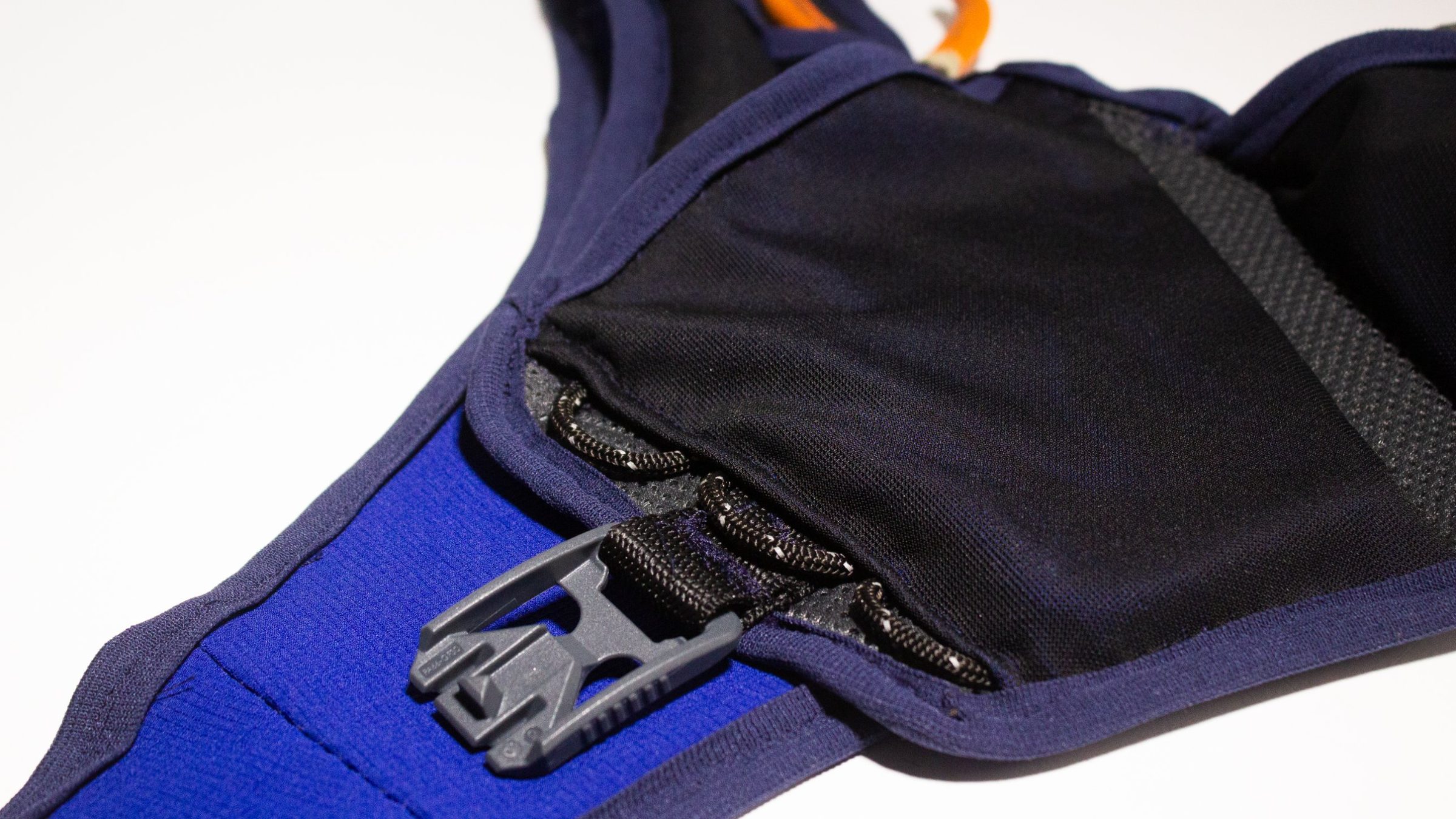
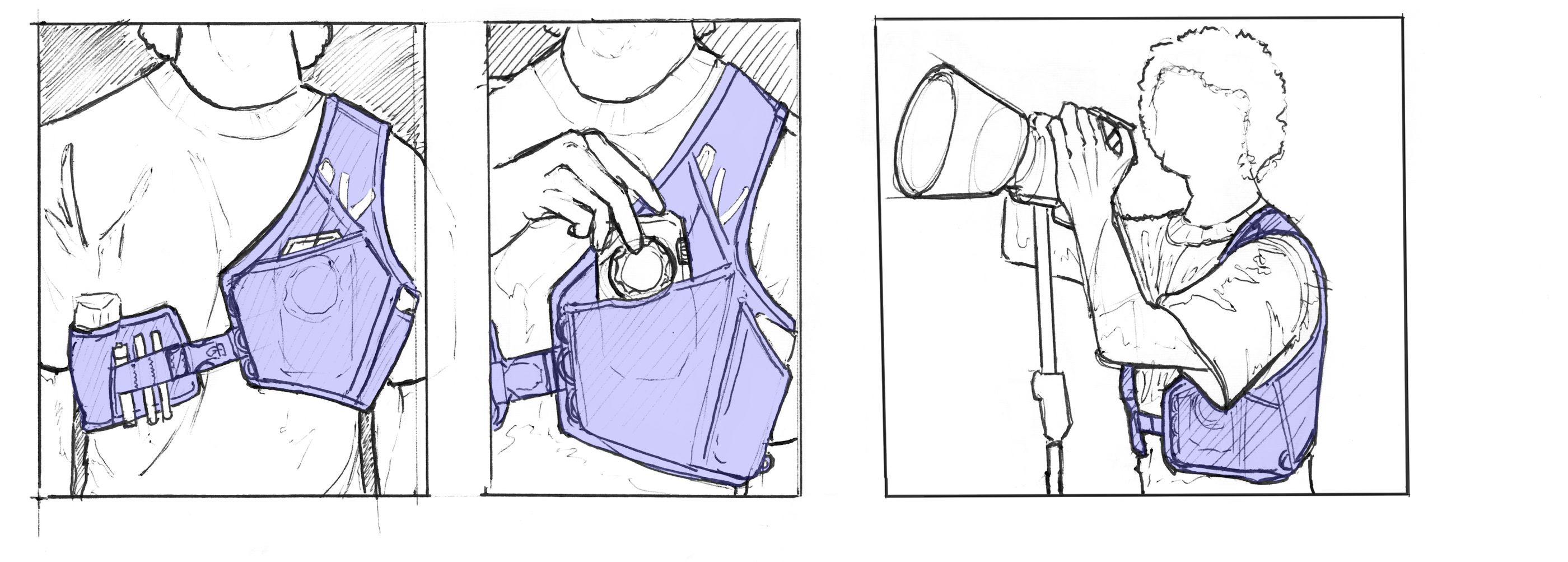
Every essential tool has a home, and the follow focus stays secure without slowing him down.
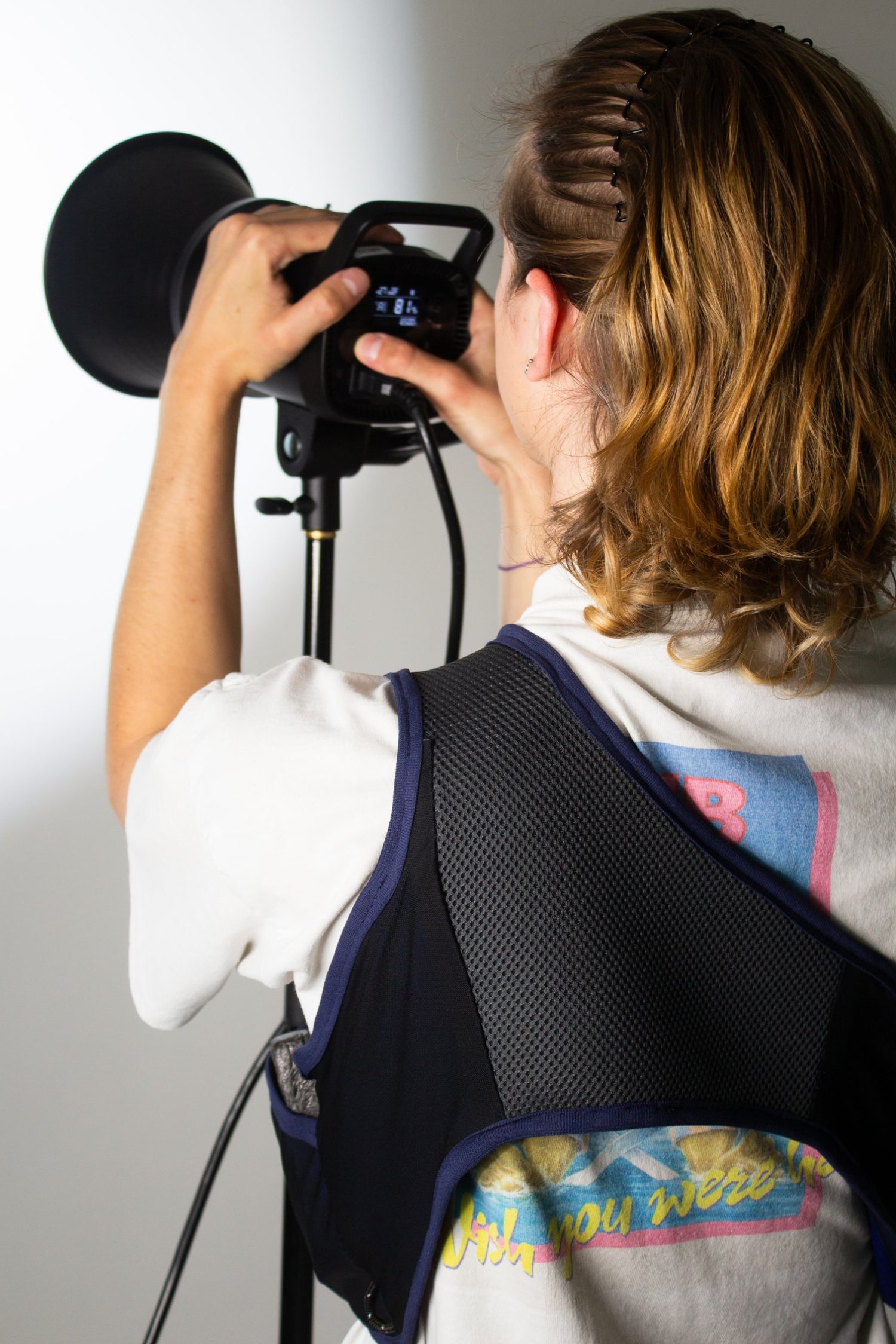
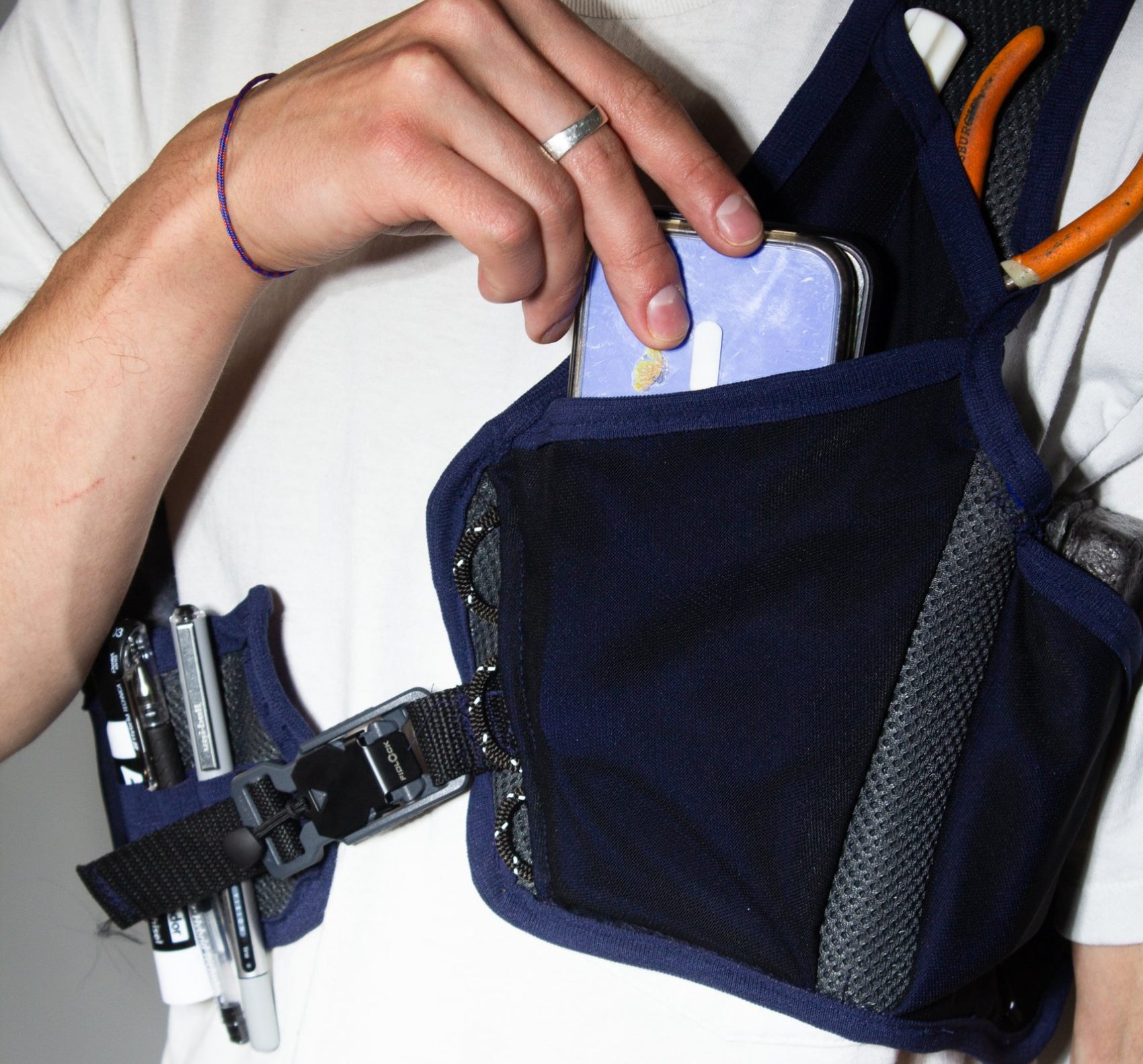
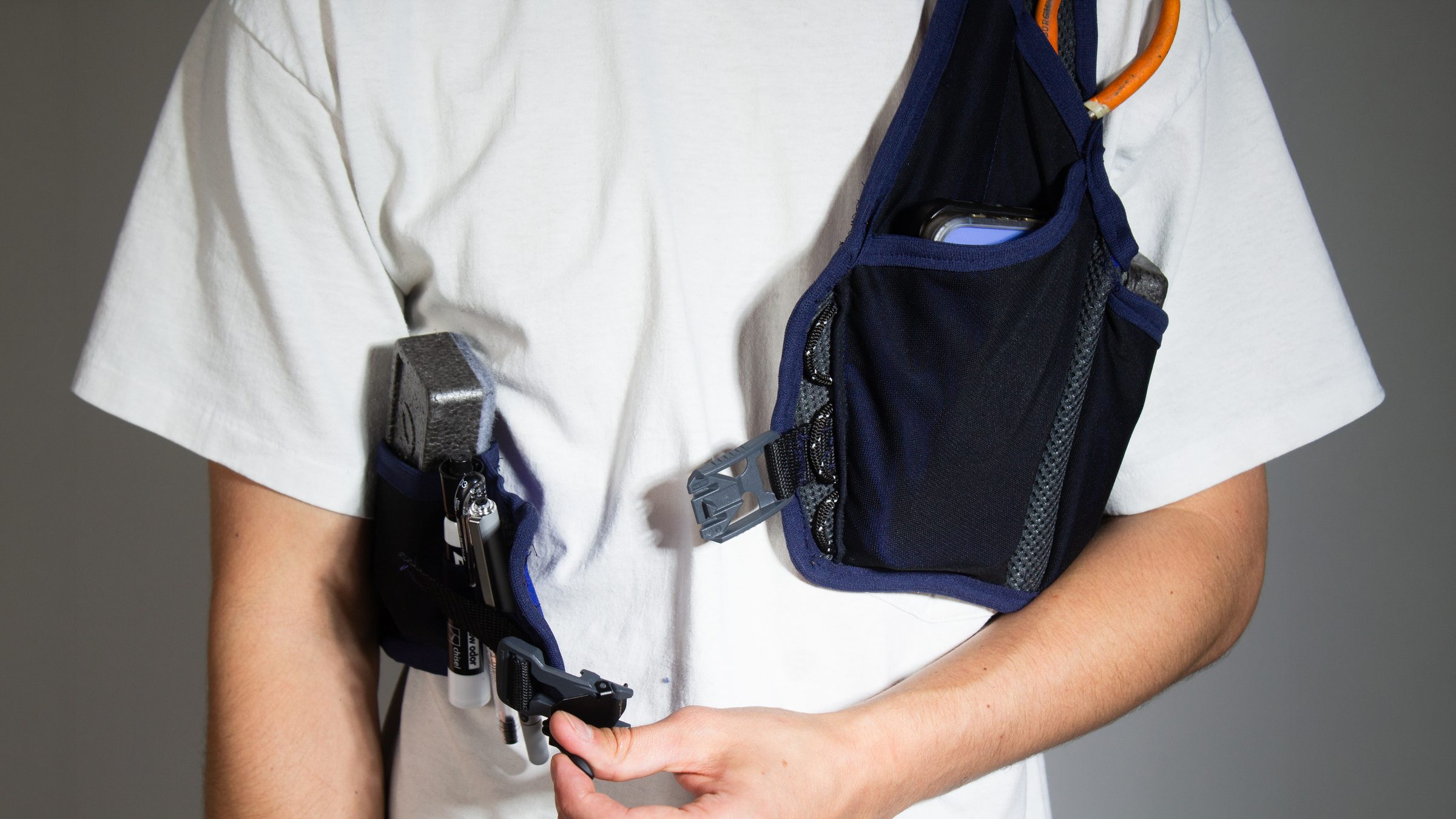
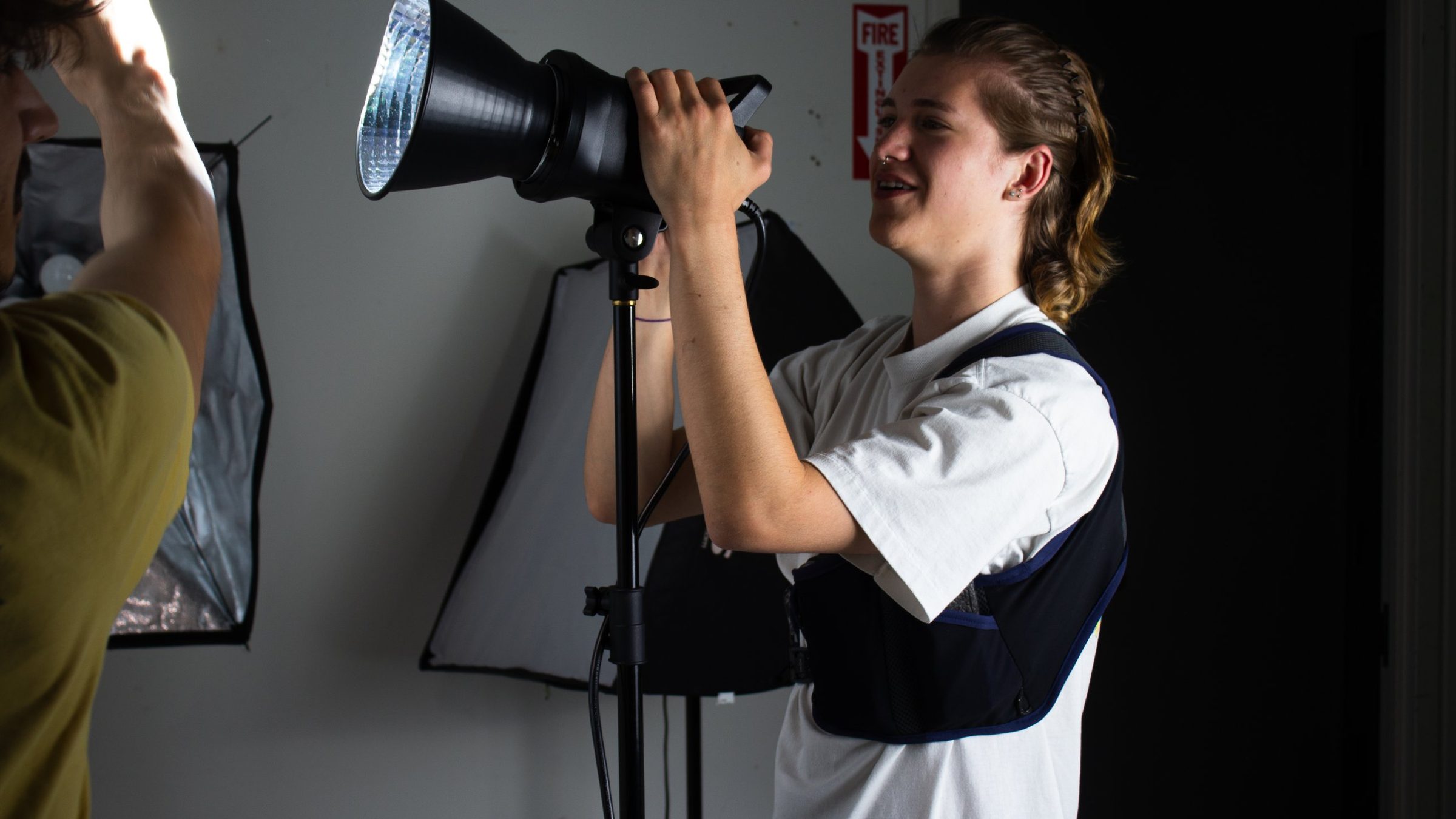
“Dude, the vest is holding up great. No failures at any point; it still functions great. I’m using it for grip work, so I’m able to use it for a bunch of different stuff. It’s fire.”
ECLAIR
Desktop air
conditioning unit.
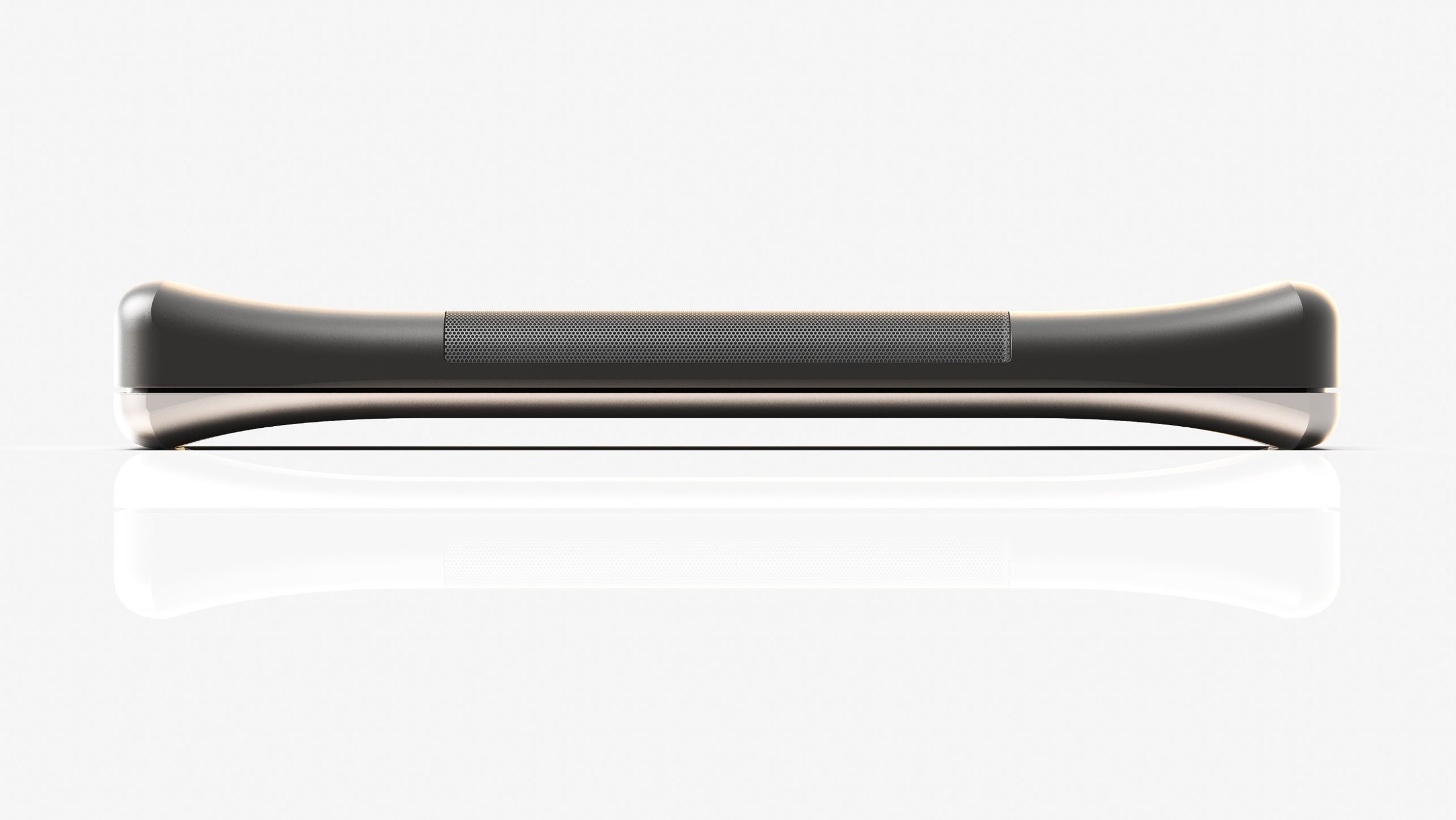
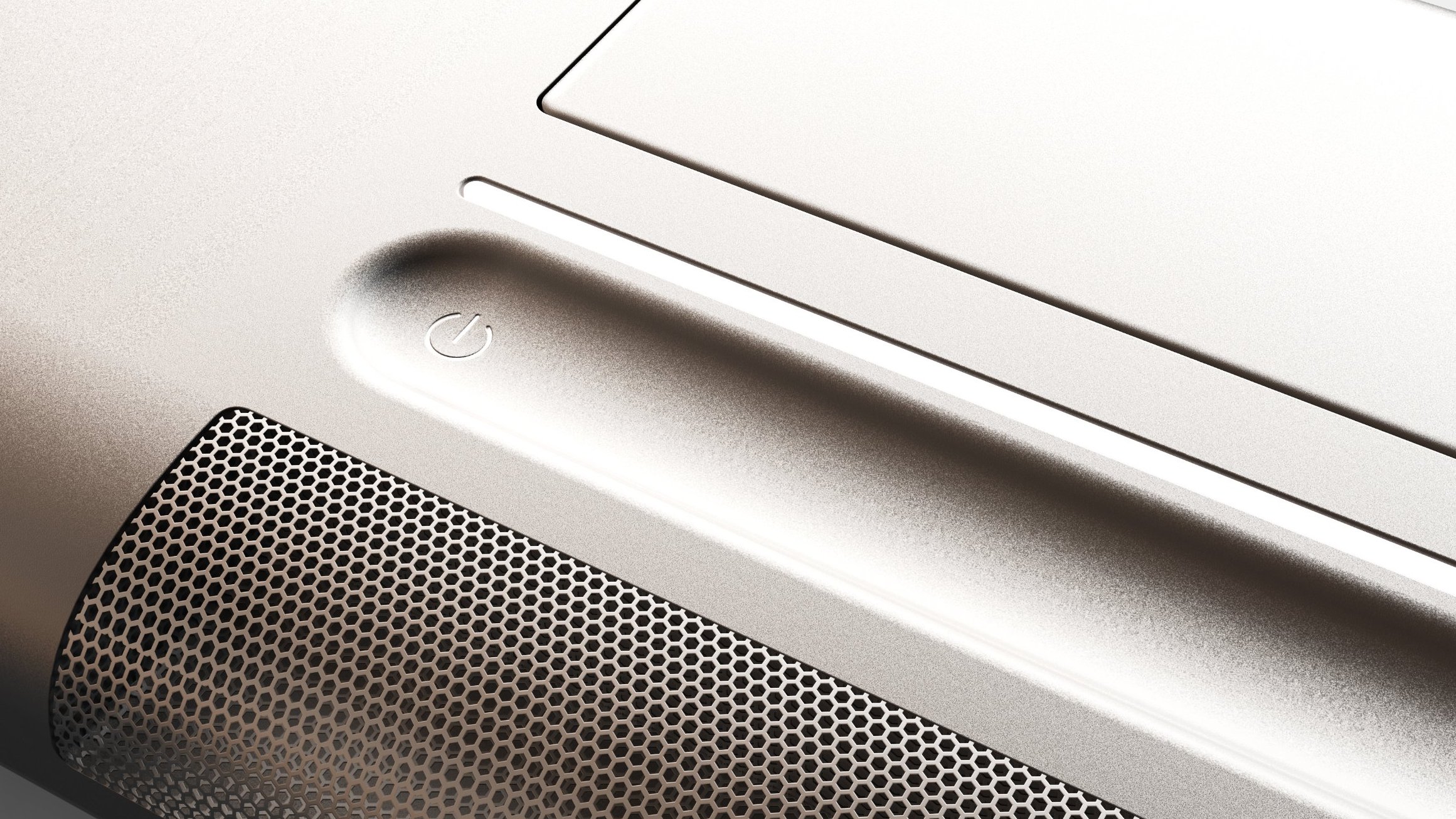
Eclair is a compact desktop air conditioner that tucks into the unused space under a monitor, built from recyclable aluminum without sacrificing performance.
The brief: design a compact desktop or portable air conditioner that balances performance, usability and aesthetics.
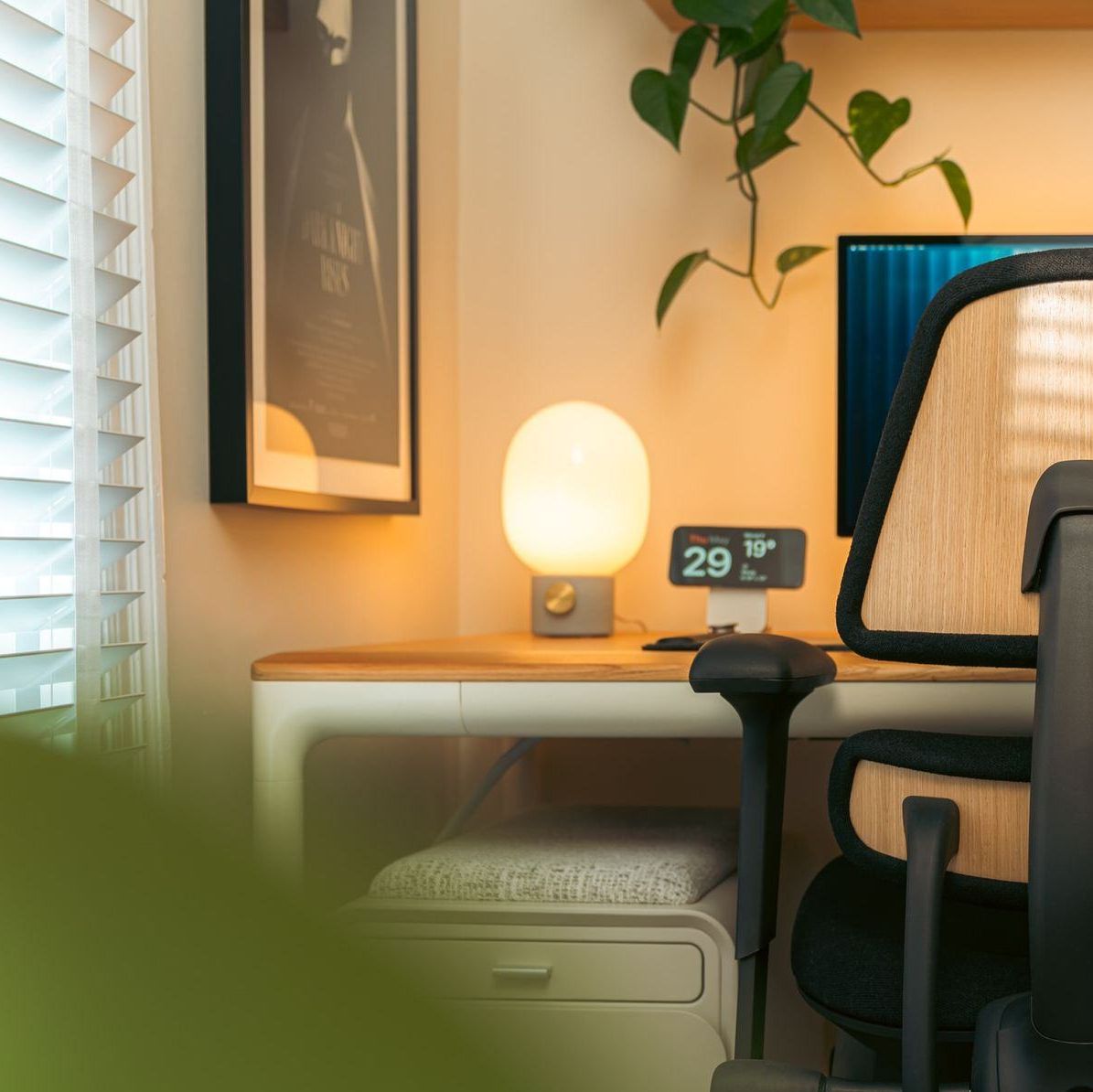

Designed for eco-conscious users, willing to pay more for high-quality products with minimal environmental impact.
Their desks favored natural materials, open space and fewer, better objects.
That pointed to a flat, elongated form that sits under a monitor or laptop stand, in premium materials users will pay more for if they are sustainable.
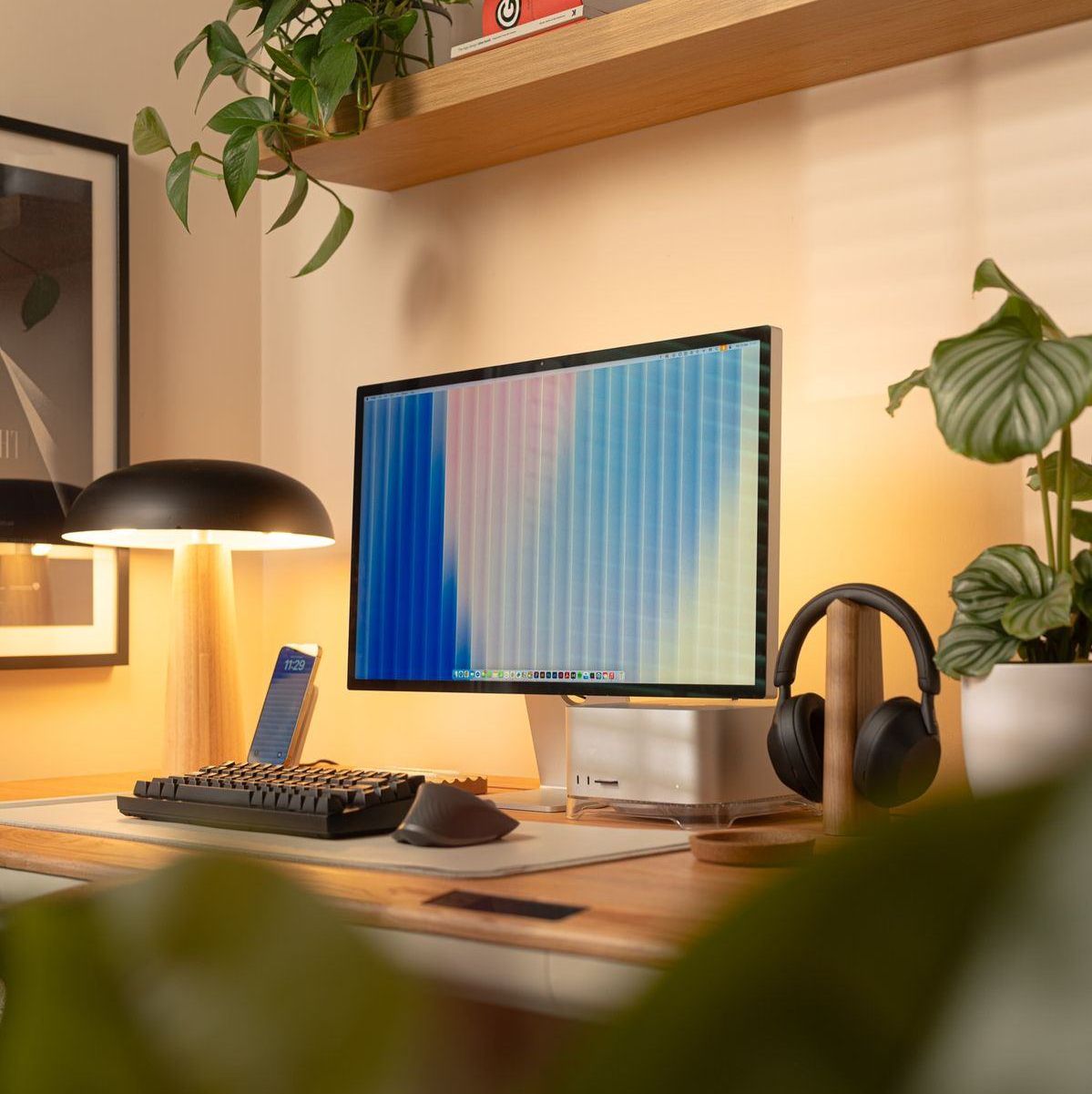
Materials
Natural, recyclable elements.
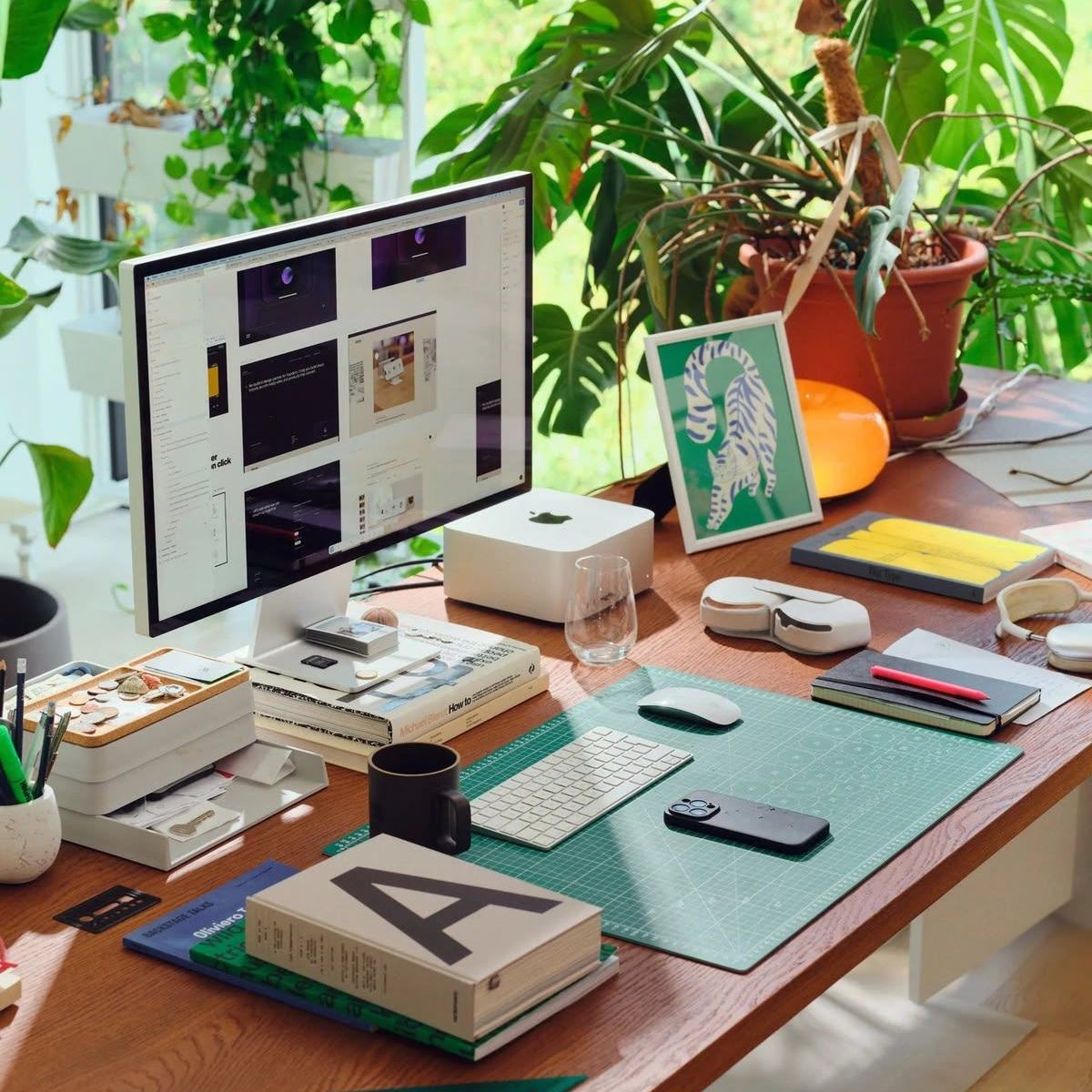
Space
Open areas to stash and store.
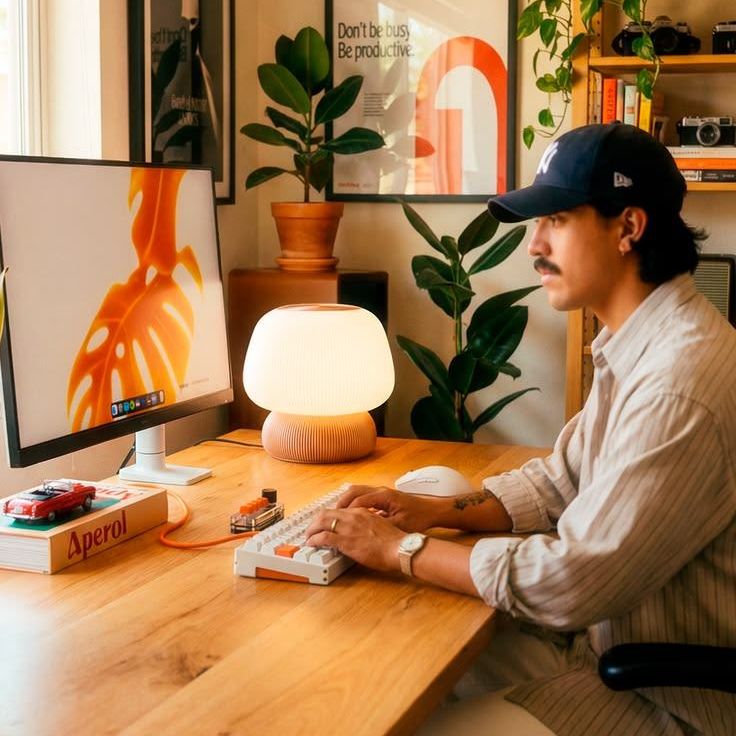
Quality
Fewer, higher-quality products.
Most users never used the space between the bottom of their monitor and the desk.
I asked everyone I knew with a desktop setup to send photos of their space. That gap was only used to push a keyboard into, or to hold sticky notes.
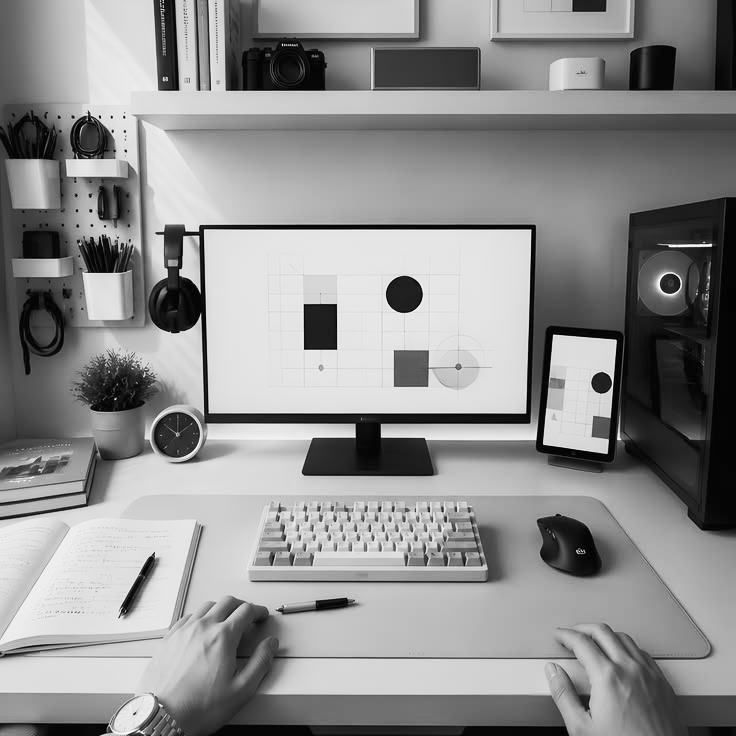
“How might we create a high quality desktop AC that is minimally intrusive to users’ desk space, created sustainably, all without sacrificing functionality?”
Taking apart a desktop swamp cooler showed what had to fit inside.
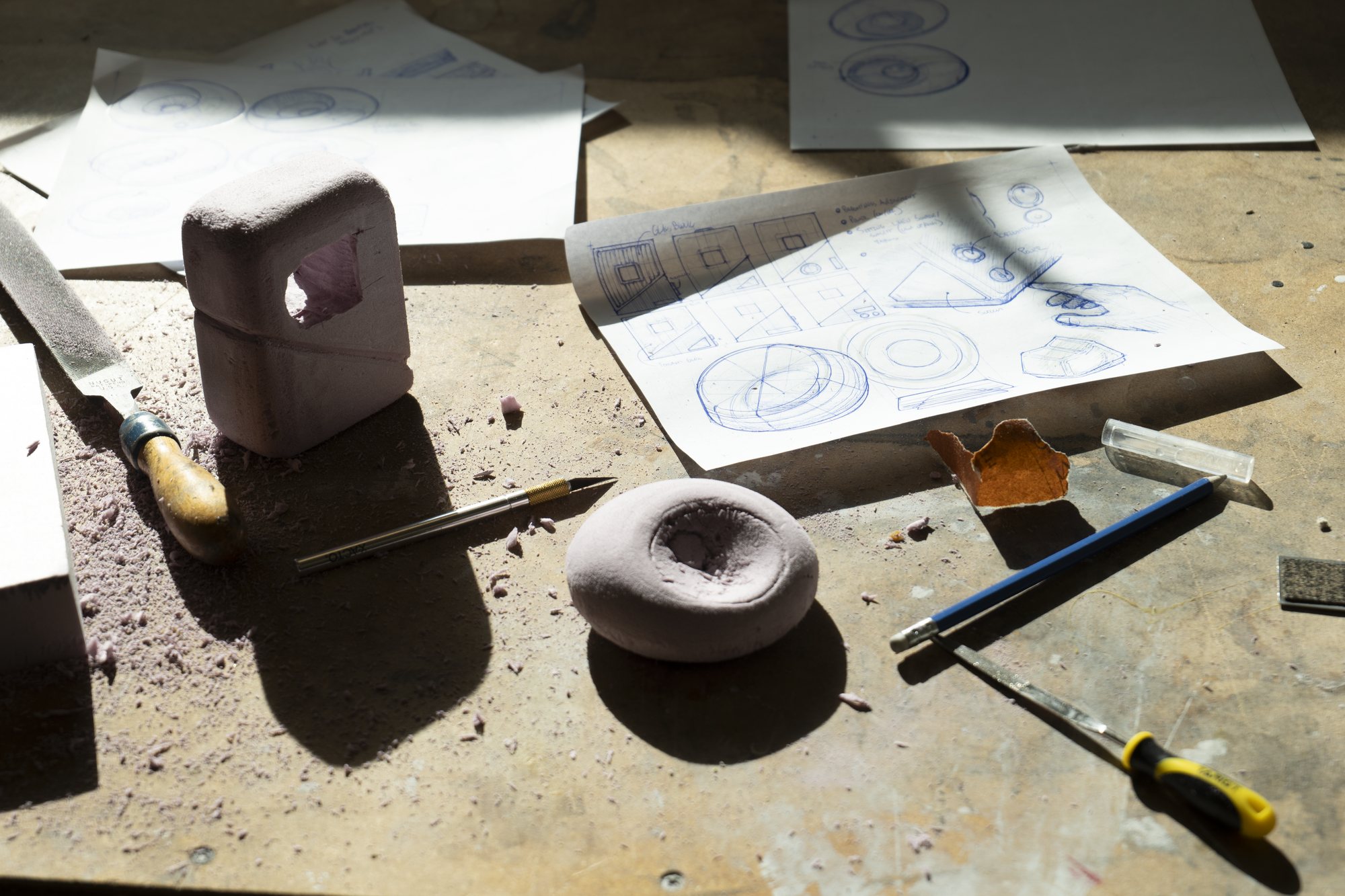
Sketches and cardboard and foam models developed side by side, each pushing the other. After critique I took one direction forward, refining its internals and how it is used.
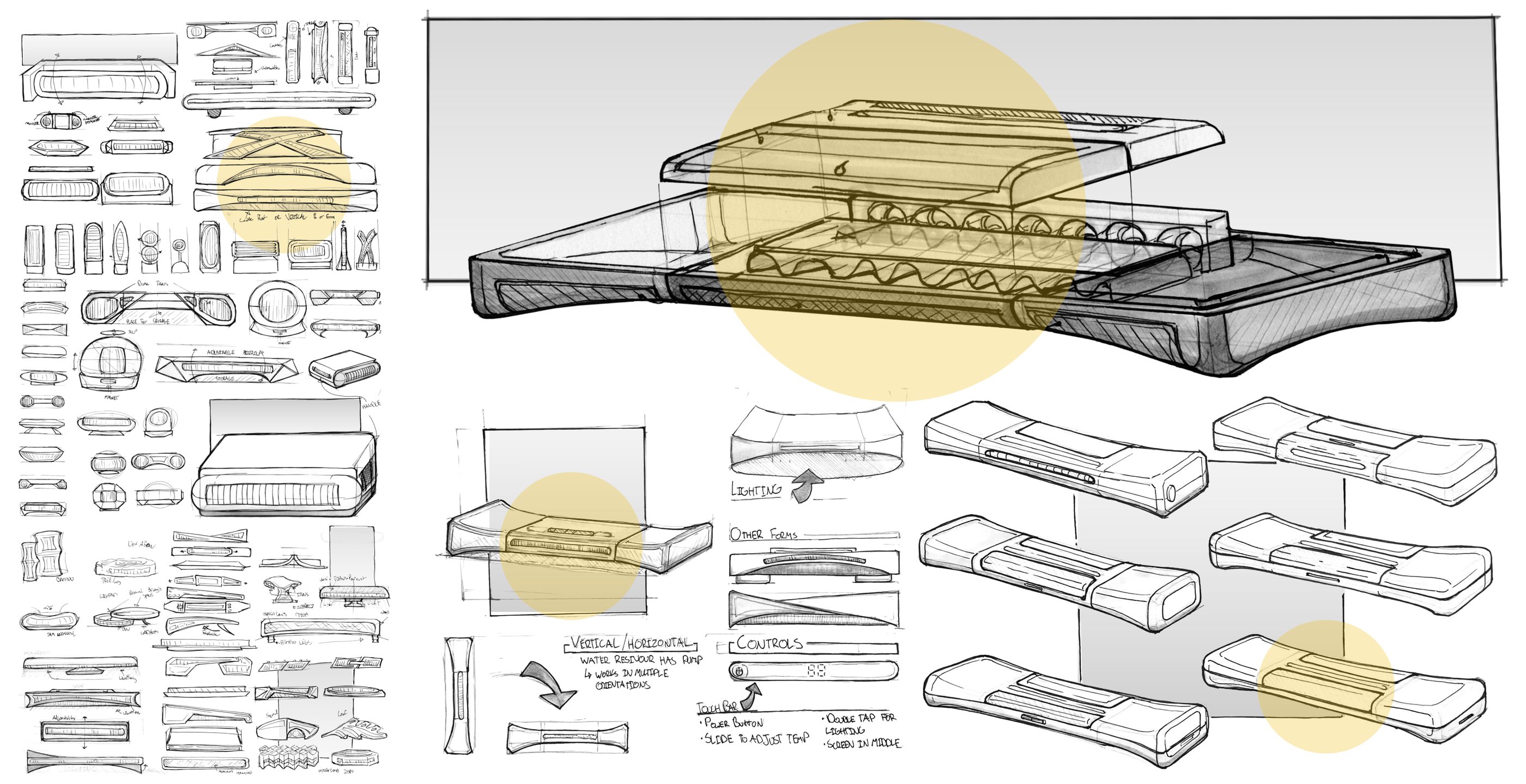
Foam models tested the form and cooling system, and showed a split design would tip and spill its water tray.
Pink low-density foam for refining the direction, then high-density yellow foam for the final model.
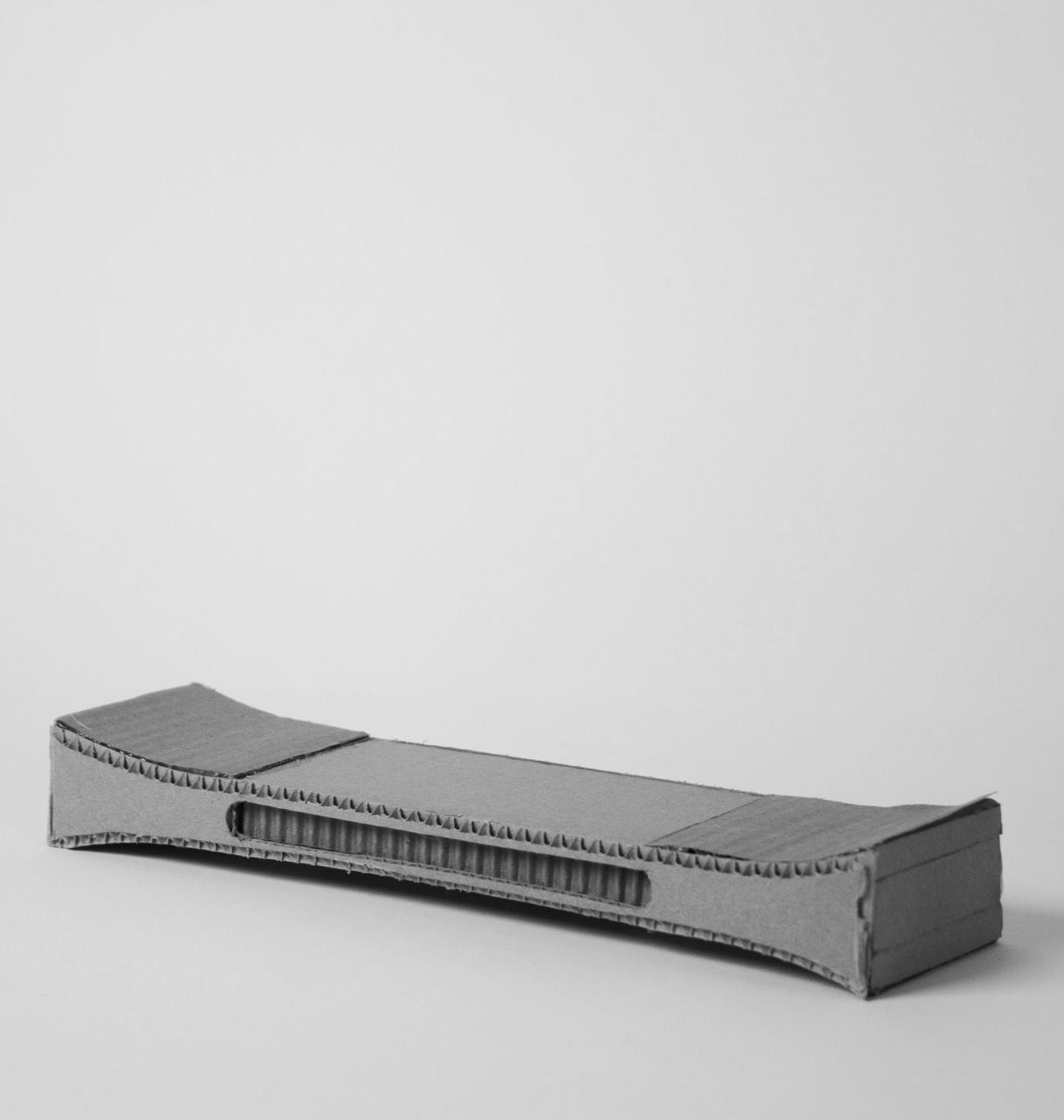
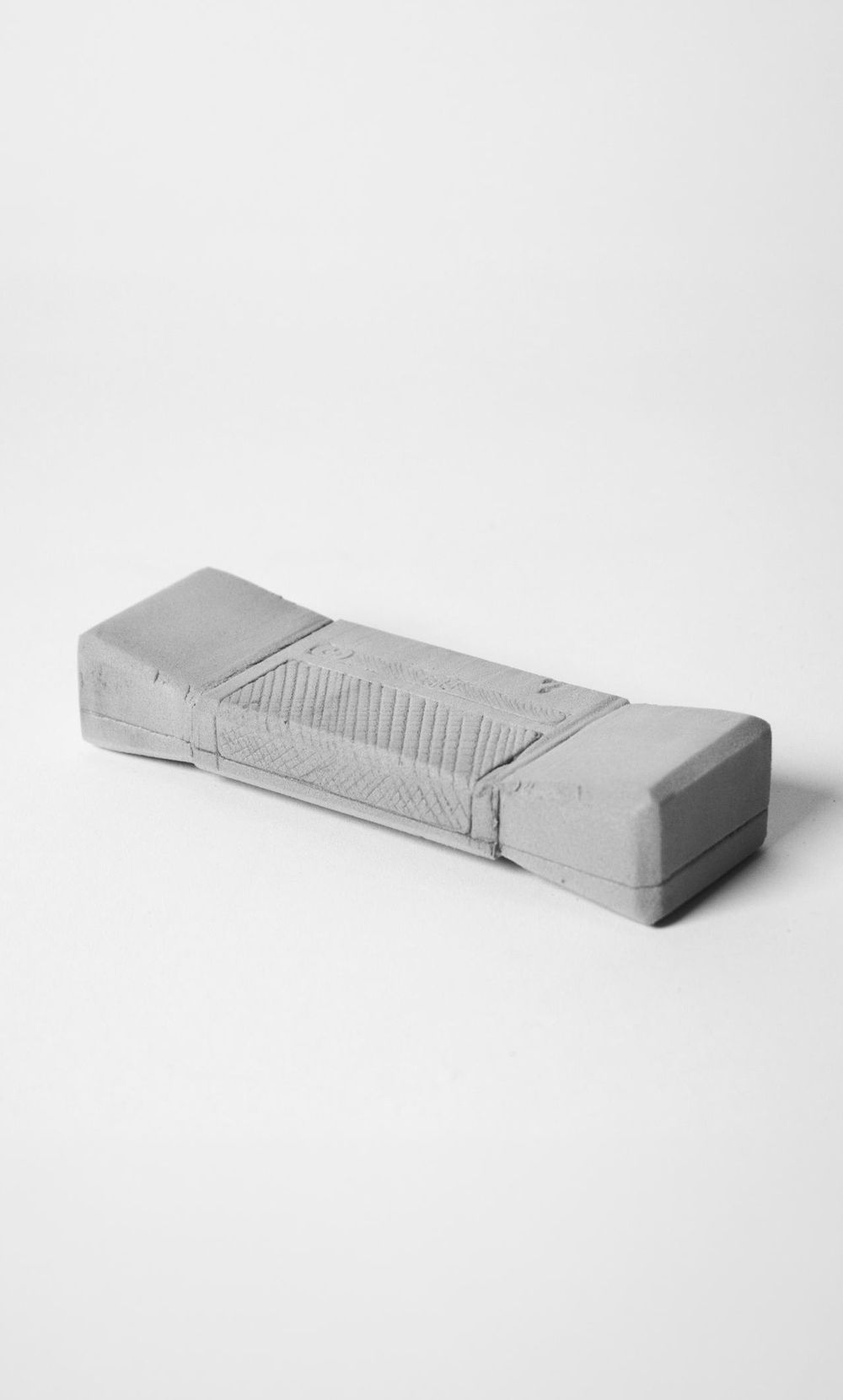
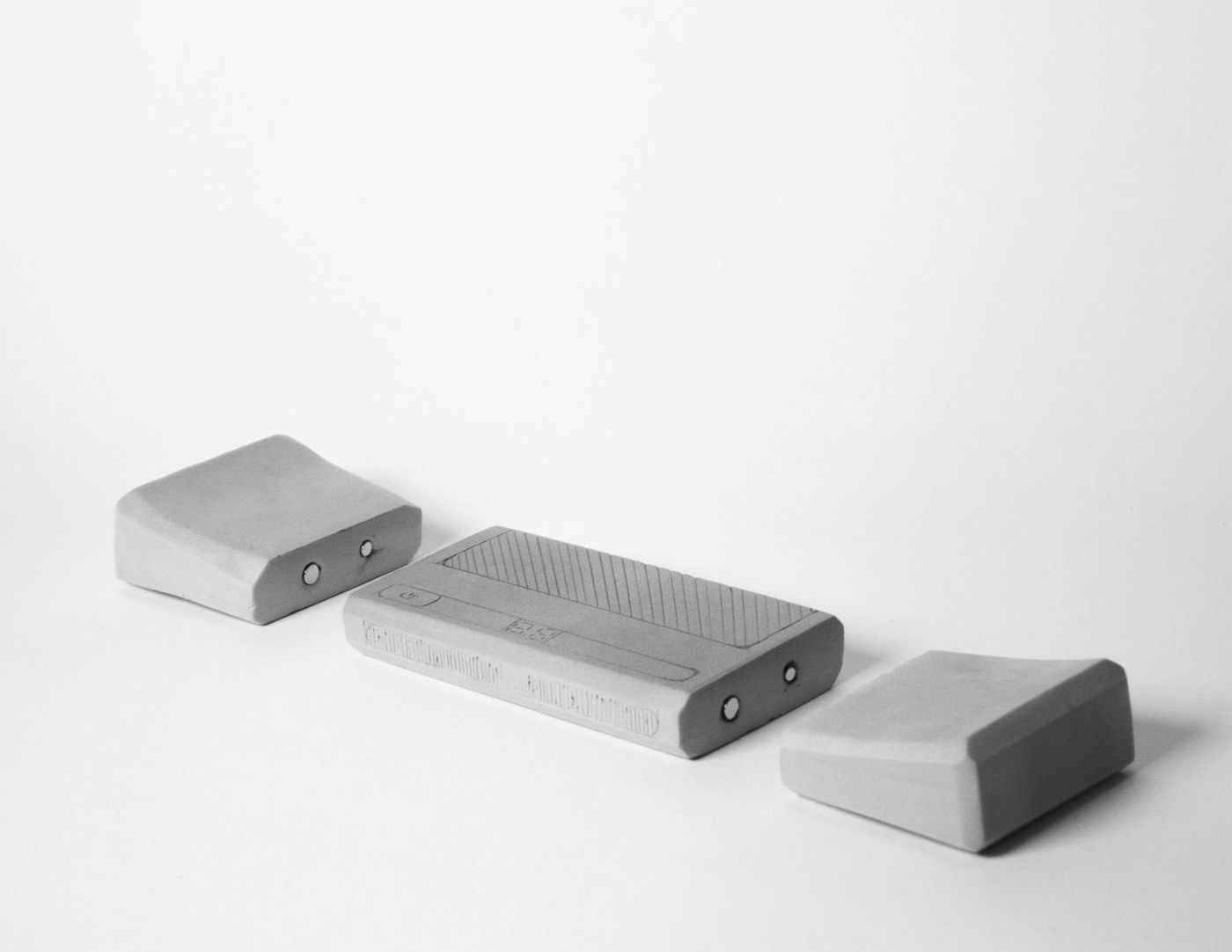
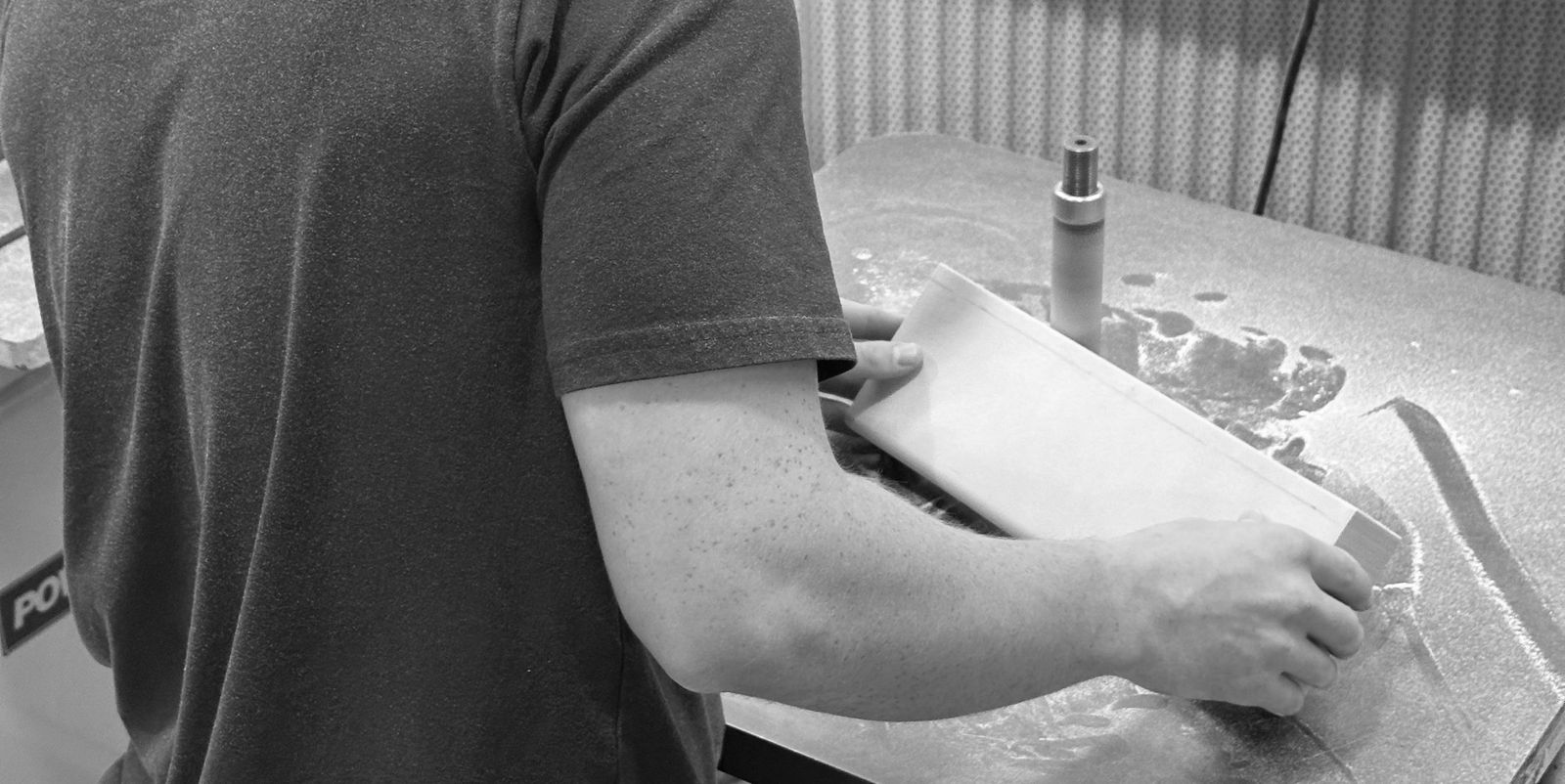
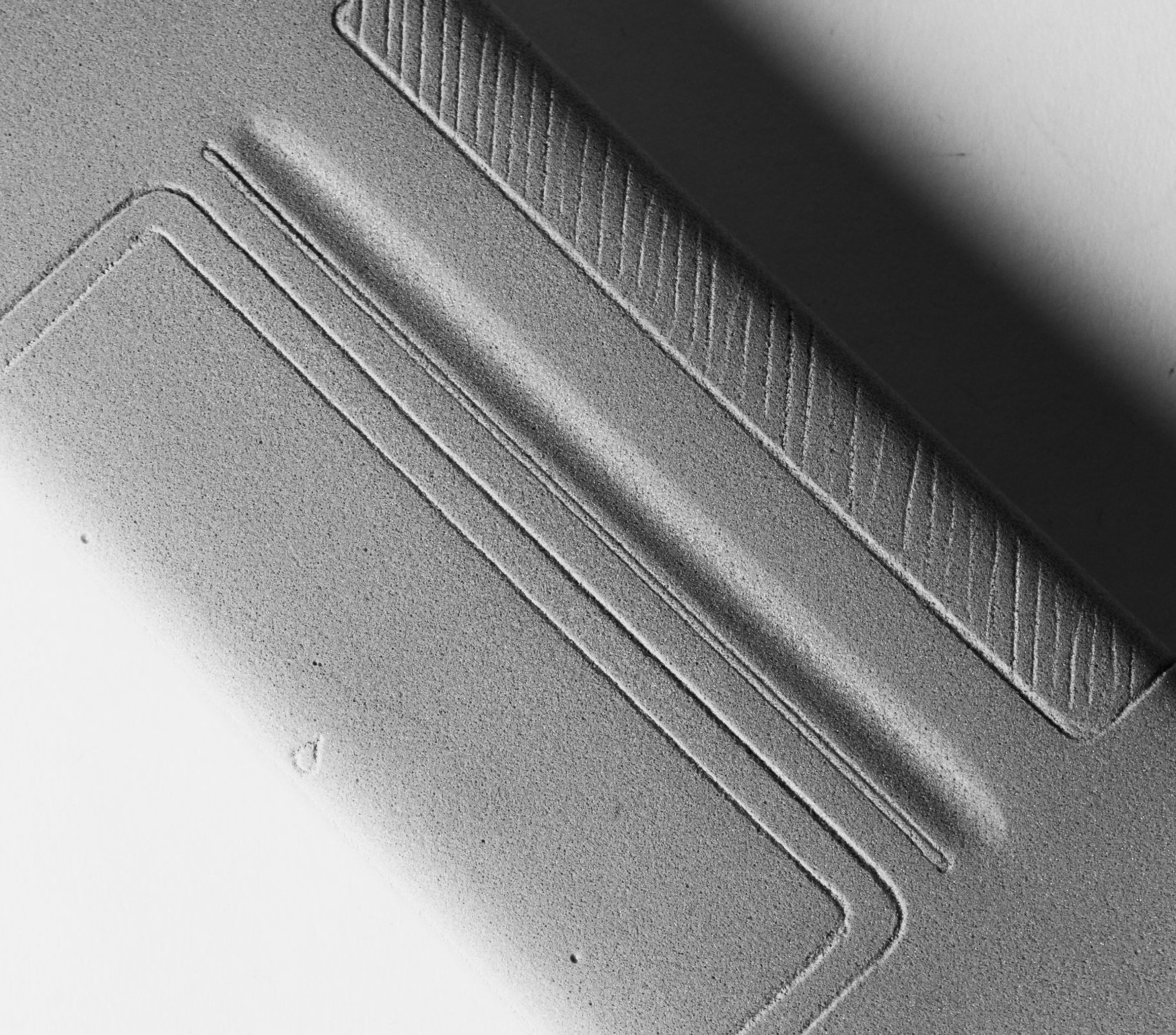
The final model was shaped entirely by hand: band saw, power and hand sanding, and etching tools for fine details.
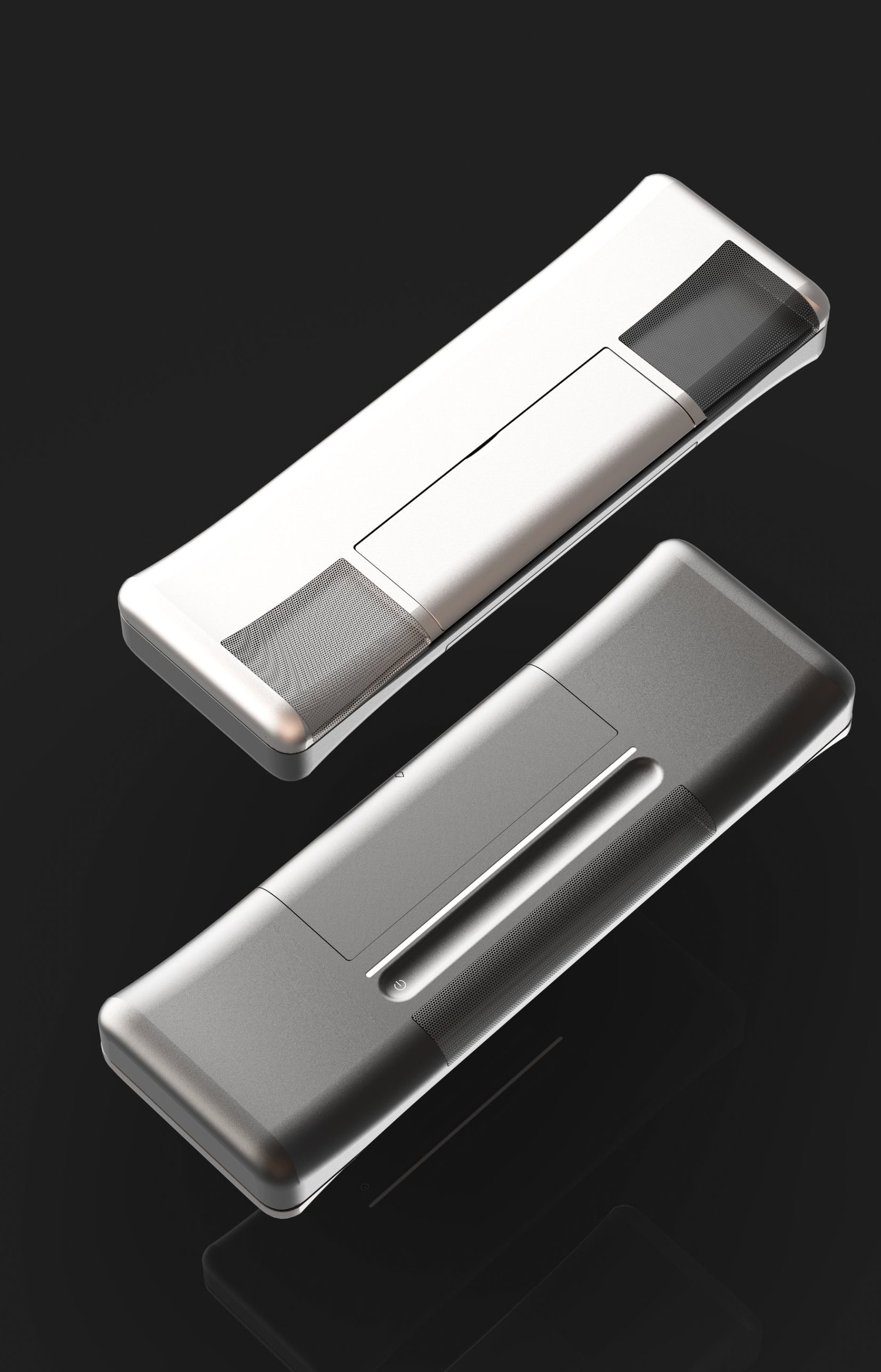
Later, I modeled it in Rhino 8 and rendered it in KeyShot, moving the power button onto the top touch bar.
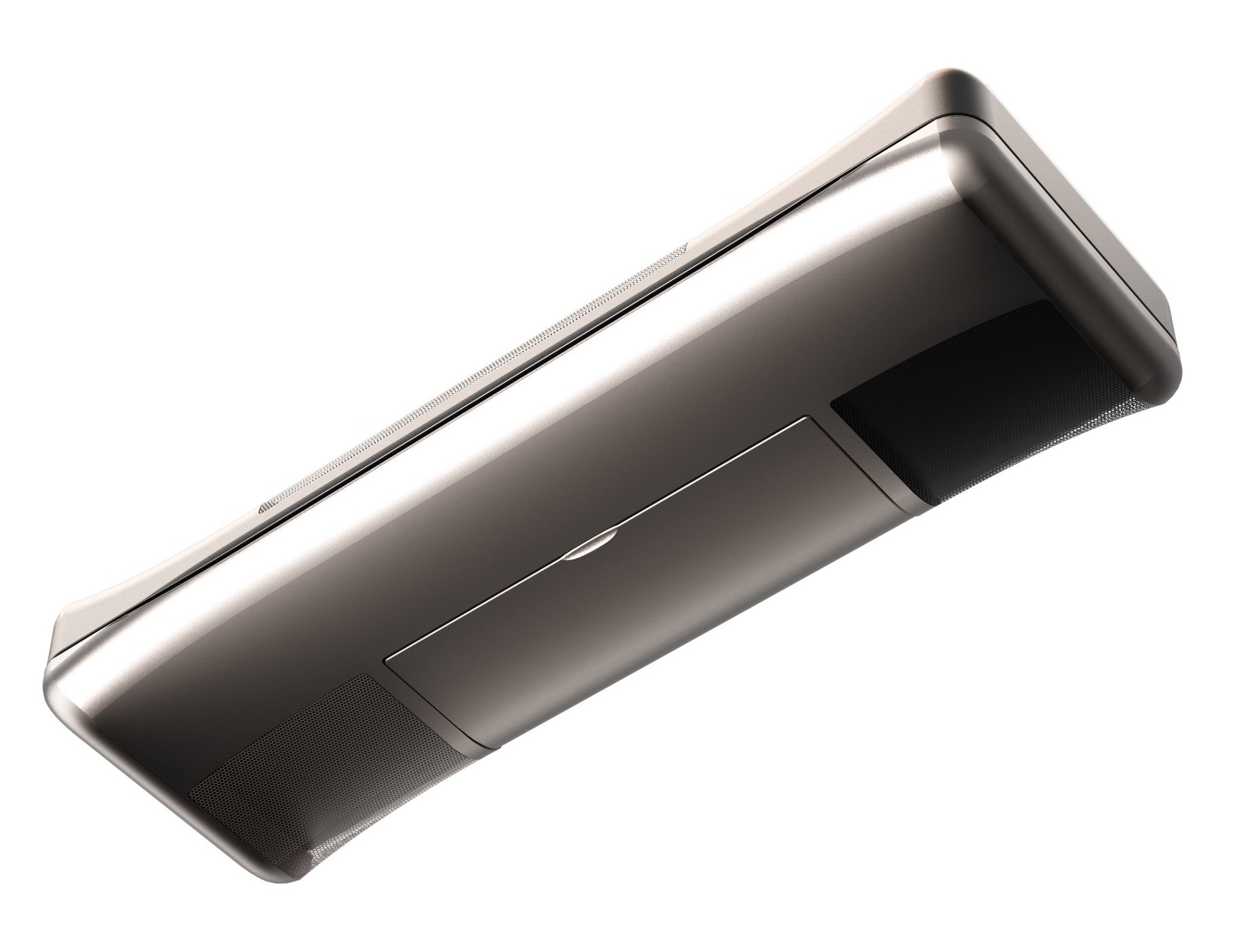
Every material choice served sustainability and a high-quality feel.
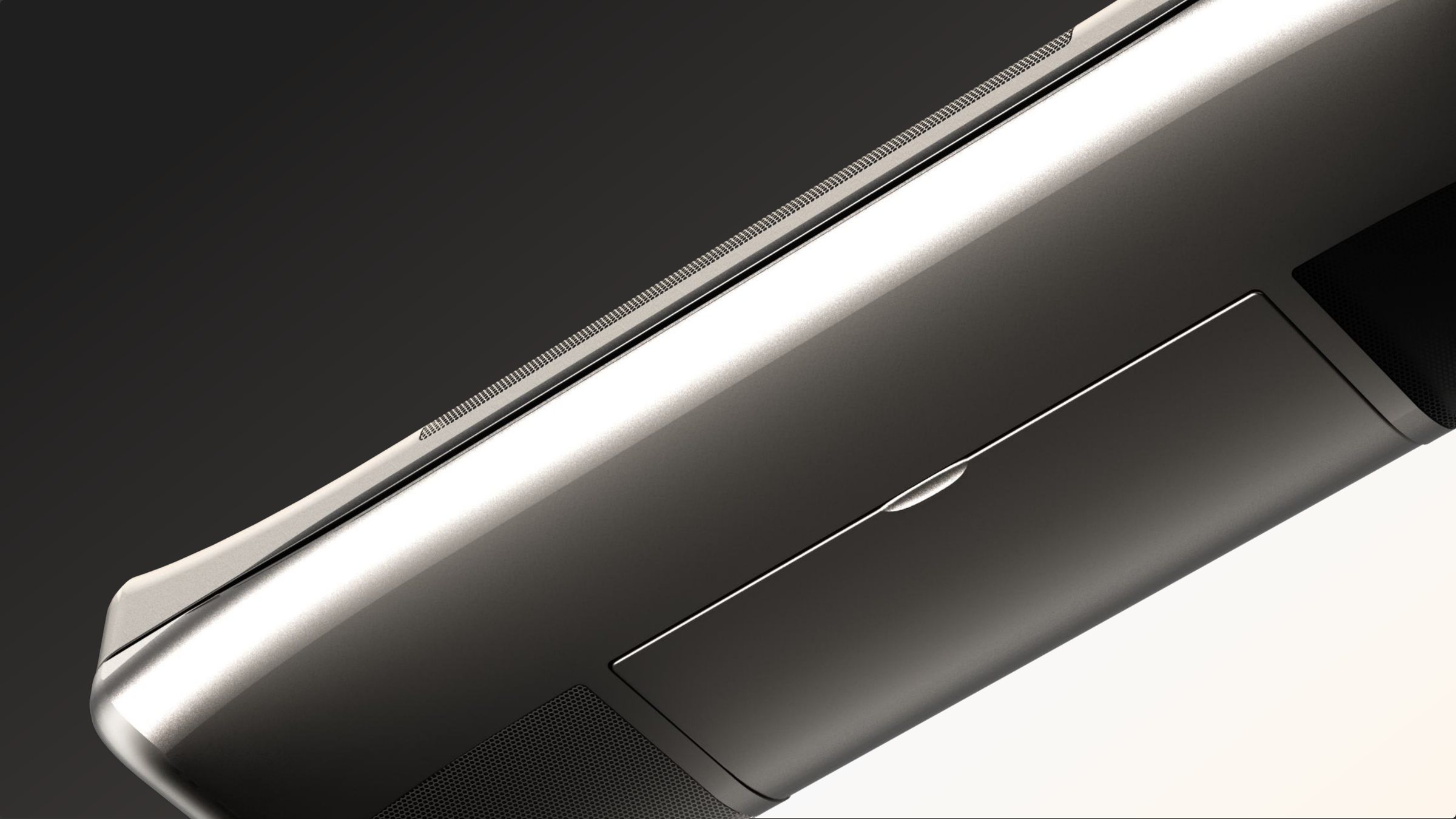
Aluminum
Melts down and recycles fully.
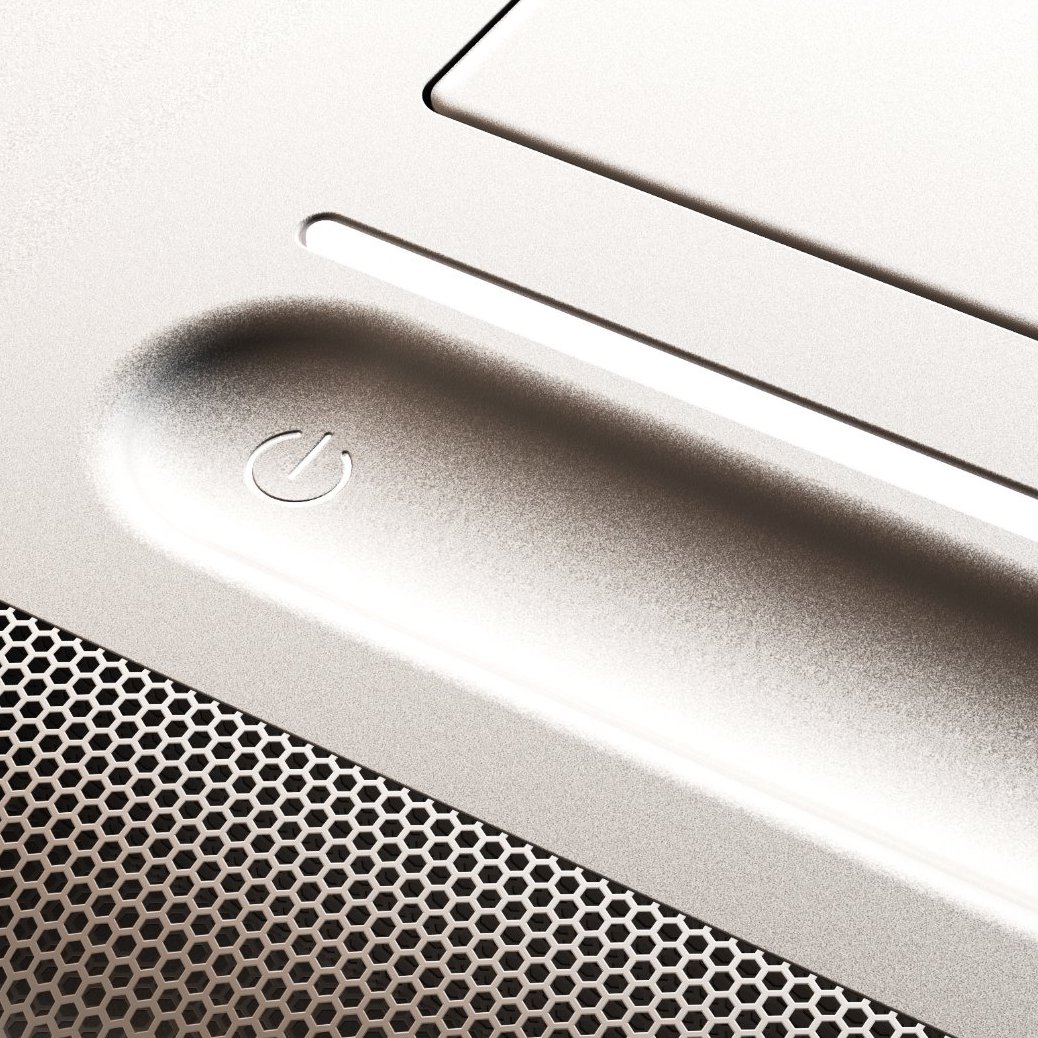
Touch Bar
Soft-touch power and LED slider.
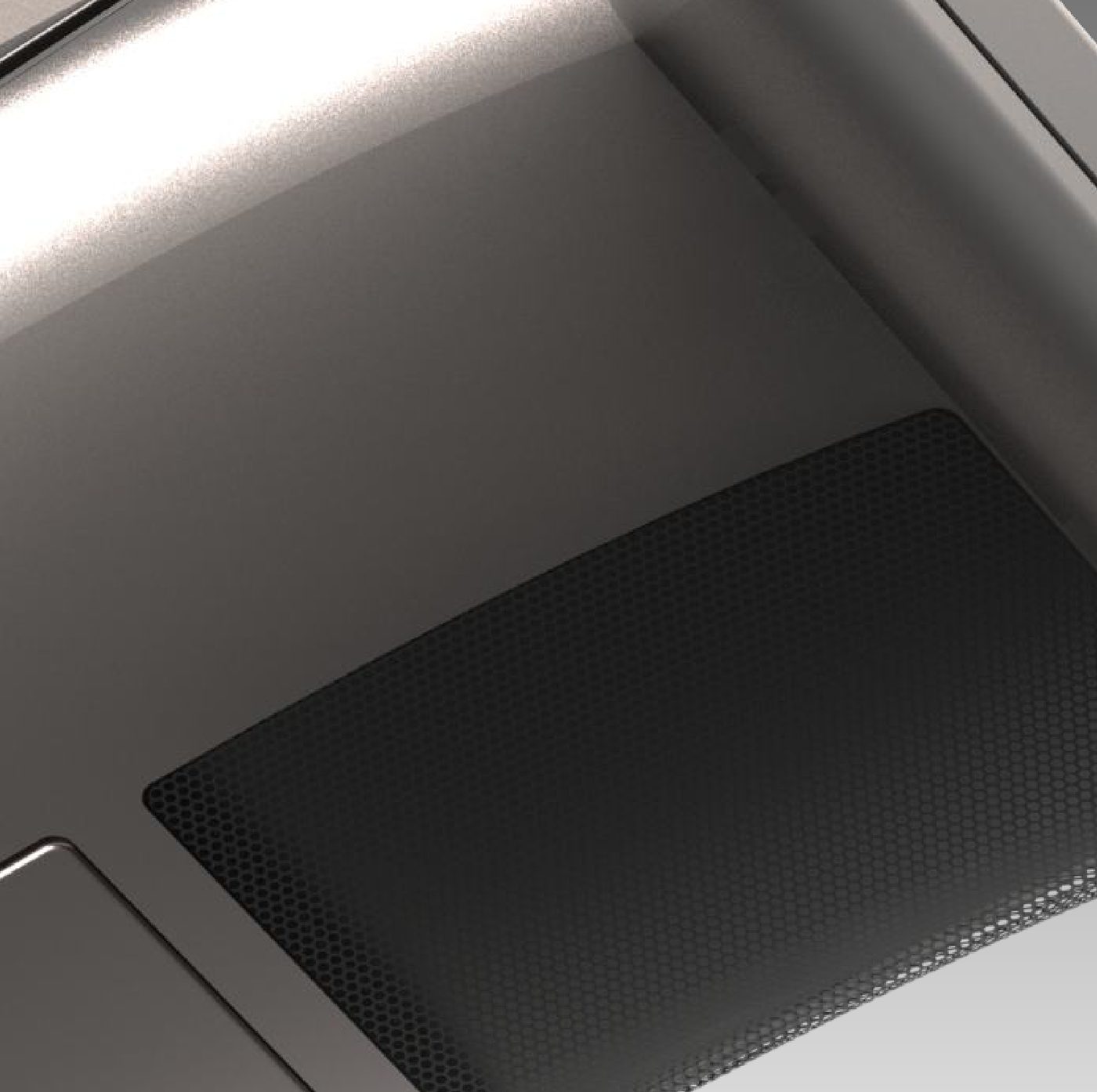
Perforated Mesh
Premium-feel vent and intake.
Simple, done well: don’t overcomplicate a design when a simpler version communicates its goals just as effectively.
NOIR
Residential pizza
oven toolset.
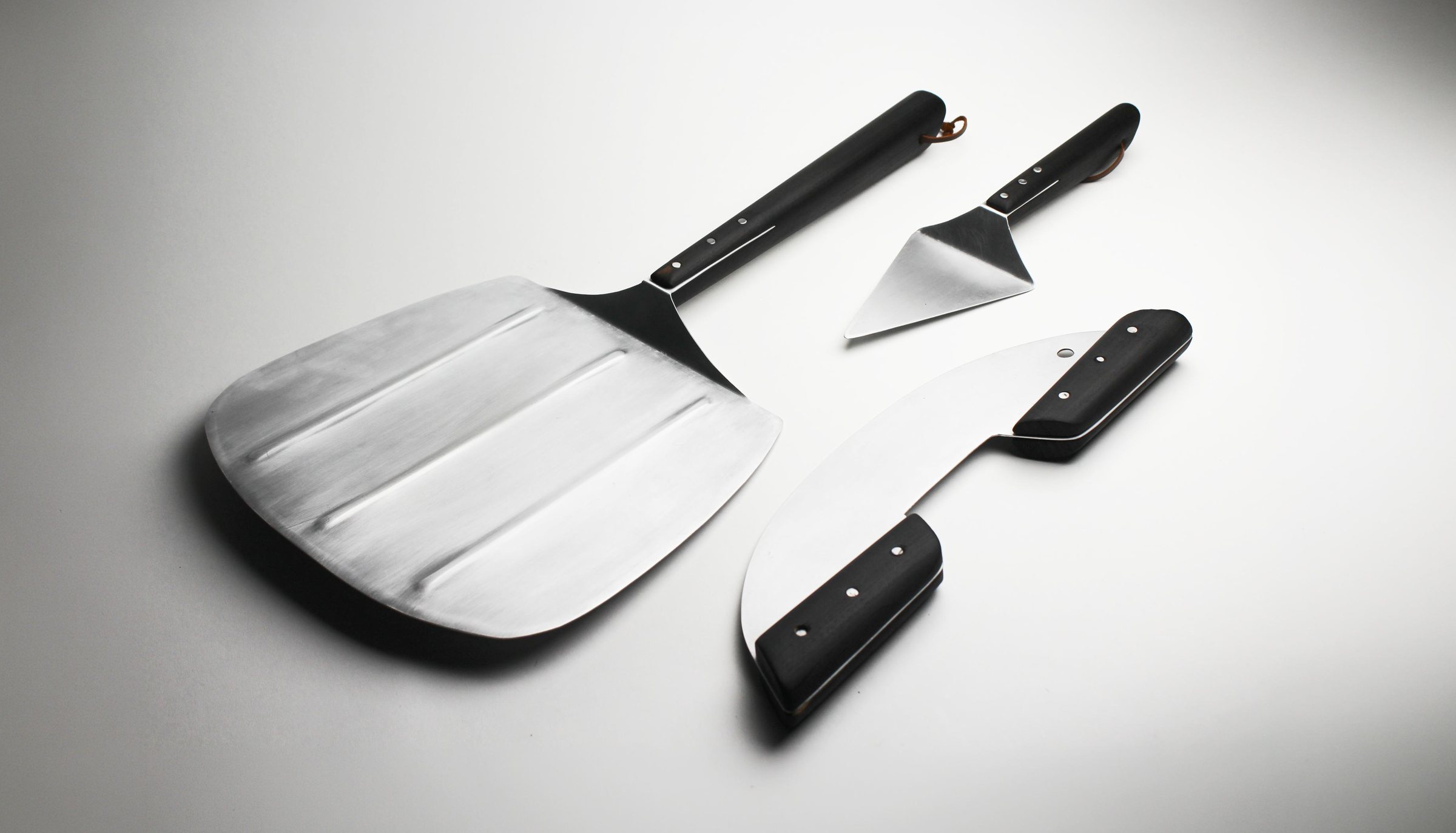
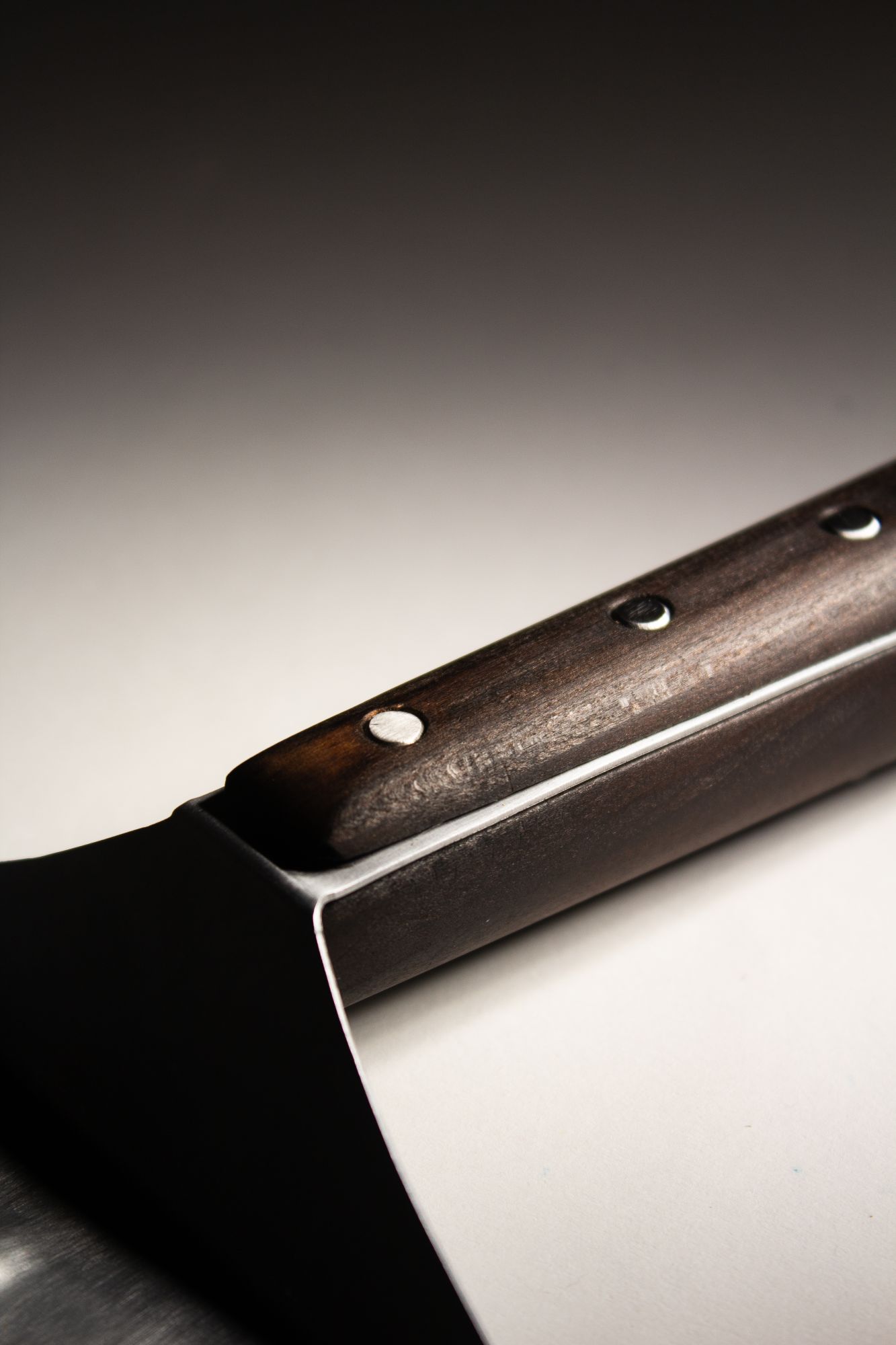
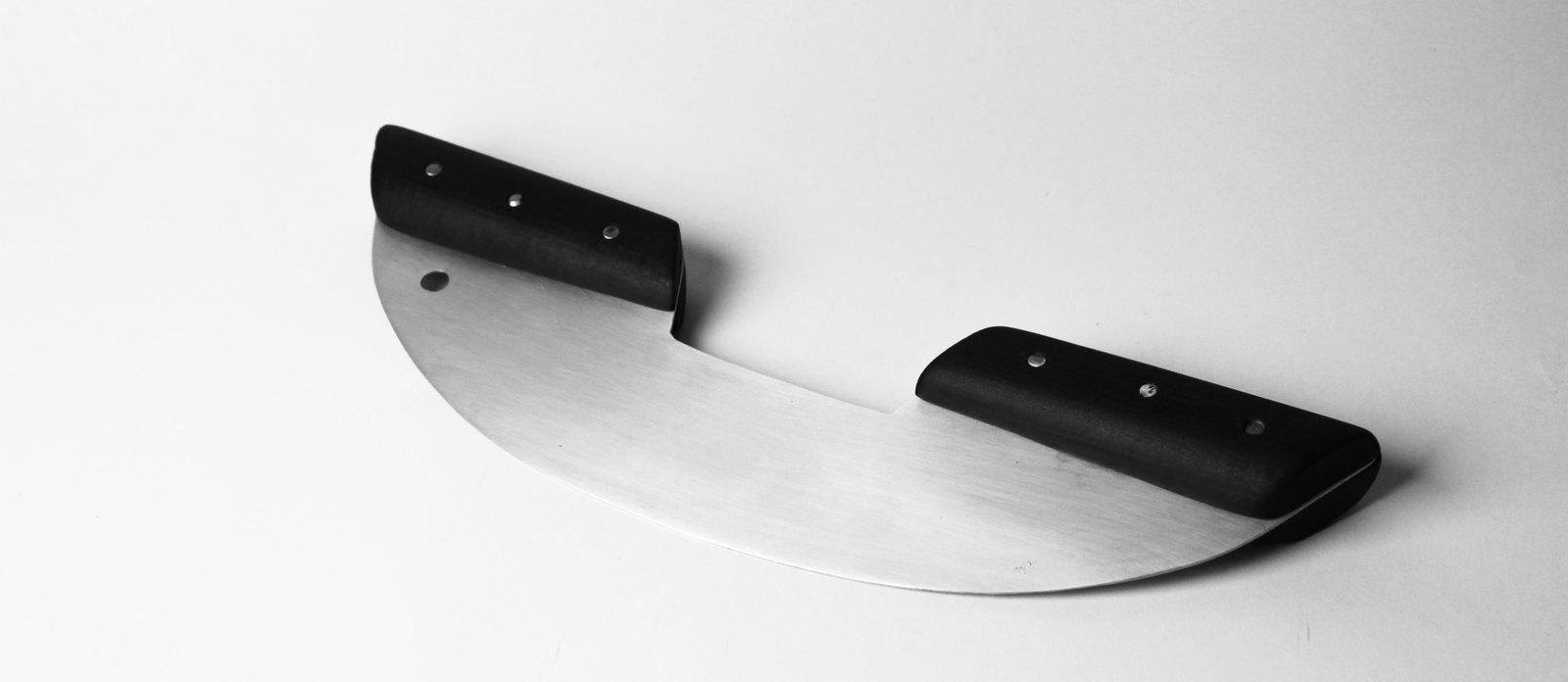
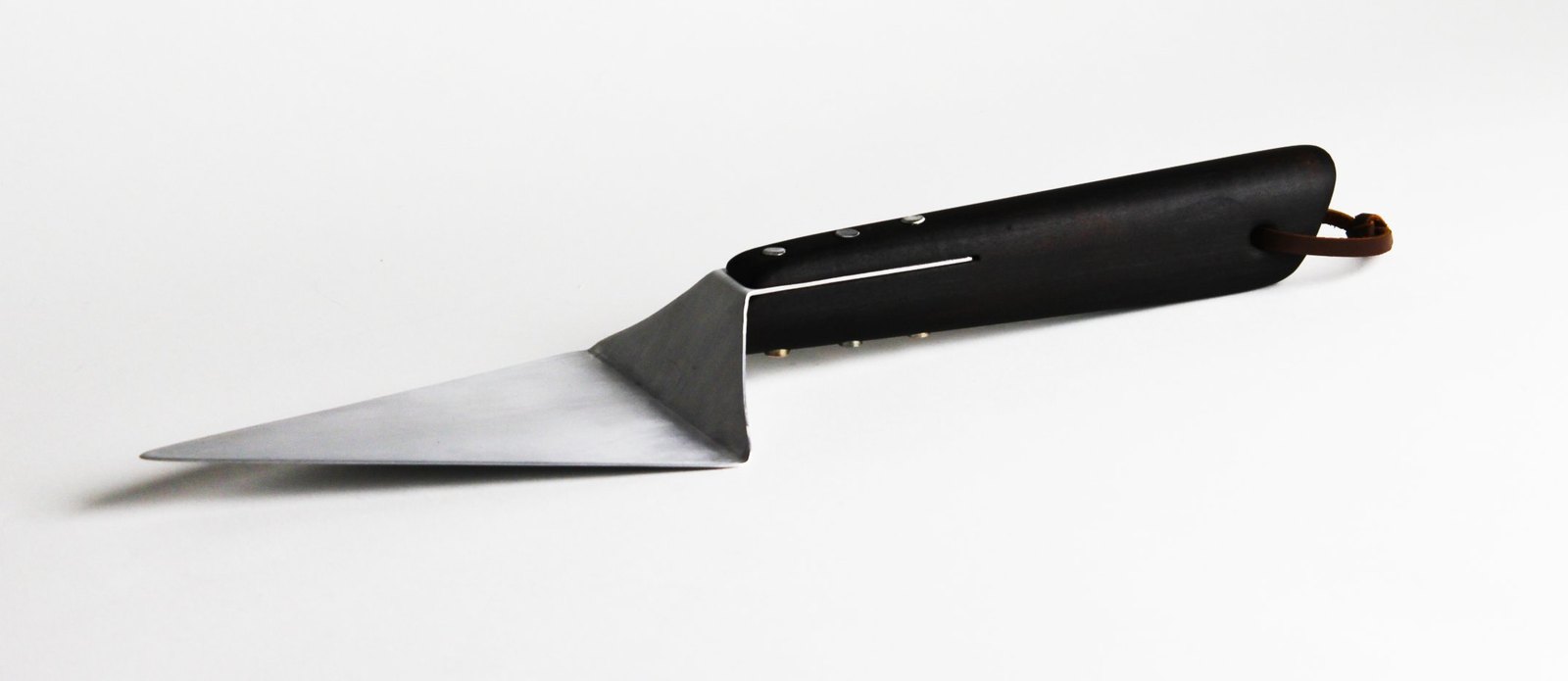
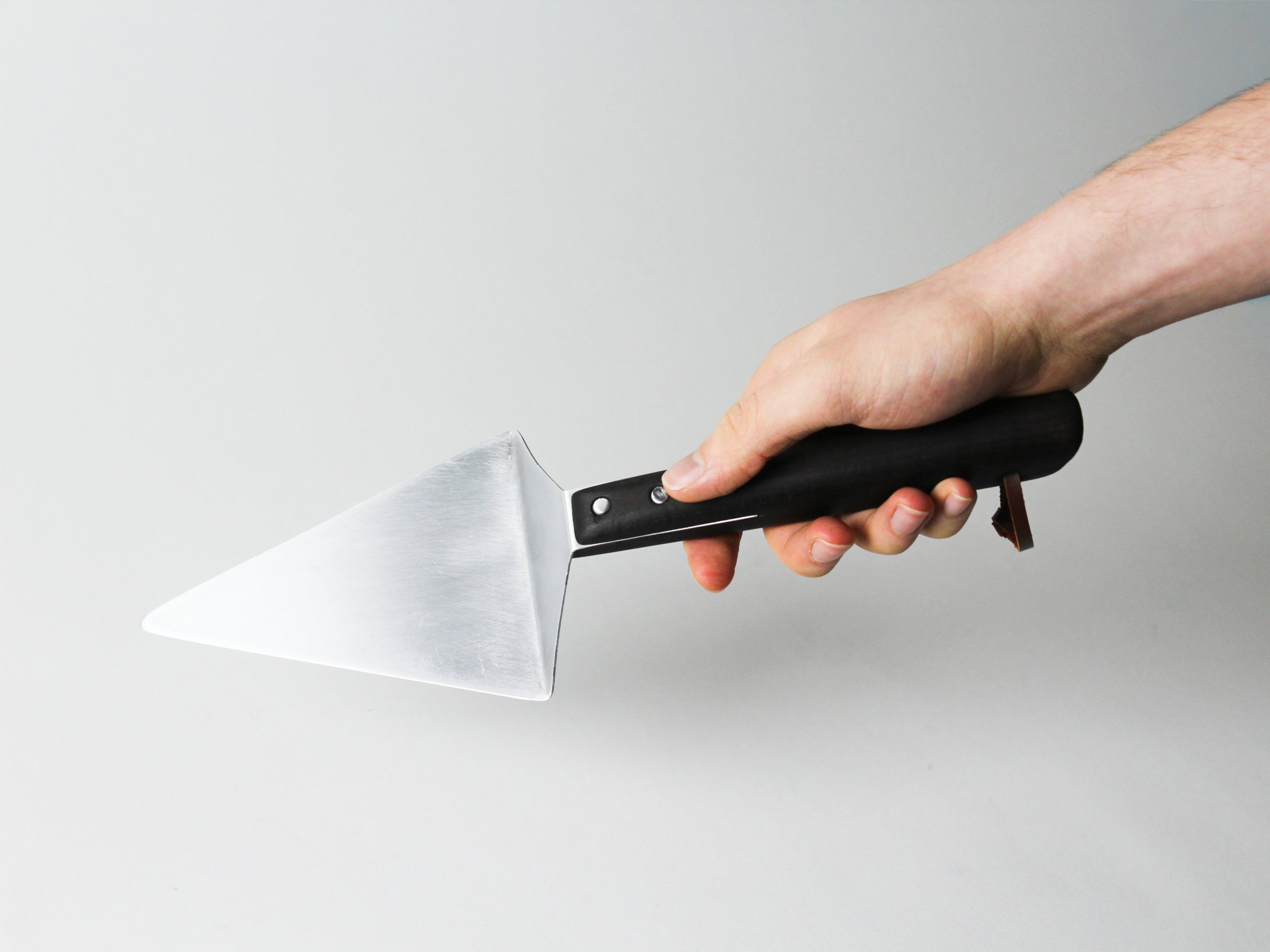
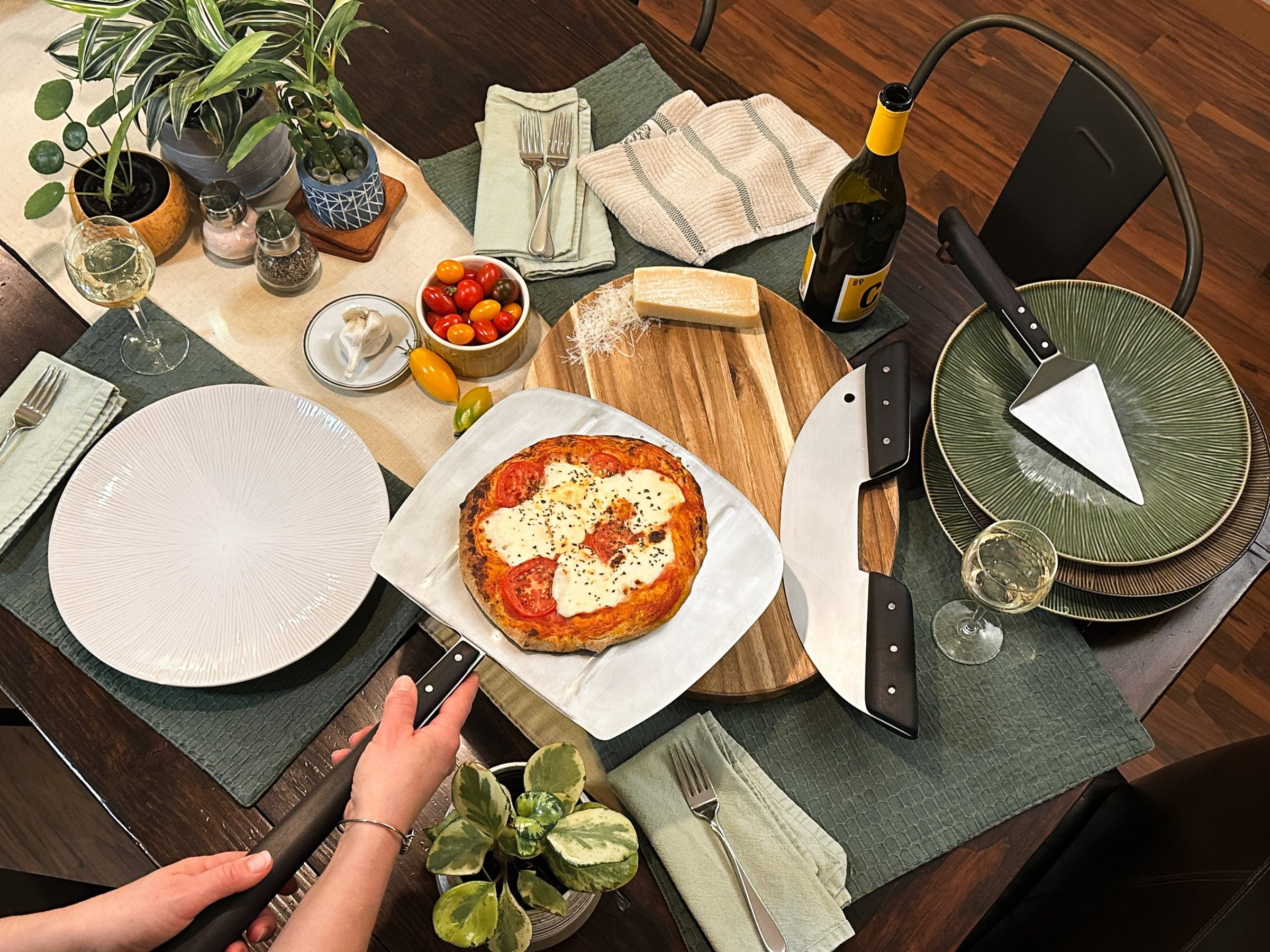
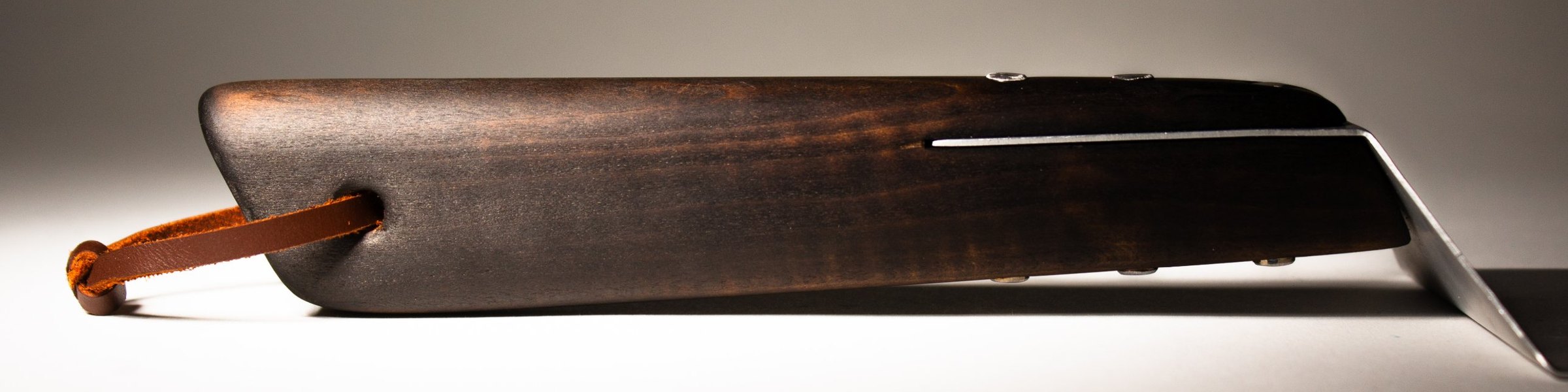
Noir is a three-piece pizza oven toolset with one shared form language, made to last, easy to clean and comfortable in hand.
The brief: design three useful and beautiful hand tools for one task, sharing a cohesive form language, in wood and sheet metal.
We each researched a toolset, chose Blaise’s pizza direction, and narrowed it to a peel, crescent cutter and server.
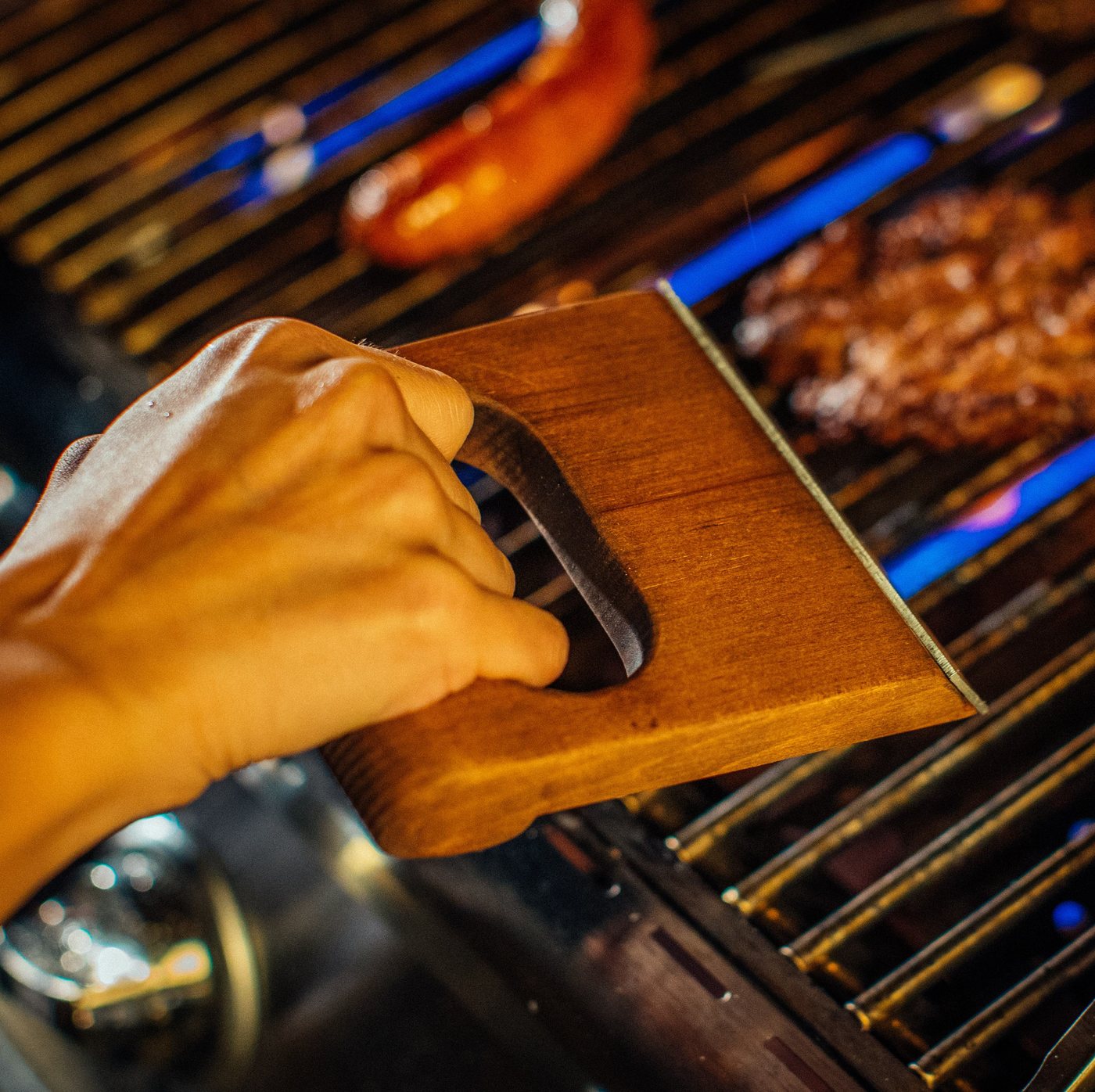
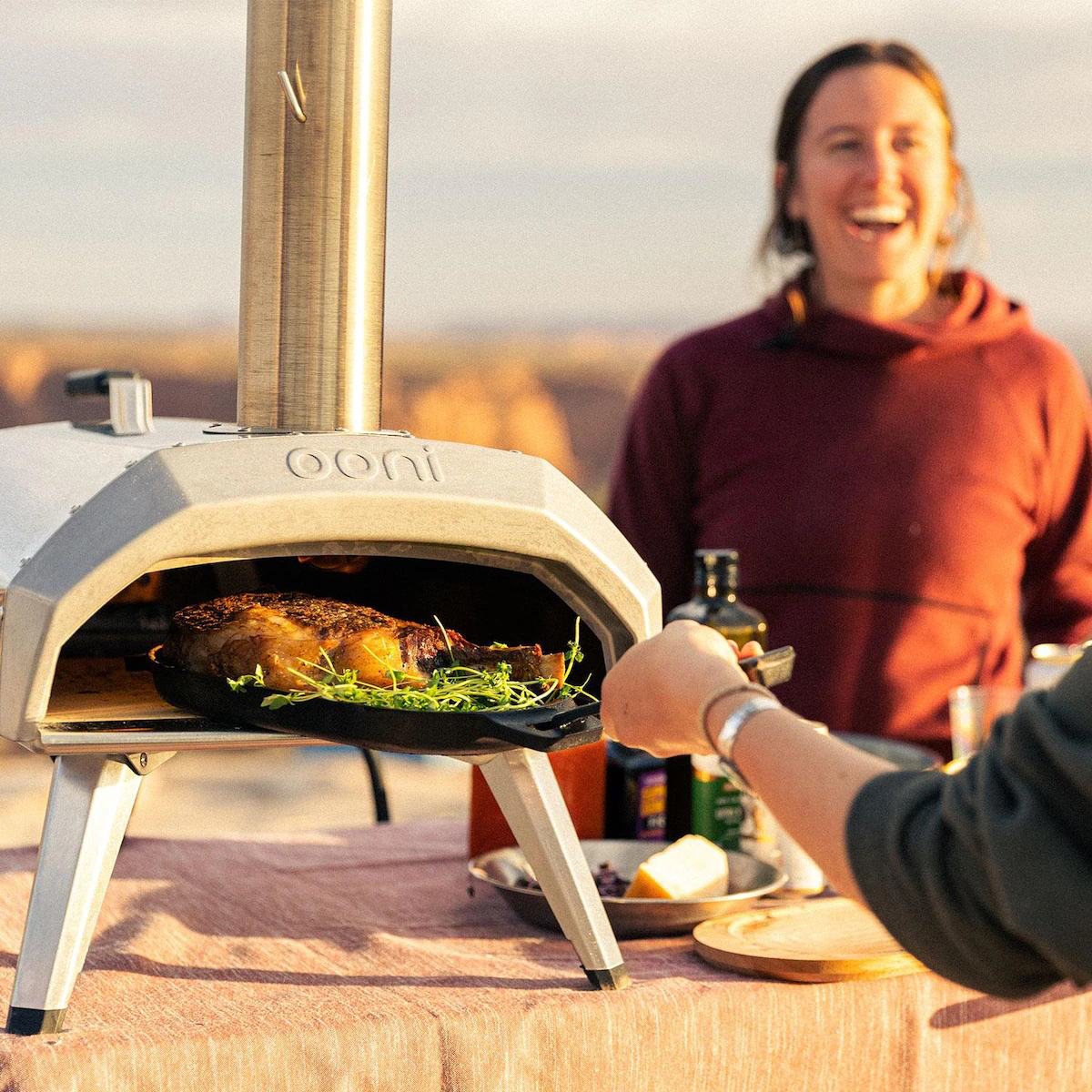
Designed for home chefs making pizza for the parties they host with their home pizza oven.
I interviewed my family, who use an Ooni oven and peel, and a friend with years of commercial experience at MOD Pizza.
Three tools cover the whole job: launch, cut and serve.

Pizza Peel
Loads, turns and retrieves pizzas.

Crescent Cutter
Breaks through a tough crust.

Pizza Server
Pulls apart and serves slices.
Existing tools have weak handles, no shared form language and are hard to clean.
Commercial cooks even bend their peels to a different angle than they ship with.
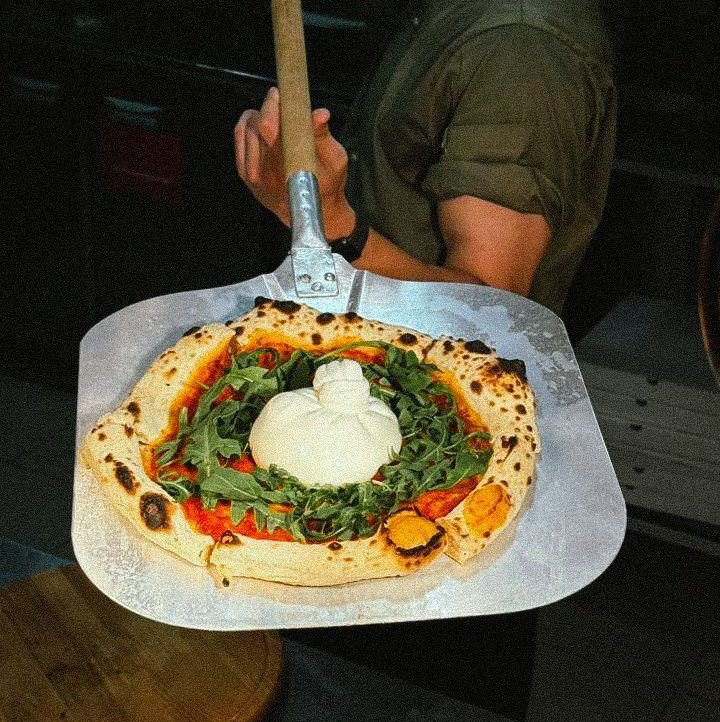
Bad Handles
Uncomfortable, cheap, fall apart.
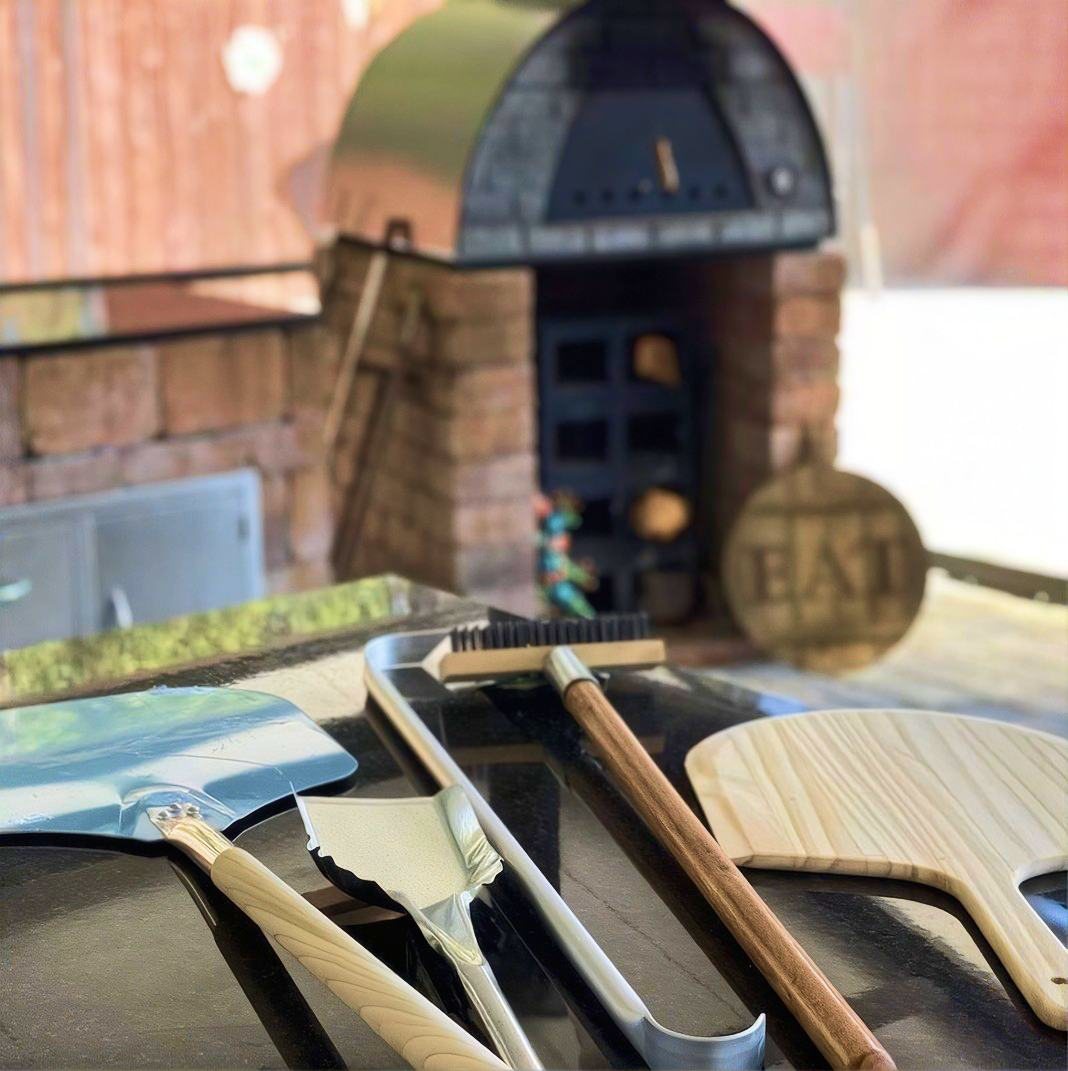
No Brand Language
Mismatched, inconsistent forms.
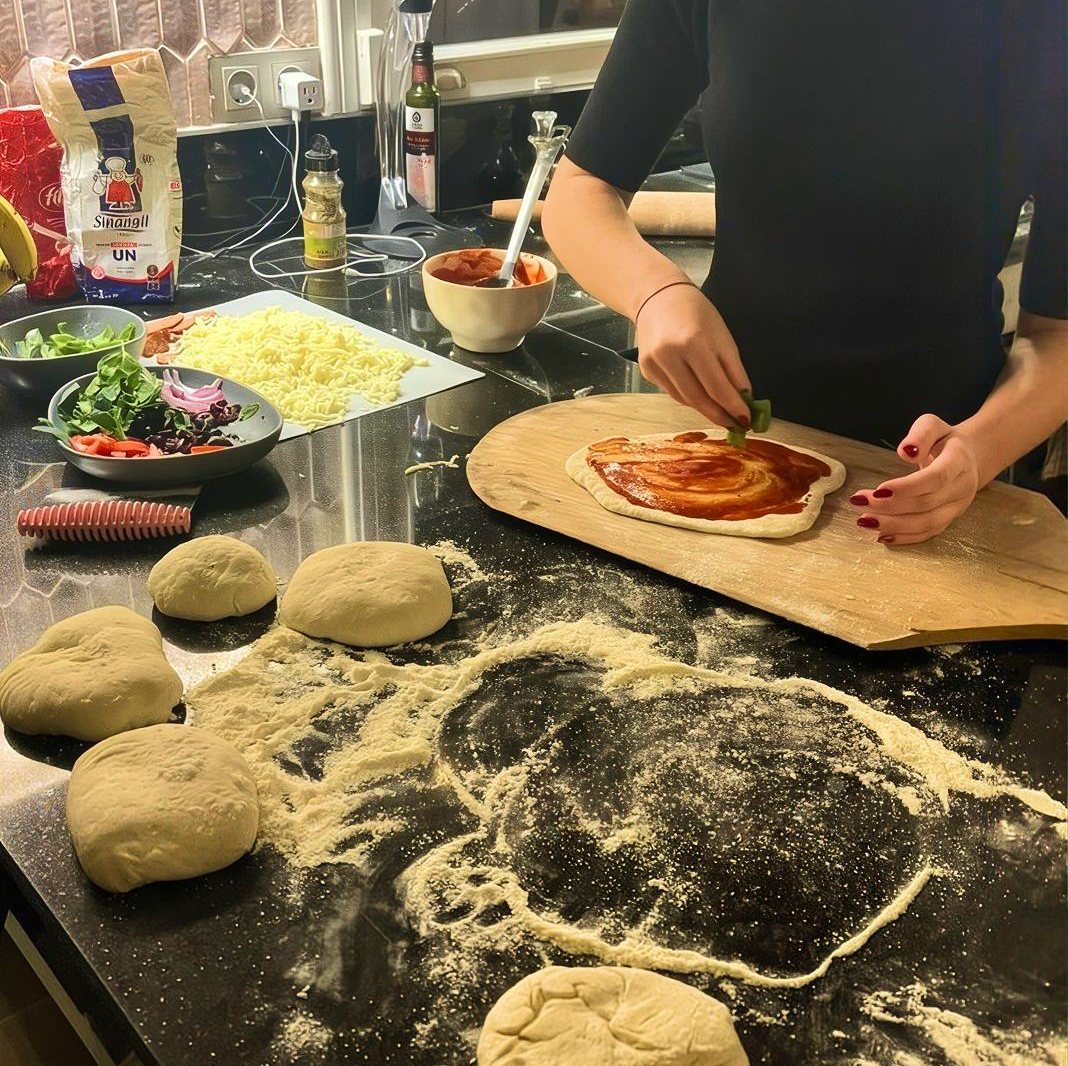
Hard to Clean
Perforated peels trap gunk.
“How might we design durable, long-lasting tools that simplify cleaning and upkeep for the user, maintain a consistent brand language, and provide a quality, ergonomic, in-hand feel?”
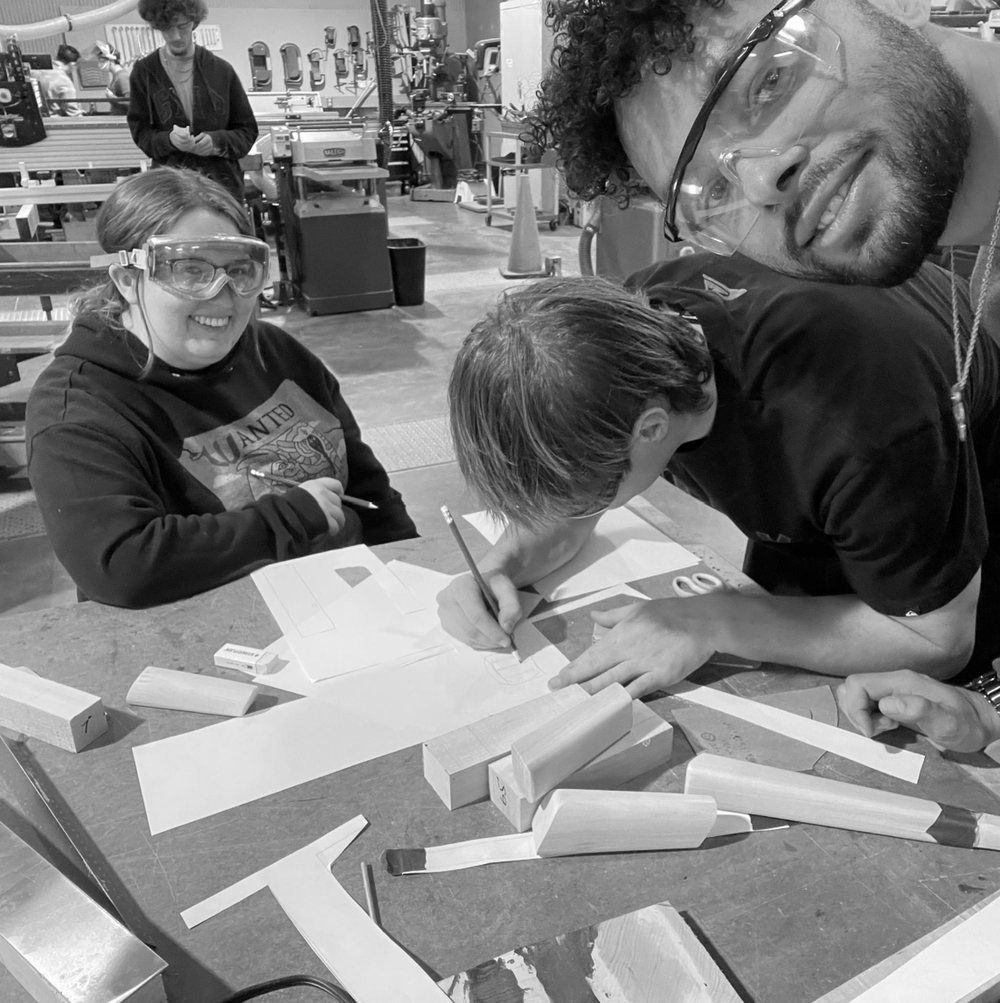
We each explored one tool (I focused on the pizza peel), then pulled the best details from all three concepts to keep the set cohesive.
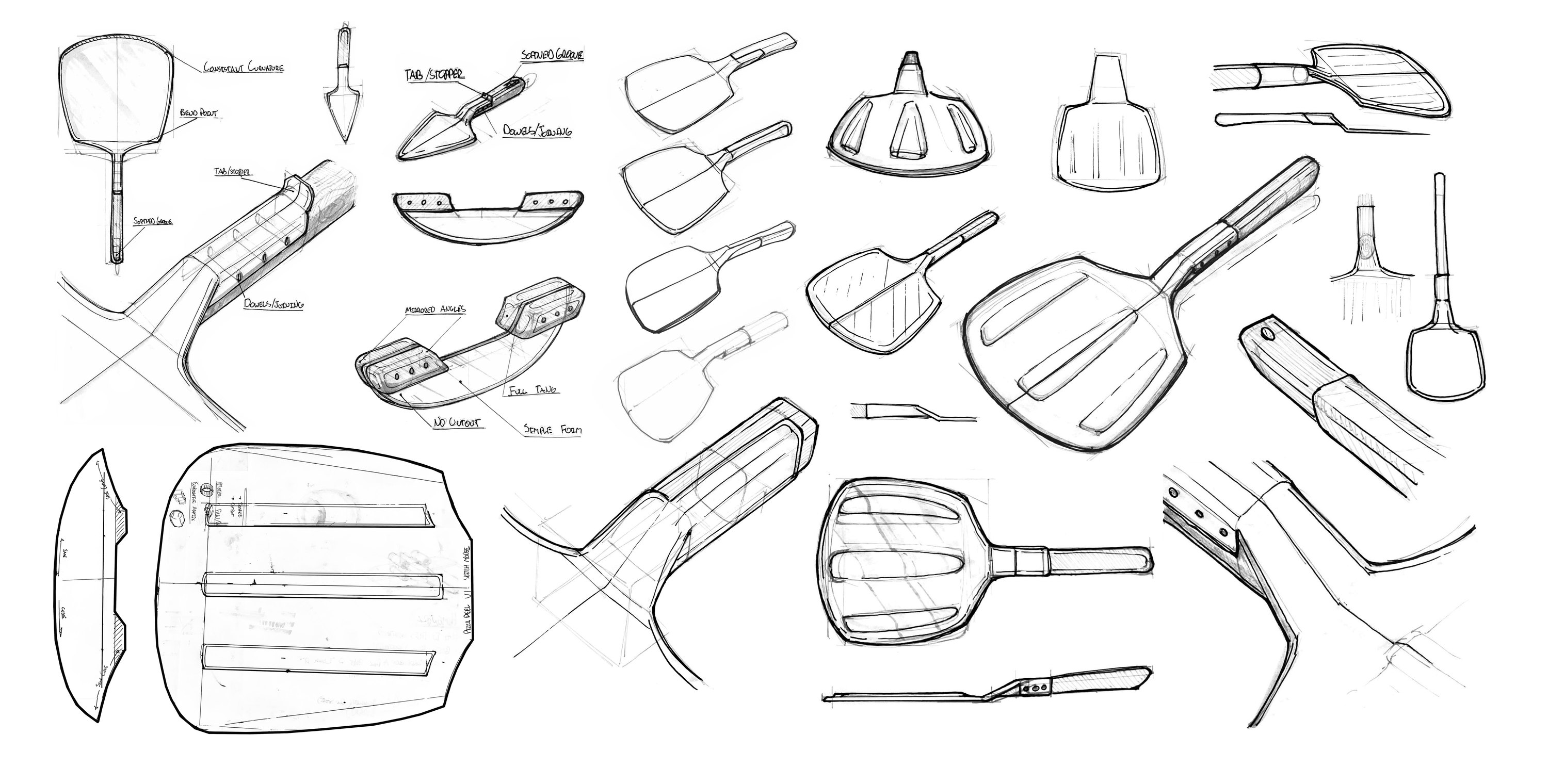
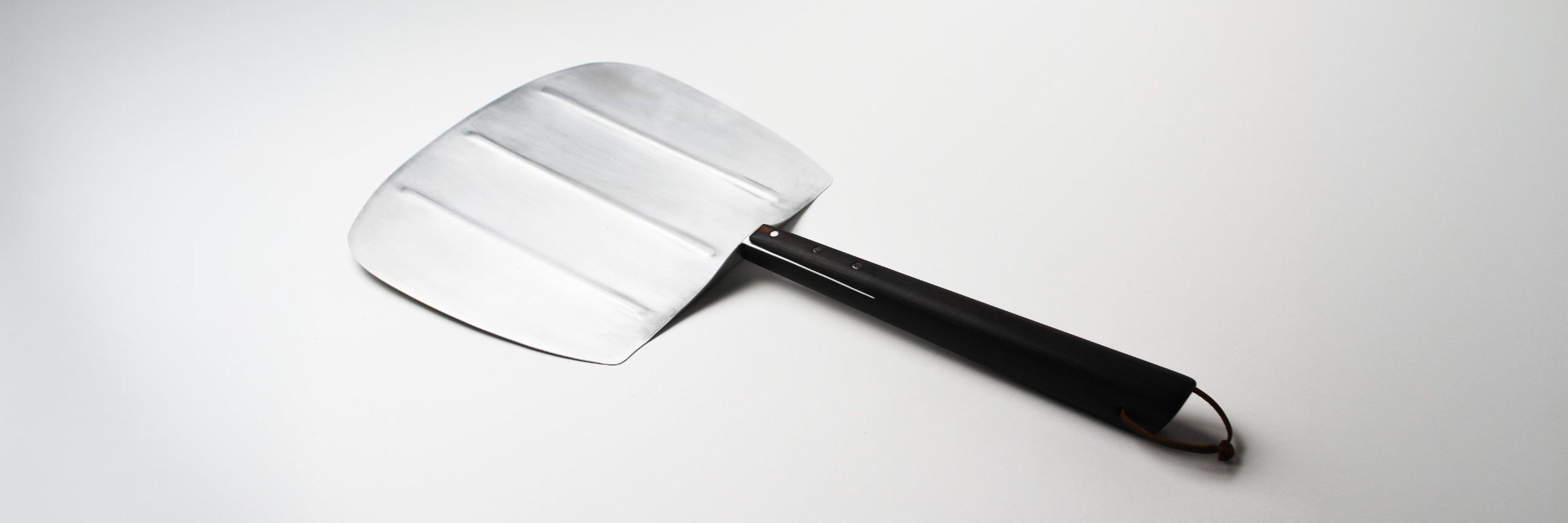
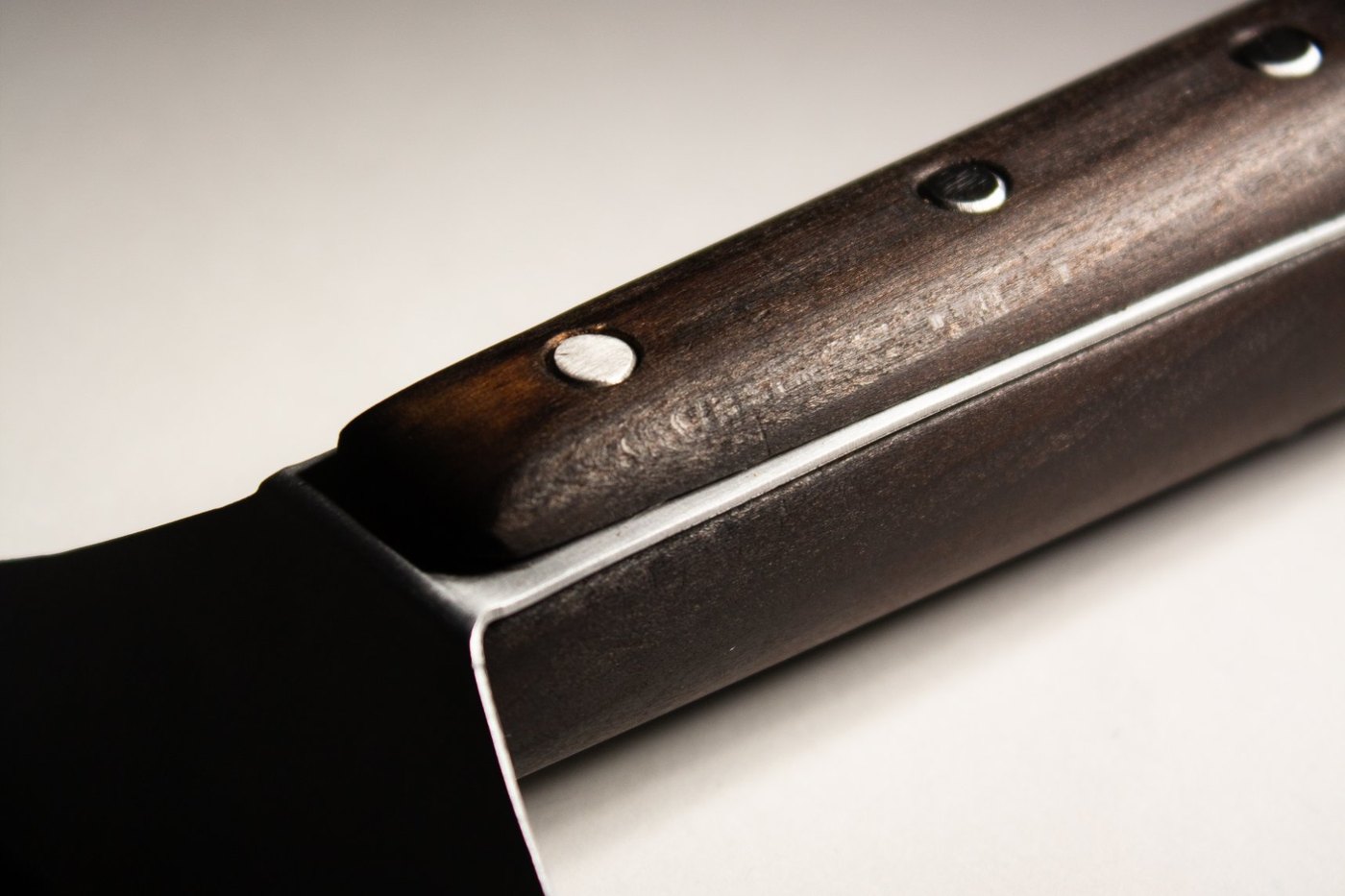
Bead-rolled ridges lift the pizza like perforations but wipe clean, and a metal tang that slots into the wood simplifies manufacturing.
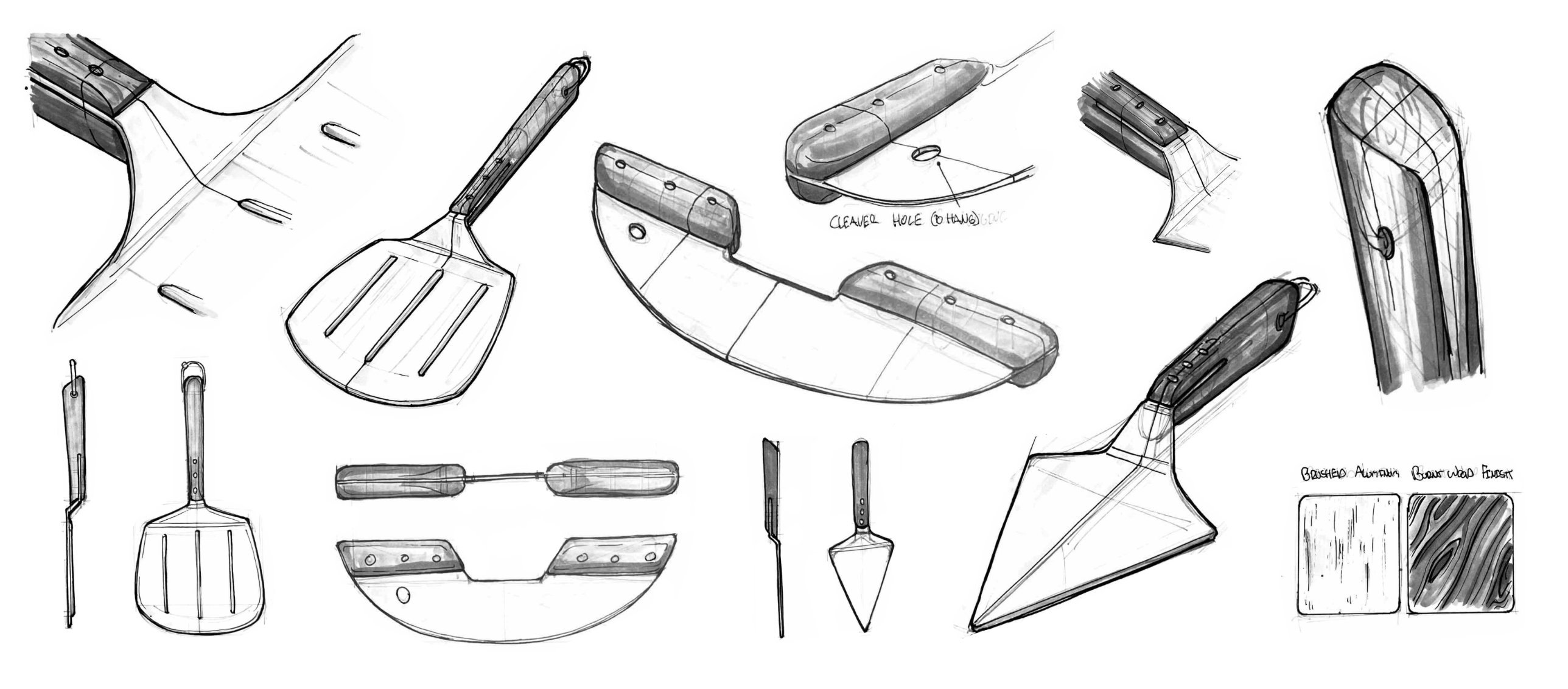
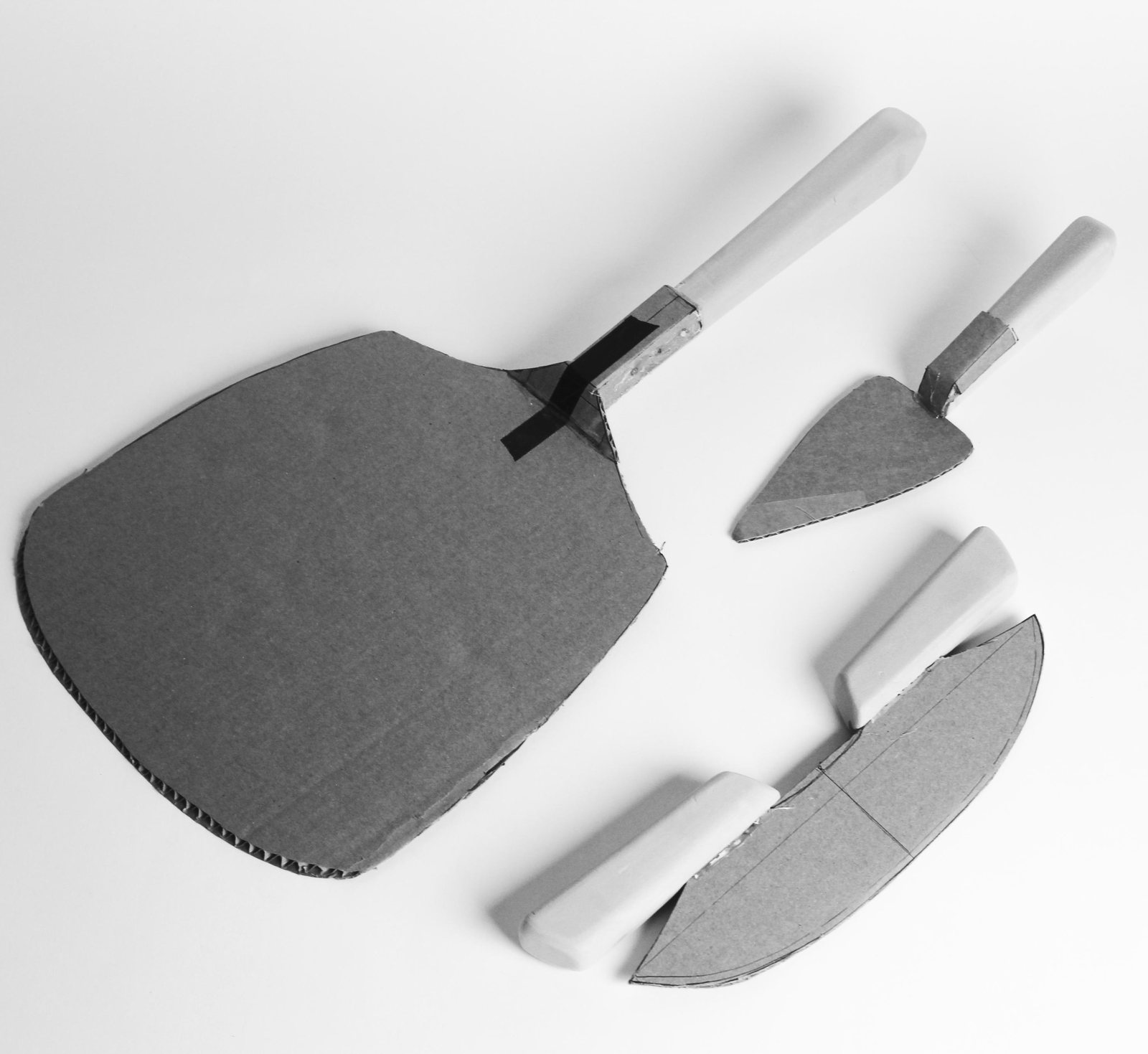
Cardboard and handle studies tested ambidextrous, multi-directional grips, with our team and other groups.
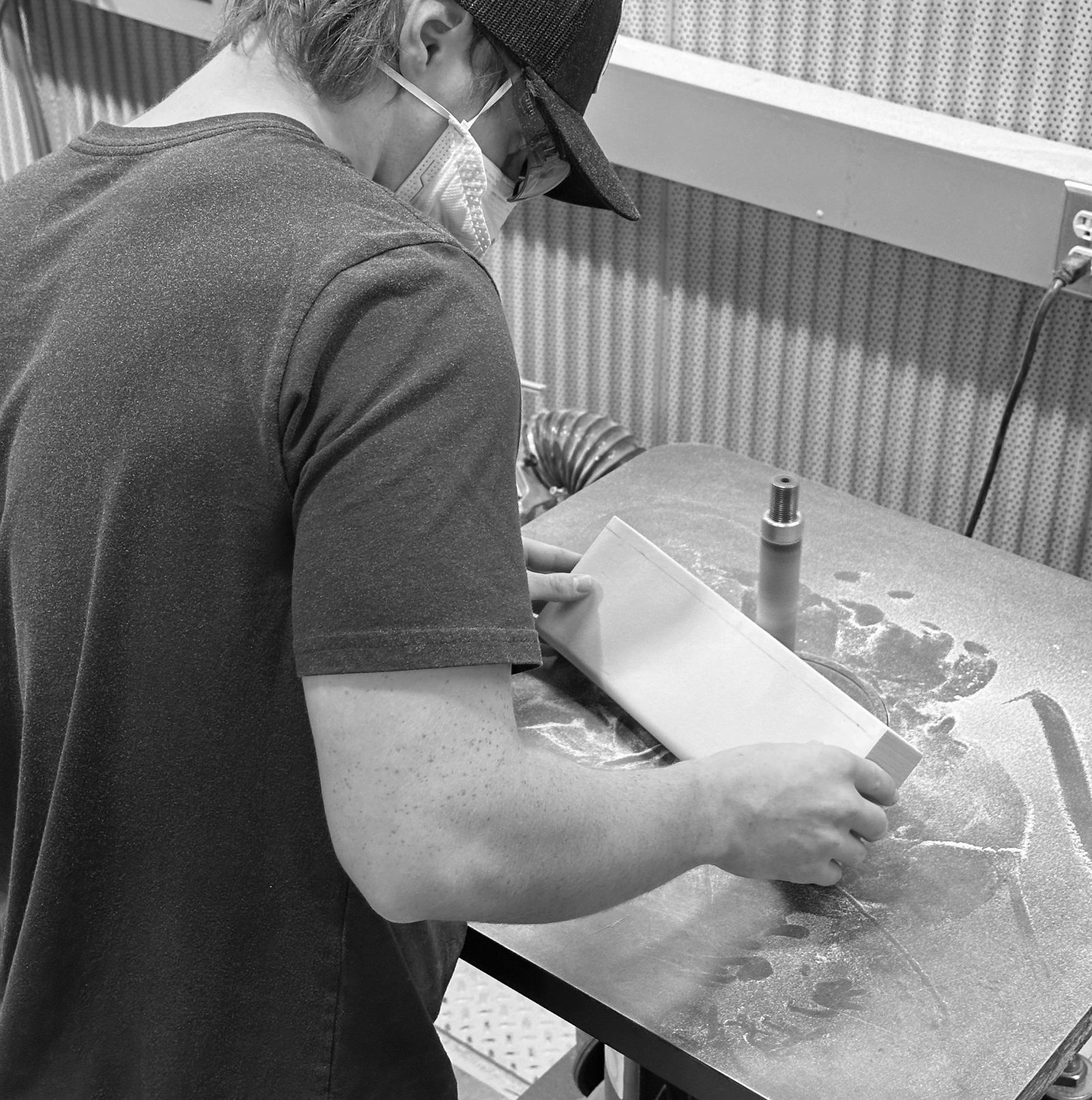
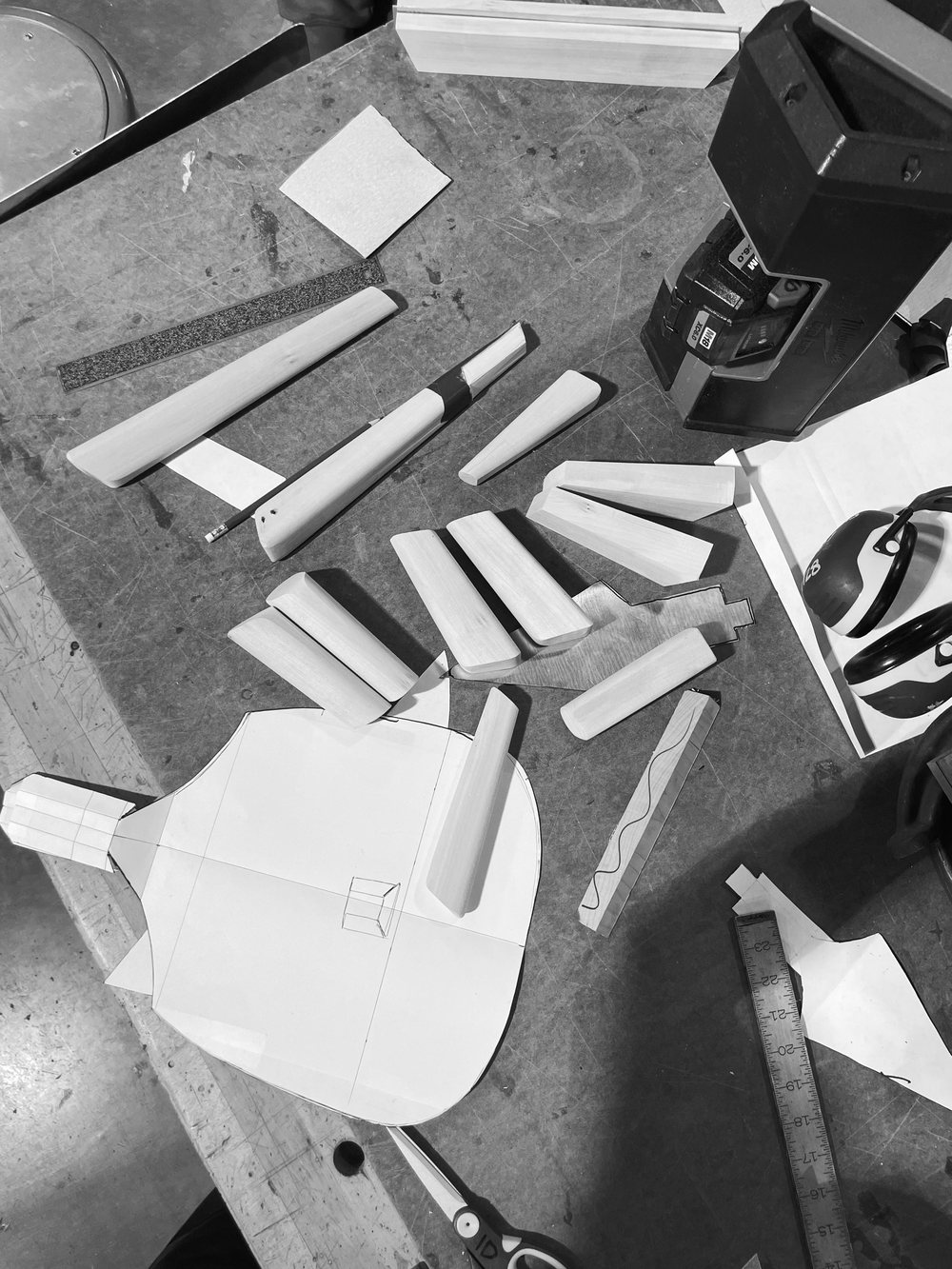
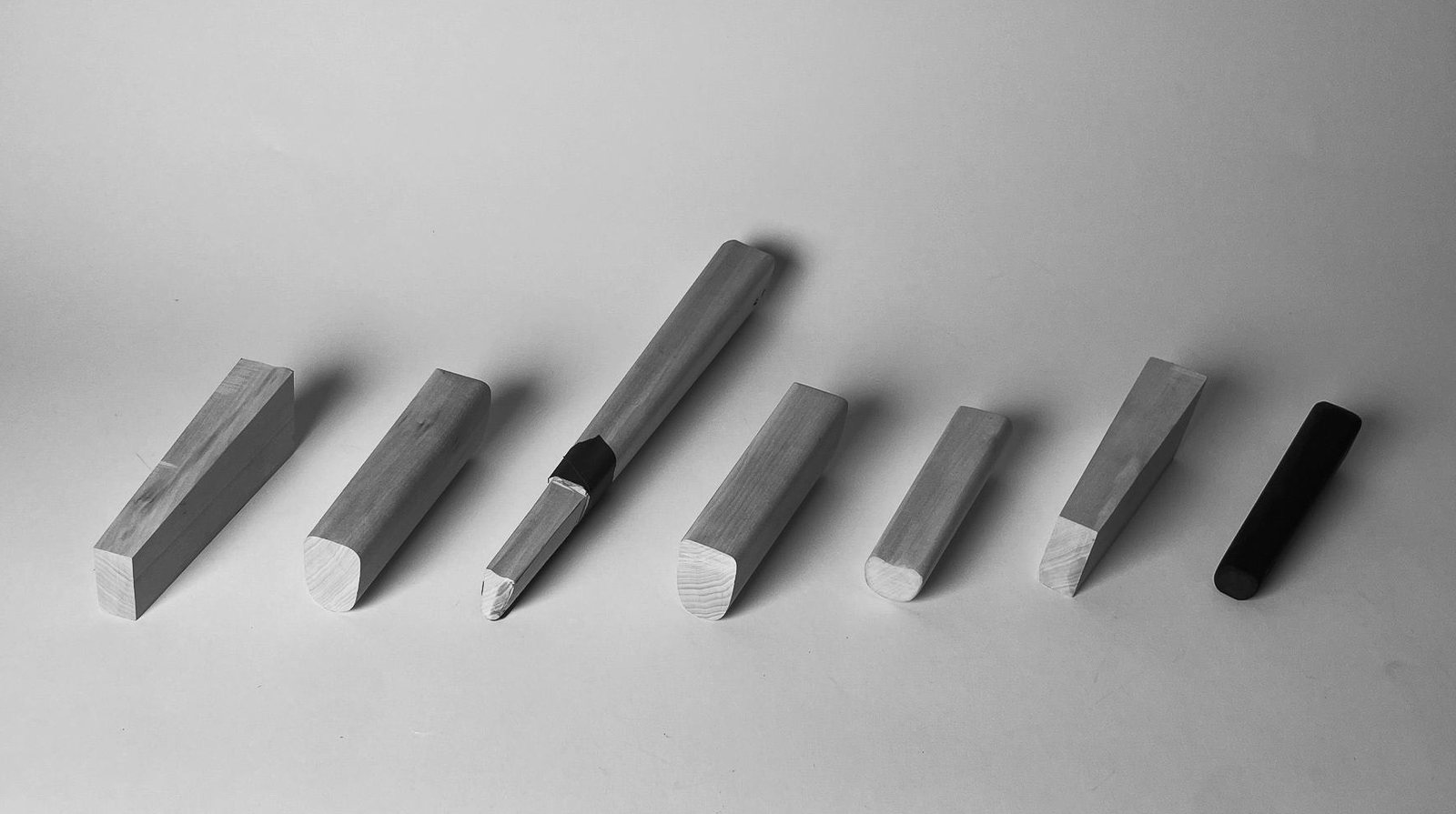
We shaped the handle prototypes on the belt sander, reworking and tweaking them after each round of feedback.
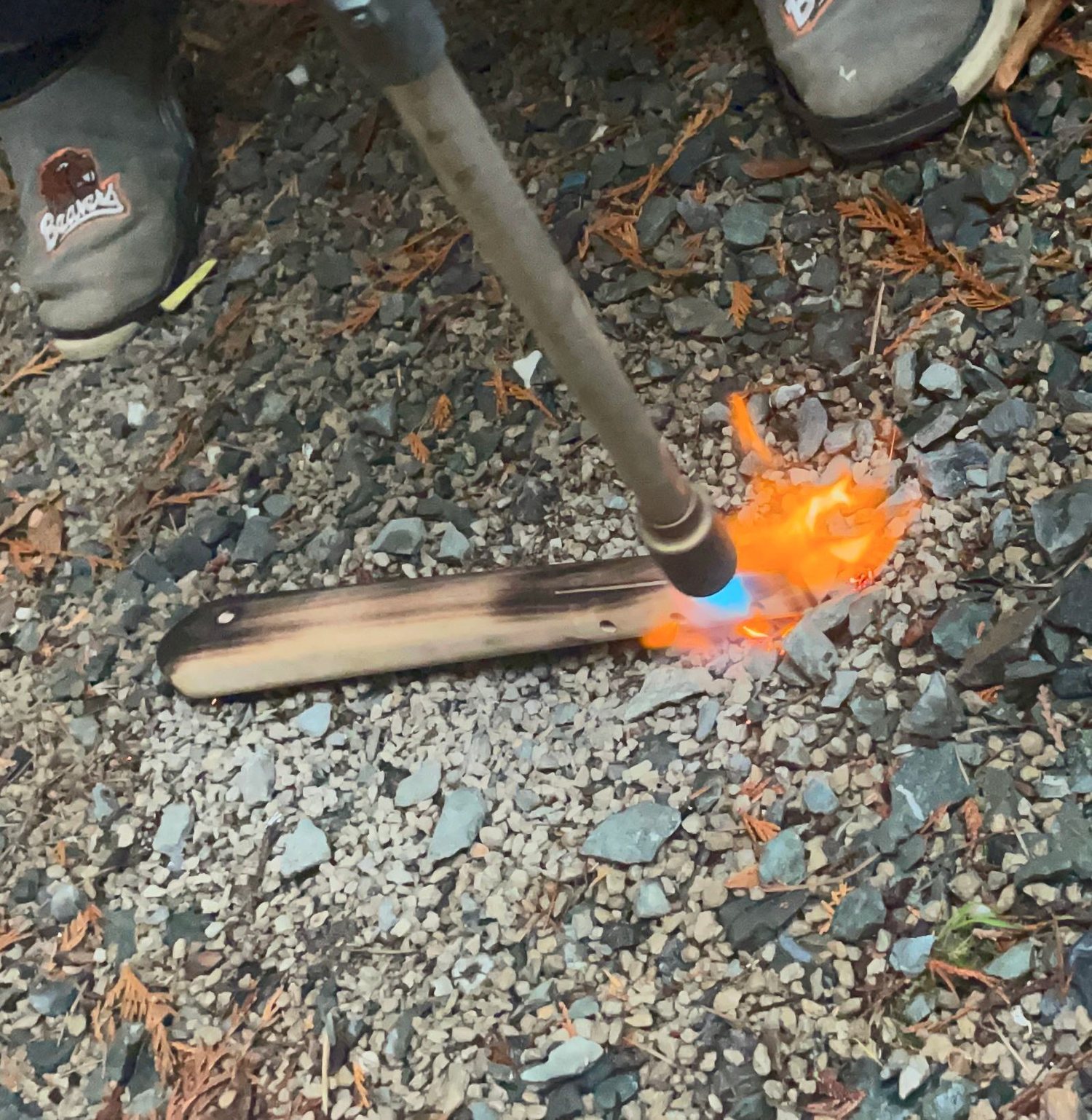
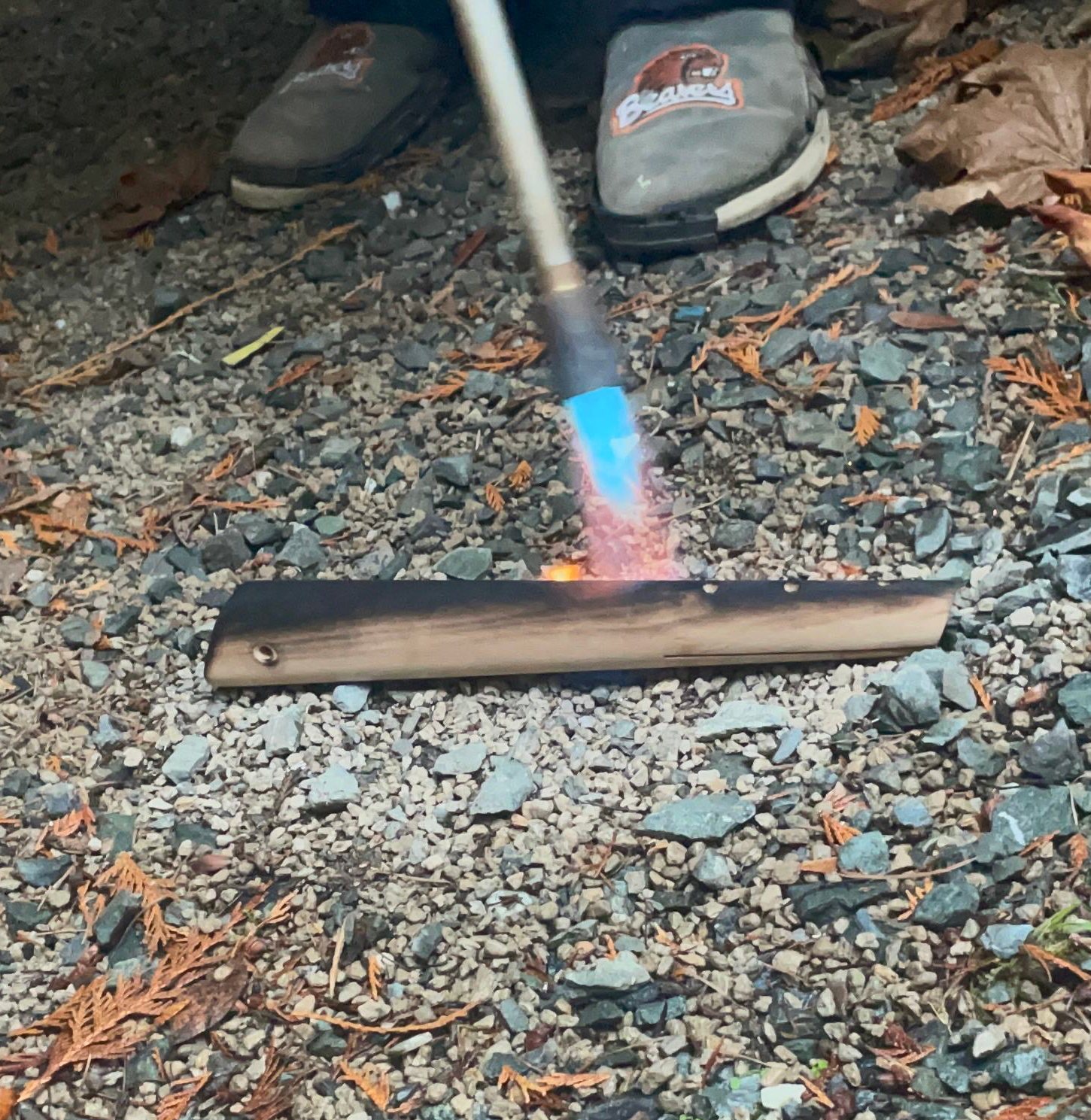
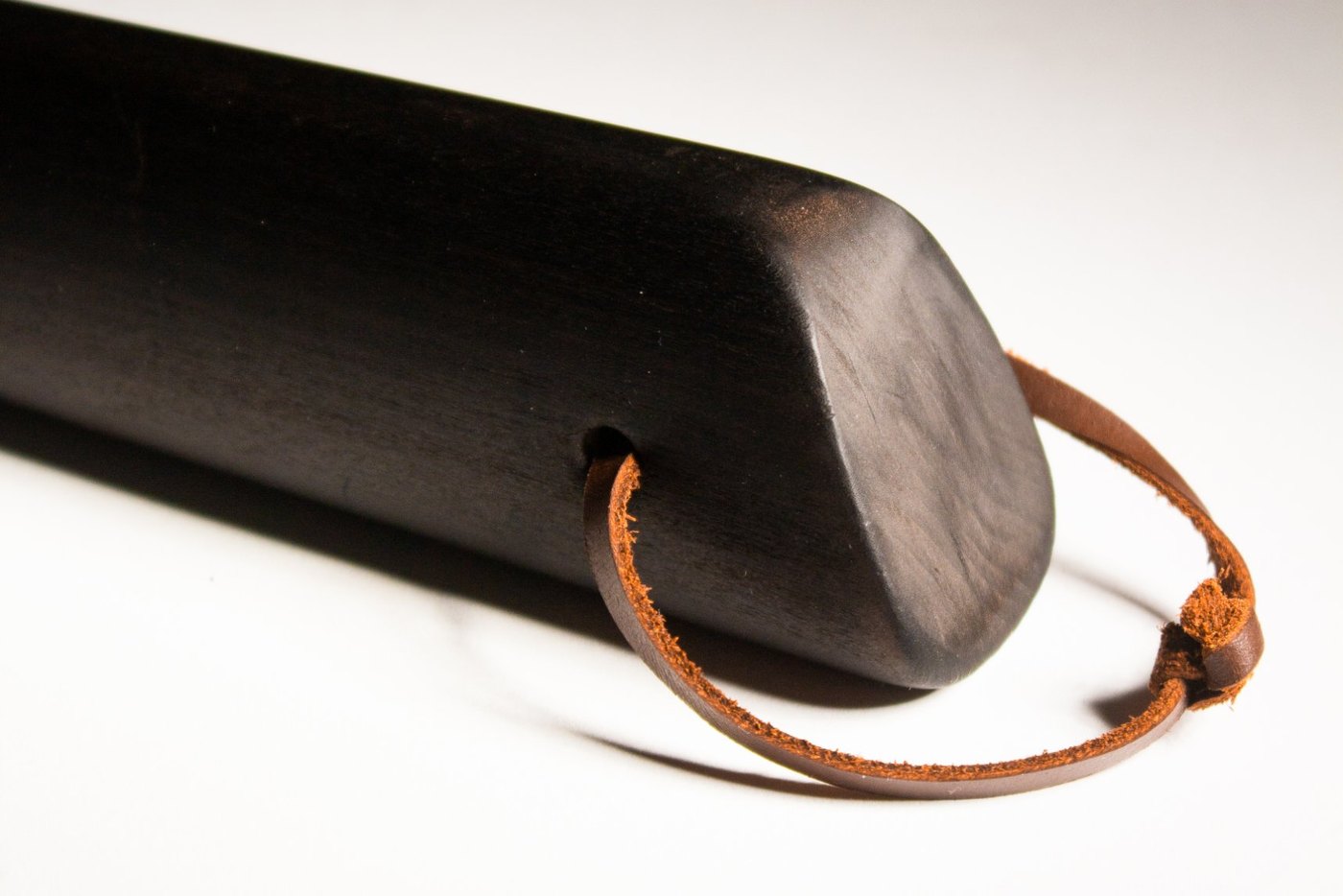
Charring the handles embraces wear: the finish builds a patina with use and nods to wood-fired pizza.
Stains weren’t allowed, so we burned the handles with a weed burner, then sanded and oiled them until no charcoal came off.
We recreated bead-rolled ridges without a bead roller and finished our handles to 400 grit to get the set ready for assembly.
We sanded and oiled the metal, deburred and chamfered the dowels, and tied the leather loops onto the handles. Then we assembled the set using 12 metal dowels to hold the bent sheet metal panels in place.
Being on a team means committing fully to the majority direction, even when it isn’t the desired direction.
Our different backgrounds made Noir far more well-rounded than anything one of us would have designed alone.